Smoke Shafts – A Glossary of Terms
A Glossary of Terms for Smoke Shaft Testing
Smoke shaft systems are critical to fire safety in high-rise buildings and a key part of a smoke control system; therefore, the shaft’s airtightness is paramount. However, different terminology can confuse the average person preparing for air testing of their smoke shaft.
To clarify some common air-testing and smoke-shaft terms, we’ve assembled this glossary of words that can be difficult to understand in the field of air-testing smoke shafts. It includes terms related to air testing, smoke shafts, and test parameters. While it’s far from exhaustive, we hope it provides some guidance.
Smoke Shaft Air Testing – A glossary of terms A to Z
Here’s an A-to-Z glossary of terms related to air testing for smoke shafts:
A – Airflow Rate: The volume of air moving through the smoke shaft per unit of time, typically measured in cubic meters per hour (m³/h). Most smoke shafts need to achieve an airtightness target of 3.8 m³/h/m².
B – Building Regulations: Legal standards that govern the design, construction, and performance of buildings and smoke shafts, including fire safety measures.
C – Calibration: The process of verifying the accuracy of testing equipment against known standards. Smoke shaft air-testing equipment should be UKAS-calibrated
D – Damper: A device installed within ductwork or smoke shafts to control airflow.
E – Extraction Rate: The rate at which smoke is removed from a space by ventilation systems.
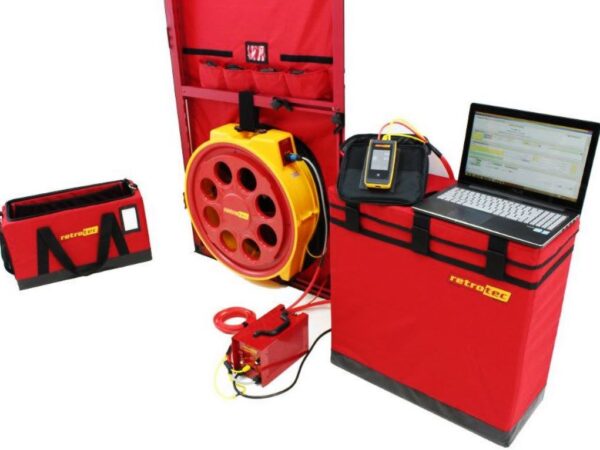
F – Fan Pressurisation Test: A diagnostic method used to determine a building’s airtightness by using a blower door fan to pressurise or depressurise the building.
G – Gauge Pressure: The pressure within a smoke shaft relative to the external atmospheric pressure, usually shown in Pascals (Pa).
H – Human toxicity: The impact of toxic substances emitted into the environment on human health, such as very leaky smoke shafts that emit smoke into the protected atmosphere.
I – Infiltration: The unintentional or accidental introduction of outside air into a smoke shaft, typically through air leakage paths such as cracks and openings within the envelope of the shaft.
J – Joint Sealing: The application of sealant at junctions, seams, or gaps to prevent air leakage in smoke shafts.
K – Kilopascal (kPa): A unit of pressure. 1 kPa equals 1,000 pascals (Pa).
L – Leakage Path: Routes through which air can enter or escape from a building or smoke shaft.
M – Mechanical Ventilation: The use of mechanical systems to control the indoor air quality by diluting and displacing indoor pollutants such as smoke or dust.
N – Negative Pressure: A condition where the air pressure inside the smoke shaft or building is lower than the air pressure outside. Some smoke shaft air tests use negative pressure to find air leakage.
O – Opening (AOV) Doors: Doors that open in each protected area, such as a stairwell landing, in the event of a fire.
P – Pressurisation Method: A technique used in air tightness testing where the building or smoke shaft is pressurised to a known level and the airflow required to maintain that pressure is measured. Readings are usually taken between 25 and 70 in 5Pa increments.
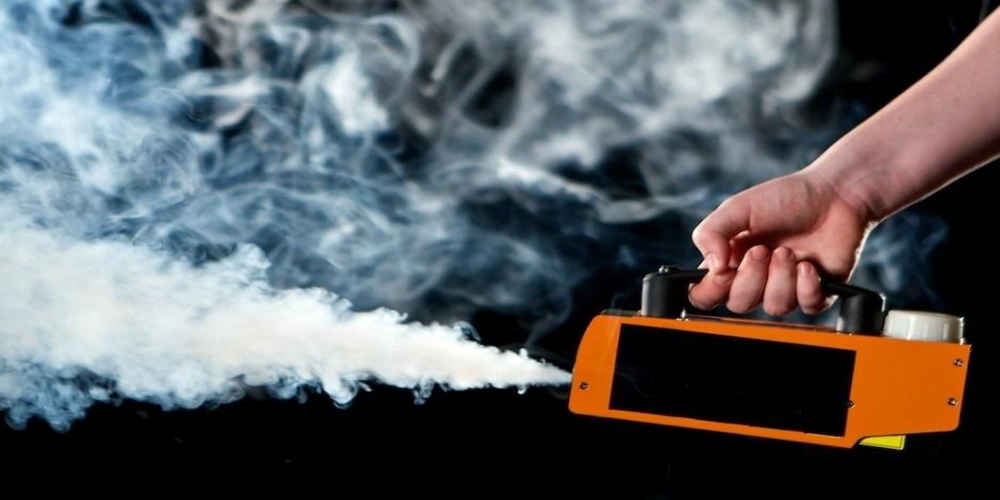
Q – Qualitative Analysis: The assessment of a building’s air tightness based on observations rather than numerical measurements, often using smoke or thermal imaging.
R – Retardant: A substance or device used to slow down or stop the spread of fire or smoke, such as fire-board and intumescent paint.
S – Smoke Shaft: A vertical duct designed to extract smoke from a building in the event of a fire.
T – Thermal Imaging: The use of infrared cameras to detect temperature differences caused by air leakage. When used with a blower door, it’s an extremely powerful tool for identifying air leakage in smoke shafts.
U – Useful Space Heating: When the smoke shaft is heated to 6-8C higher than the surrounding building temperature, combined blower door and thermal imaging can be used to identify air leakage through the smoke shaft envelope.
W – Weather Sealing Strips: Materials used to seal gaps around doors to prevent air leakage.
X – Xenon Test: A method for detecting air leaks that uses xenon gas as a tracer in a pressurised space.
Y – Yield Point: The point at which a material or system begins to deform under stress, which could affect the smoke shaft’s airtightness.
Z – Zero Tolerance to Air Leakage: Because the smoke shaft must achieve a low air leakage figure to pass the air test, extra care is needed during the design and construction of the smoke shaft.
This glossary covers fundamental terms associated with air testing for smoke shafts. For more detailed information on smoke shaft regulations, contact APT Sound Testing to chat with our smoke shaft testing experts.
Need help with air testing your smoke shaft?
If you need help with air testing your smoke shaft, we can help. Our experienced air test engineers have over 10 years of smoke shaft testing experience, so we know how to help clients pass testing and achieve smoke shaft sign-off.
Our premium smoke shaft testing service includes:
- Smoke shaft survey visits by experienced consultants.
- We are a UKAS and ATTMA Level 2 air testing company.
- Smoke shaft air test certification.
- The latest high-powered fan equipment
- UKAS-calibrated blower door equipment.
- Diagnostic air leakage surveys using smoke & thermal imaging.
- Rapid 24-hour testing service
We offer leading design, consultancy, and compliance for every part of your project. IAPT aims to provide a friendly, professional, stress-free experience for all your smoke shaft air testing requirements.s
For more information on our smoke shaft air testing services for smoke shafts, please get in touch with Darrenen directly on 07775623464, or email us at info@airpressuretesting.net
Contact APT for your smoke shaft Air Test.
APT Sound Testing Ltd is one of the UK’s leading UKAS-accredited testing laboratories for smoke shaft air tightness testing. We combine air leakage testing, smoke visualisation surveys, and thermal imaging inspections to accurately diagnose leakage pathways and help clients achieve compliance first time. Our experienced engineers conduct smoke shaft testing on residential, commercial, high-rise, and mixed-use developments across the UK.
Smoke Shaft Air Tightness Testing • Smoke Shaft Leakage Detection • Thermal Imaging Surveys • UKAS Accredited Testing • Nationwide Coverage
APT Sound Testing Ltd
📞 07775623464
🌐 www.aptsoundtesting.co.uk
📧 info@aptsoundtesting.co.uk
Helping developers achieve compliant smoke ventilation systems through expert testing and leakage diagnostics.