A Friendly, Proactive Approach to Acoustic Compliance
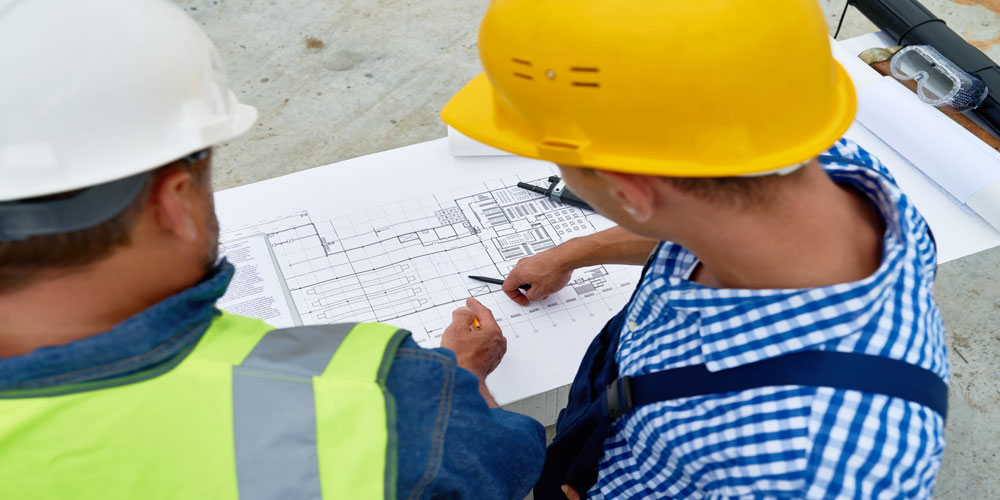
Acoustic compliance doesn’t have to be complicated. We take a friendly, forward-thinking approach that supports your project from the earliest design stages through to pre-completion testing and final certification.
Our services include:
Acoustic design and consultancy
Sound insulation testing
Pre-completion testing and certification
Specialist cleanroom testing
With many years of experience across both public and private sectors, we work with a broad range of clients, from self-builders and independent developers to major national housebuilders. We also support specialist industries such as healthcare and banking, where precision testing and flexible scheduling are often critical.
Clients consistently tell us they value not only our technical expertise but also our approachable, solutions-focused mindset. It’s this combination that has helped us achieve one of the highest return-client rates among pre-completion testing consultancies in the UK.
Local Expertise, National Coverage
While we operate across the UK, our centrally located London office allows us to respond quickly to urgent testing and survey requirements in the capital and surrounding areas.
Unlike many providers, we never subcontract our services. Every sound test is carried out by our in-house engineers, ensuring complete consistency, quality control, and accountability from start to finish.
We understand that construction timelines can be demanding, which is why we regularly accommodate last-minute bookings and weekend testing, particularly for clients in fast-paced sectors such as banking and commercial fit-outs.
Qualified Engineers, Accredited Standards, Modern Equipment
Our experienced engineers bring decades of combined acoustic design knowledge to every project. From initial consultation to final certification, we provide practical guidance tailored to your development’s specific requirements.
As a multi-UKAS accredited laboratory operating to strict ISO standards, we maintain the highest levels of professionalism and quality assurance. We also invest in state-of-the-art acoustic testing equipment, fully calibrated to UKAS standards, to ensure precise and dependable results every time.
Integrated Acoustic and Air Tightness Testing
To make compliance simpler and more cost-effective, we also offer UKAS-accredited air tightness testing in-house. By combining sound and air testing within one coordinated service, we help reduce administrative complexity, streamline scheduling, and keep your project moving smoothly.
Speak to Our Team
Whether you need expert advice or want to arrange a sound test, our friendly and knowledgeable team is ready to help. Get in touch via our online contact form or call 01525 303905 to discuss your project and arrange a tailored testing solution.
APT Sound Testing is a professional noise and acoustic consultancy operating across Greater London and the Home Counties. Our fully qualified and highly experienced consultants provide expert advice and undertake detailed acoustic surveys covering all aspects of sound and noise. This includes the investigation of noise complaints, BS 4142 assessments, and London noise surveys for planning and development purposes.
We regularly carry out noise surveys for residential, commercial, and mixed-use developments throughout London and across the UK. Our surveys are tailored for sites exposed to noise from road, rail, and air traffic, as well as industrial and commercial sources.
Comprehensive Acoustic Services
APT Sound Testing offers a complete range of acoustic services, from initial noise assessments through to detailed noise mitigation proposals. Where new plant or equipment is proposed, we undertake noise surveys to determine acceptable noise emission limits in line with Local Authority requirements and provide practical mitigation advice to ensure compliance.
As a local consultancy, we have in-depth knowledge of Greater London planning policies and local legislation. Our noise consultants bring extensive experience in assessing the acoustic impact of residential, industrial, and commercial developments within the community.
Noise Surveys for New Developments in London
London noise surveys and reports are typically required during the pre-application stage and throughout the planning process. In many cases, planning conditions will specify that a noise survey must be undertaken prior to approval.
Noise surveys are usually carried out at the design stage, before construction begins. This allows the acoustic design of the building to reflect local noise levels. Where ambient noise levels are high, more robust acoustic measures may be required to prevent future noise issues. Local authorities may also require post-completion BS 8233 noise surveys to demonstrate that internal noise standards have been achieved in living rooms and bedrooms.
A typical noise survey report will include:
The reason for and scope of the assessment
A location plan showing the proposed development and nearby noise-sensitive receptors
Survey methodology, including monitoring locations, equipment used, and weather conditions
Any deviations from standard guidance and the reasons for them
Full tabulated survey results
Comparison of results against relevant noise standards
Recommendations for noise mitigation measures, such as acoustic barriers
Detailed calculations to support predicted noise reductions
Noise Exposure Categories (NECs)
There are four Noise Exposure Categories (NECs), determined by the level of environmental noise affecting a site. The NEC assigned to a development helps inform planning decisions and the extent to which noise mitigation is required.
NECs are usually established through on-site noise monitoring. Mitigation options can then be assessed using calculations and noise modelling, allowing appropriate measures to be incorporated into the development at the design stage.
Many noise-related planning issues can be avoided or resolved through a thorough and accurate acoustic assessment, supported by robust mitigation measures where required.
Building Regulations and Sound Insulation Testing
APT Sound Testing provides expert advice on soundproofing design for walls and floors to meet the requirements of Approved Document Part E of the Building Regulations. As acoustic specialists, we offer a complete end-to-end solution, including:
BS 8233 noise surveys to support planning applications
Acoustic design services to ensure compliance with Building Regulations Part E
Sample sound testing to assess existing construction and target acoustic upgrades
Visual site inspections to ensure correct installation of acoustic details
Pre-completion sound testing in London
Pre-Completion Sound Testing in London
Pre-Completion Sound Testing (PCT) demonstrates compliance with Approved Document Part E by testing completed walls and floors prior to handover. Testing is carried out once all relevant separating elements are fully constructed, ensuring the building meets required airborne and impact sound insulation standards.
Site Visits and Sample Sound Testing
Our acoustic site surveys allow us to review existing construction in detail and identify potential issues, such as unsuitable materials or incorrect installation methods. We also verify that acoustic products are installed in accordance with manufacturer guidance, helping to avoid costly on-site mistakes.
Sample sound testing of existing partitions provides a clear understanding of current acoustic performance. This enables us to develop a targeted acoustic design that aligns with the real-world performance of the structure.
BS 8233 Noise Surveys in London
Noise assessments are often required at the planning stage for developments that generate noise or are sensitive to existing noise sources. Mixed-use developments frequently fall into both categories.
For noise-generating developments, a Noise Impact Assessment is typically required. This involves measuring existing ambient noise levels and assessing the potential impact of the proposed development. Larger schemes may also require consideration of secondary impacts, such as increased road traffic noise.
Internal noise levels can be predicted using advanced acoustic modelling software. In many cases, achieving acceptable internal noise criteria depends on the glazing and ventilation strategy, and specific systems may need to be specified as part of the design.
Speak to Our Noise Consultants
If you are a homeowner, developer, or business experiencing noise issues, our professional noise consultants are here to help. The noise assessment process is straightforward and non-intrusive. In most cases, we install monitoring equipment for a 24-hour period to capture accurate data, accounting for external variables and site conditions. A detailed report is then produced, along with clear advice on the next steps.
Contact APT Sound Testing
APT Sound Testing is one of the leading acoustic consultancy firms in Greater London. For London noise surveys, noise assessments, acoustic studies, and sound insulation testing, contact our knowledgeable team for professional advice that could save you time and costs later.
Have you ever wondered how buildings are designed to be quiet and peaceful? The secret often lies in professional acoustic consultancy. This service plays a key role in making sure your construction or renovation project meets noise regulations. Understanding the importance of site surveys is the first step toward a compliant and comfortable building. By working with experts from the start, you can ensure successful project outcomes without the headache of noise-related problems down the line.
When undertaking a construction project, managing sound is more important than you might think. Acoustic consultancy helps you navigate the complex world of noise control, ensuring your building is comfortable and compliant.
Professionals in this field provide expert advice to make sure your project adheres to all necessary building codes and environmental regulations. Let’s explore what these consultants do and why their early involvement is so beneficial.
What Does an Acoustic Consultant Do?
So, what exactly is the job of an acoustic consultant? Their primary role is to assess, manage, and design for sound. This begins with a professional site survey to gather accurate site data. During these visits, they inspect the existing construction to identify any potential acoustic challenges, such as the use of lightweight blocks that don’t block sound well.
The consultant also checks that acoustic materials are being installed correctly by your team. This hands-on approach ensures that the design will perform as expected in the real world. For noise and vibration assessments, they use specialized equipment to measure sound levels, providing a clear picture of the current acoustic environment.
Ultimately, their work is about ensuring regulatory compliance and even improving energy efficiency through smart material choices. By analyzing the site and construction, they provide targeted recommendations that help your project meet all necessary standards, like Part E of the Building Regulations.
Benefits of Engaging Acoustic Consultancy Services Early
Bringing in an acoustic consultant at the beginning of your project offers significant advantages. Early engagement is key to identifying potential issues before they become expensive problems. A site survey visit before construction starts provides valuable insights into the property’s unique acoustic characteristics.
This proactive approach helps prevent costly delays that can arise from failed sound tests later on. By addressing challenges from the outset, you can ensure a smoother project execution and keep everything on schedule and within budget.
Engaging experts early leads to better results and greater customer satisfaction. Key benefits include:
Avoiding Costly Rework: Identifying and fixing acoustic problems during the design phase is much cheaper than correcting them after construction is complete.
Ensuring Compliance: Consultants help you meet all legal sound insulation requirements from day one.
Achieving Peace of Mind: Knowing that your project is on the right track acoustically lets you and your team feel confident about the final outcome.
Understanding Site Survey Visits in Acoustic Consultancy
The site survey process is a fundamental part of any successful acoustic consultancy service. It’s how experts gather the essential information needed to provide effective advice. Without accurate measurements and a firsthand look at the property, it’s impossible to create a targeted acoustic design.
A detailed site survey allows consultants to understand the specific challenges of your project. Depending on your needs, there are different types of surveys that can be performed, each providing unique data. Let’s look at what happens during these visits and who needs to be involved.
What Happens During a Site Survey Visit?
A site survey is a necessary and structured process designed for thorough data collection. When the survey team arrives, they will review the survey layout and assess the property’s current state. This visit is critical because a compliant design can still fail a sound test due to poor workmanship.
During the visit, the consultant performs a risk assessment to identify any elements that could compromise acoustic performance. They also observe environmental conditions that might affect noise levels. The main goal is to check the construction and installation of materials.
You can expect the survey to involve several key activities, including:
Checking the existing construction for acoustically weak materials.
Verifying that installation teams are following the manufacturer’s guidelines for acoustic products.
Measuring existing sound levels to establish a baseline for the acoustic design.
Who Attends a Site Survey Visit and What Should You Prepare?
Typically, the site survey team includes an experienced acoustic consultant. Their role is to lead the assessment, take measurements, and identify any issues. It’s also helpful for you, the client, or your project manager to be present to answer questions and provide access to all necessary areas.
Proper preparation is essential for effective project planning and ensures the team can collect accurate data. Before the visit, you can help the process run smoothly by having key information ready. This allows the surveyors to make the most of their time on-site and gather the best possible survey data.
To help the team, you should prepare the following:
Access: Ensure all relevant areas of the site are accessible.
Drawings: Provide architectural plans or drawings of the proposed development.
Project Details: Share information about the construction materials and methods you plan to use.
Acoustic Testing: from Sample Sound Testing to Noise Surveys
Acoustic consultancy involves various types of surveys, each designed for a specific purpose. The right type of survey for your project depends on your goals, the existing noise levels, and the requirements of local building codes. Some tests check the performance of walls and floors, while others assess noise from the surrounding environment.
From sample sound testing to comprehensive noise surveys for planning applications, each method provides critical information. Understanding these different tests will help you see how consultants develop a complete picture of your project’s acoustic needs.
Sample Sound Testing: When and Why Is It Used?
Sample sound testing is often used for renovation or conversion projects. It involves testing the existing walls and floors of a building to see how well they currently block sound. This provides accurate data that forms the basis for a targeted acoustic design, ensuring you only spend money on necessary improvements.
This type of testing is valuable because it gives a real-world overview of the building’s performance, accounting for any unique construction quirks or environmental factors. It helps identify potential challenges early on, such as a party wall that needs significant upgrades to meet Building Regulations Part E.
The survey data collected from sample sound testing helps consultants:
Establish the baseline sound insulation performance.
Create a cost-effective and targeted acoustic design.
Avoid over-engineering solutions, saving you time and money.
Overview of the BS4142 Plant Noise Survey Requirements
If your project includes new industrial or commercial equipment like air conditioners or extraction systems, you may need a BS4142 plant noise survey. This standard is used to assess the environmental impact of noise from industrial sources on nearby residential areas. It is one of the key types of site surveys for ensuring regulatory compliance.
Following the BS4142 method helps prevent complaints and potential legal issues with the local authority. The survey involves measuring the existing background noise and then predicting or measuring the noise from the new equipment. A typical survey can take 24 hours to capture noise variations throughout the day and night.
The assessment compares the new noise level to the existing background noise to determine the level of impact.
Assessment Step
Description
Measure Background Noise
The existing noise level (LA90) is measured at different times of day without the new source.
Determine Specific Noise
The noise level of the new plant or machinery is predicted or measured.
Calculate Impact
The difference between the new noise and the background noise indicates the likely impact on residents.
Acoustic Design Services for New Builds and Retrofits
Beyond testing, acoustic design services are essential for creating quiet, comfortable, and compliant buildings from the ground up. Whether you are working on a new build or retrofitting an old property, a professional acoustic design ensures that sound insulation is an integral part of the construction, not an afterthought. APT Sound Testing has years of experience providing these services for projects of all sizes.
This proactive approach supports sustainable practices by selecting the right materials for both acoustic performance and energy efficiency. For land development projects, a solid acoustic design is crucial for protecting future residents from external noise and ensuring the development is a desirable place to live.
How Acoustic Design Services Optimize Building Performance
Acoustic design services optimize building performance by integrating sound control into the earliest stages of project planning. During an architectural site survey or design review, consultants analyze your floor plans and construction proposals. They consider the unique characteristics of your building to recommend the most effective solutions.
This detailed review looks at the mass, isolation, and absorption elements of your proposed party walls and floors. By leveraging data from thousands of previous sound tests, consultants know what works and what doesn’t for different types of construction. This expertise helps prevent common mistakes and leads to better final results.
An optimized acoustic design directly contributes to customer satisfaction by ensuring:
The building meets or exceeds the requirements of Approved Document E.
Future residents enjoy a peaceful living environment.
The risk of a failed pre-completion sound test is significantly reduced.
Acoustic Consultancy & Construction
Acoustic consultancy testing is essential for ensuring that your construction or renovation project meets the necessary sound standards and provides a comfortable environment. By engaging acoustic consultants early in the process, you can identify potential issues and implement effective solutions that enhance both functionality and aesthetics.
Understanding the various types of acoustic testing available, from sample sound testing to comprehensive noise surveys, empowers you to make informed decisions for your project. Remember, a well-executed acoustic plan not only contributes to better building performance but also elevates the overall experience for occupants. If you’re ready to take the next step, reach out for a free consultation to discuss how our acoustic consultancy services can benefit your project!
Here at APT Sound Testing we can offer a detailed survey report and outline possible mitigation measures with noise mapping to show the ‘real life’ effectiveness of the measures. Such assessments can cover extraction systems, air conditioners, industrial plant, refrigeration units, and general use of industrial buildings.
If the local authority has requested you undertake a BS4142 Noise Assessment please call us now on 01525 303905 or email us at info@aptsoundtesting.co.uk
APT Sound Testing is a professional noise and acoustic consultancy firm operating in Greater London and the Home Counties. Our fully qualified and highly experienced consultants can provide expert advice and conduct survey analysis into all aspects of sound, such as investigating complaints into excessive noise and/or a BS 4142 London Noise Surveys.
We undertake London noise surveys on numerous potential housing and other noise-sensitive sites throughout the Capital and the UK. Our acoustic surveys cater for sites that may be exposed to noise from road, rail or air traffic and/or from industrial activity.
We undertake wide range of services from noise assessments through to noise mitigation proposals. Where it is proposed to install new plant or equipment, we undertake noise surveys to determine noise emission limits, in line with Local Authority requirements, and provide advice on mitigation.
As a local company we have an in depth knowledge on Greater London planning permissions and local legislation. Our noise consultants are expertly suited to carry out noise assessments, with a wealth of experience in assessing the sound impact of residential, industrial and commercial businesses in the community.
Noise Surveys for New Developments in London London noise surveys and report should be submitted during the pre-application process and discussions on planning applications. In many circumstances a planning condition will stipulate that a noise survey will need to be undertaken.
Noise surveys are normally carried out at the design stage of the project prior to the commencement of construction., this is to allow the acoustic design of the building to take into account the local noise levels, i.e. if the local noise levels are quite high then the acoustic design will ned to be more robust to mitigate any potential noise problems. Thereafter the local authority may also require post a BS 8182 London noise survey to prove that the noise standards have been achieved within the living rooms and bedrooms. The following information will usually need to be included within the noise survey report.
The reason and scope of the report.
Location plan of the proposed development and likely receptor points such as the nearest residential window/s.
The noise survey Methodology including the noise monitoring location, the equipment used and the weather conditions during the noise survey.
Reasons for deviations from standard methods.
Full table of results.
A comparison of survey results against the noise standards.
Recommendations for noise control measures – acoustic barriers etc.
Full calculations against noise reductions expected to support any suggested noise control measures.
The Different NEC Noise Exposure Categories (NECs) There are four Noise Exposure Categories based on the level of noise at the development. The NEC in which the site falls determines to what extent noise should be considered in the granting of planning permission. The NEC(s) are usually determined by monitoring noise levels. Potential mitigation options can then be assessed by calculation, and/or the use of noise modelling. Appropriate noise mitigation can then be incorporated into the development at the design stage.
Problems relating to noise during the planning stages can usually be avoided or resolved with a good, detailed and accurate acoustic assessment report and by accounting for robust mitigation measures where and when required.
APT Sound Testing can be consulted on all aspects of acoustic related issues. In addition to sound measurements we also provide invaluable advice on the soundproofing design of walls and floors to meet the standards of Part E of Building Regulations. As a true specialist, we can offer a complete solution. Here are a few of our services:
Acoustic Design Service to ensure you project complies with Building Regulations Part E.
Sample sound testing to check the acoustic performance of your existing construction to allow for targeted acoustic upgrades.
Visual site surveys to insure your subcontractors are constructing the acoustic details correctly
Pre-completion London Sound Testing in compliance with Building Regulations Part E.
Pre-Completion Sound Testing In London Pre-Completion Sound Testing is method of showing compliance with Approved Document Part E of the Building Regulations by testing the completed construction prior to handover. Sound Testing Services in the UK required for Pre-Completion Testing (PCT) with respect to Building Regulations Approved Document Part E is carried out when the construction of party walls and floors are complete.
Site Visits & Sample Sound Testing
APT Sound Testing offer Acoustic Site Survey visits to let us view the existing site construction. This allows us to check for potential problematic areas such as lightweight blocks haven’t been used in the existing construction. It also lets us check that the installation teams are installing the acoustic materials as per manufacturer’s guidelines, thus avoiding crucial onsite mistakes. We can also undertake sample sound testing of existing site construction; this offers an accurate overview of the acoustic performance of the existing partitions which enables us to offer a targeted acoustic design which correlates with the sound performance of the existing construction.
BS8233 Noise Surveys in London London noise assessments are often required at the planning stage of developments that may generate noise, and noise-sensitive developments which may be affected by noise. Some developments, such as mixed use, fall into both categories. Potentially noise generating developments often require a Noise Impact Assessment to be undertaken. This normally requires existing ambient noise levels to be established, typically by undertaking measurements, and the impact of noise from the development to be established. For large developments, it is often necessary to consider secondary effects, such as the impact of increased traffic on existing roads.
Internal noise levels within the proposed buildings can be calculated using our latest noise prediction software. For most buildings, the overall sound insulation performance of the building envelope will depend on the glazing system employed. It may be necessary to stipulate specific glazing and ventilation systems that must be employed to ensure that internal noise criteria are achieved.
If you are an individual or a business with sound problems, and would like to speak with one of our professional noise consultants, please speak to one of our advisors today. The noise assessment process isn’t intrusive, lengthy or costly. Normally we would leave a meter over a 24 hour period which would gather the necessary data automatically, taking into account other factors such as construction, setting and external variables. We could then provide a detailed report and advise how best to proceed.
Contact APT Sound Testing APT Sound Testing is one of the leading acoustic consultancy firms operating in the Greater London area. For London noise surveys, assessments, studies as well as our full range of London sound insulation testing, please contact our knowledgeable team of noise experts to provide professional and invaluable advice which could save you time and potential costs further down the line – call today on 01525 303905 or email info@aptsoundtesting.co.uk
Leaseholder Sound Testing for New Wood Floors: What You Need to Know
Upgrading a leasehold flat by replacing carpet with a hard flooring finish, such as engineered wood or solid timber, is a popular renovation choice. However, this simple change can trigger strict lease conditions requiring Leaseholder Sound Testing for Floors and, in many cases, acoustic upgrades.
Before you lift a single carpet tile, it’s important to understand why sound testing matters, what’s involved, and how to ensure your new flooring doesn’t fall foul of your lease.
This guide is written for leaseholders, managing agents, freeholders, and contractors who need to comply with sound testing regulations when switching to hard floors.
Why Sound Testing Is Required When Changing Carpet to Wood
Most leases include a covenant that either:
✔ Requires soft flooring (carpet) to remain in place or ✔ Permits hard flooring only if sound insulation performance is proven to match the original construction
Carpet naturally absorbs footfall noise and helps limit sound transferring to the flat below. Hard finishes amplify:
Without proper acoustic upgrades, neighbours below may experience increased disturbance — leading to complaints, disputes, and even legal action.
That’s why freeholders and management companies often demand acoustic evidence and test certificates before approving alterations or issuing a Licence to Alter.
What Sound Testing Involves
Professional Leaseholder Sound Testing typically includes three stages:
1️⃣ Pre-Works Sound Testing (Baseline)
Carried out before removing carpets to record current acoustic performance:
Airborne sound insulation
Impact sound performance
These results become the target your new floor must meet or exceed.
2️⃣ Acoustic Upgrade Design
Based on the baseline results, an acoustic specialist may recommend:
Acoustic underlays
Floating floor systems
Additional mass or separation above joists
These upgrades improve your chances of passing the final test.
Whether you’re a leaseholder applying for a Licence to Alter or a managing agent enforcing compliance, we ensure your flooring upgrade is carried out smoothly — and soundly.
At APT Sound Testing, we provide a full turnkey acoustic consultancy service to help you meet planning requirements and Building Regulations Part E — ensuring your project passes building control for its acoustic elements, without unnecessary cost or delays.
From initial site surveys through to final pre-completion testing, we work with you at every stage to deliver effective sound insulation solutions. Whether you’re developing new builds or conversions, our UKAS-accredited team has the expertise to help you achieve compliance the first time.
Our 4-Step Acoustic Design Advice Package
We’ve developed a streamlined process to help clients meet Approved Document E requirements with confidence:
1. Site Survey Visits
We inspect your site’s construction to identify potential problem areas — for example, the use of lightweight blocks or incorrectly installed acoustic materials. This proactive approach helps avoid costly issues later.
2. Sample Sound Testing
Testing your existing walls and floors gives us an accurate picture of their sound insulation performance. Using this data, we can create a targeted acoustic design tailored to your project.
3. Acoustic Design Review
We assess the mass, isolation, and absorption qualities of your construction and provide recommendations to optimise acoustic performance.
4. Pre-Completion Sound Testing
We conduct final sound insulation tests — both airborne and impact — to prove compliance with Building Regulations Part E and secure building control sign-off.
Part E Sound Insulation Testing
Since July 2003, all new builds and conversions have been required to test 10% of each party wall and floor construction type. Our testing covers:
Airborne Noise – sound travelling through the air, like TV noise or conversation.
Impact Noise – sound generated by direct contact, like footsteps or dropped objects.
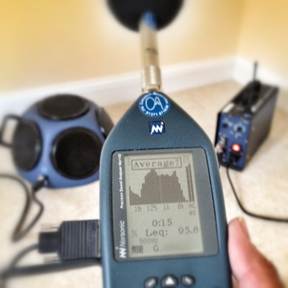
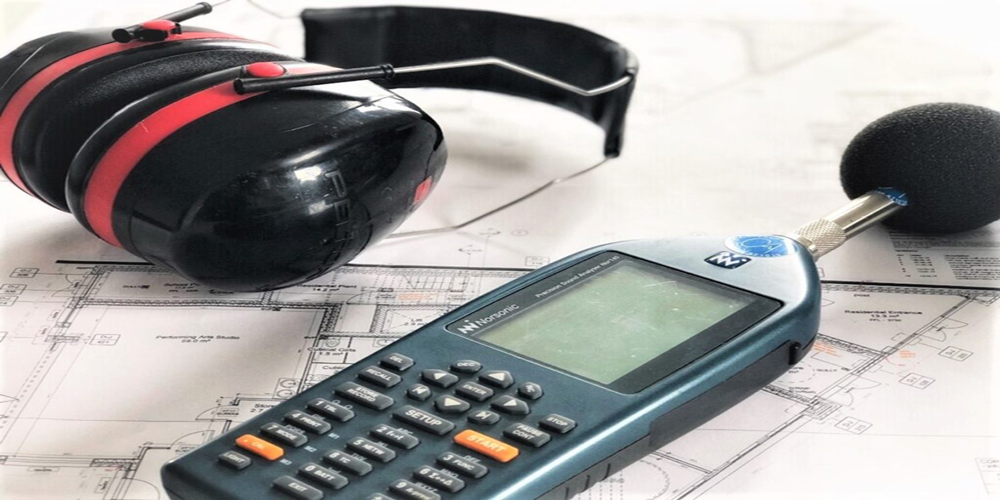
Our UKAS-accredited team uses state-of-the-art Norsonic equipment to deliver accurate, reliable results and detailed reports for building control.
Acoustic Design Services
We’ve designed and tested acoustic partitions for everything from semi-detached houses to large apartment developments. Drawing on thousands of completed sound insulation tests, we know what works — and what doesn’t — for every construction type.
By combining design expertise with accredited testing, we provide a complete, compliant, and cost-conscious solution. Our services help reduce the risk of sound test failures caused by poor workmanship or non-compliant materials.
Sample Sound Testing
Early-stage testing is one of the best ways to avoid surprises at the end of your build. By checking the installation of acoustic materials and testing performance before completion, we can highlight — and help fix — any potential compliance issues before they become costly problems.
📞 Get in Touch If your local authority has requested sound insulation testing, or if you want to ensure your project is on the right track, contact us today:
When it comes to construction, few things impact long-term satisfaction quite like sound. Whether it’s noisy neighbours in an apartment block, echoes in a commercial space, or inadequate insulation in a converted building, poor acoustics can create lasting problems. What’s more, meeting sound insulation standards isn’t just about comfort, it’s a legal requirement under Building Regulations Part E in the UK.
At APT Sound Testing, we understand that navigating these regulations can be challenging. That’s why we offer a full turnkey acoustic consultancy and sound testing service, guiding clients from early design stages right through to final pre-completion testing and certification. With years of experience and UKAS accreditation, we deliver expertise you can trust.
In this guide, we’ll walk you through how our process works, why acoustic design matters, and how we can help ensure your project achieves compliance, efficiency, and peace of mind.
Why Is Acoustic Consultancy So Important?
In the UK, Approved Document E outlines the minimum performance standards for sound insulation between dwellings. It applies to new builds, conversions, and material change-of-use developments. Non-compliance can lead to delays, expensive remedial work, and in some cases, refusal of building control sign-off.
But good acoustic design isn’t only about meeting a checklist — it enhances quality of life, protects your investment, and demonstrates a commitment to high building standards. Unfortunately, many projects leave acoustic considerations too late in the process, only to discover performance issues during final testing.
That’s where APT Sound Testing steps in. Our consultancy ensures your project is designed and built with acoustic performance in mind, significantly reducing the risk of sound test failure and costly rework.
Our 4-Step Acoustic Design and Testing Process
We’ve developed a clear, practical process that takes the stress out of acoustic compliance. Whether you’re a developer, architect, or contractor, we support your project every step of the way.
1. Site Survey Visit
Our process begins with an on-site assessment of the existing construction. This visit allows us to evaluate the current materials and identify potential weaknesses in the structure. For example, the use of lightweight blocks or poor sealing can result in inadequate sound insulation.
During this visit, we also assess the quality of any ongoing installation. Are acoustic materials being fitted correctly? Are workmanship standards being followed? Catching issues early can prevent expensive problems later in the build.
2. Sample Sound Insulation Testing
Before we propose any acoustic design changes, we carry out sample sound testing on the existing walls and floors. These tests provide an accurate picture of the current sound insulation levels and allow us to tailor a solution that addresses specific weaknesses.
Rather than relying on assumptions, we base our recommendations on real-world data. This approach ensures your design is targeted, cost-effective, and compliant.
3. Acoustic Design Review
Once testing is complete, we conduct a full design review of your proposed party walls and floors. This includes detailed analysis of the three key acoustic design principles:
Mass – Heavier materials tend to block sound more effectively.
Isolation – Structurally separating elements can reduce vibration transfer.
Absorption – Soft, porous materials absorb sound within a space.
Using data from thousands of tests across a wide range of projects, we help you choose the best construction method to meet or exceed Part E requirements. We also work closely with your team to ensure the design is practical to implement and cost-efficient.
4. Pre-Completion Sound Testing
The final step in the process is the pre-completion sound test. This test is required by Building Control to confirm that your development meets Approved Document E standards. We use state-of-the-art Norsonic equipment and carry out all testing under UKAS accreditation, meaning our results are guaranteed to be accepted by authorities.
Once the test is complete, we provide a detailed report and, if the build passes, certification for sign-off.
If you’ve received a request from your local authority for sound insulation testing, get in touch with us directly at 01525 303905 or visit our website to book your site visit.
Supporting Every Stage of the Build
Our services don’t stop at testing. At APT Sound Testing, we work alongside developers from early design right through to completion. Whether you’re building a handful of houses or managing a large-scale apartment block, we’ve got the experience and expertise to guide you.
We’ve worked on hundreds of projects across the UK, including:
New build homes
Residential conversions
Hotels and student accommodations
Large apartment developments
Mixed-use commercial spaces
Each project is different, and we tailor our approach accordingly. Need on-site advice during construction? We can visit your site to ensure materials are installed correctly. Have a design challenge? We’ll work with your architects to find smart, cost-effective solutions.
Why Choose APT Sound Testing?
There are plenty of consultants out there—but here’s why our clients choose us:
UKAS-Accredited: Our sound testing laboratory is fully accredited, ensuring all results are reliable and legally recognised.
End-to-End Support: From design advice to final testing, we offer a complete solution under one roof.
Highly Experienced: We’ve carried out thousands of tests and reviewed hundreds of acoustic designs. We know what works.
Cost-Effective Solutions: We help you achieve compliance without overspending. No unnecessary upgrades—just effective, tailored advice.
Reliable Communication: Got questions? We’re just a phone call or email away, with clear, jargon-free answers and prompt support.
Avoiding Common Pitfalls in Acoustic Design
In our experience, the most common reasons for sound test failures include:
Use of lightweight blocks without adequate acoustic treatment
Poor workmanship around junctions, sockets, and service penetrations
Misunderstanding of material performance
Incorrect installation of acoustic insulation
These problems can almost always be avoided with early intervention and good planning. By involving us at the design stage, you’ll have the confidence that your construction is on the right track from day one.
Let’s Talk About Your Project
Whether you’re in the early stages of planning or nearing completion, we can help ensure your acoustic requirements are met. Our team is responsive, experienced, and ready to assist with any aspect of your project.
We’re happy to provide a free consultation to discuss your needs and suggest the best next steps.
Trusted Consultancy Service
Sound insulation is too important to leave to chance. By partnering with a trusted acoustic consultancy like APT Sound Testing, you can ensure your building meets regulatory requirements, avoids costly failures, and delivers the best possible experience for future occupants.
With our straightforward process, technical expertise, and proactive approach, we help you move from design to delivery with confidence.
Ready to talk? Get in touch today — and let’s build something better together.
# About the Author
Darren Helliwell is a building performance specialist with over 25 years of hands-on experience leveraging thermal imaging, blower door testing, and smoke analysis to optimise air tightness in both new-build and refurbishment projects such as Battersea Power Station, Imperial War Museum and Harrods.
Using advanced infrared thermal imaging cameras alongside state-of-the-art blower door and smoke-testing equipment, Darren’s team delivers detailed thermographic surveys across residential and commercial buildings. These thermal imaging surveys pinpoint invisible air leaks, identify insulation defects, and reveal thermal bridging—empowering architects, contractors, and property owners to make targeted, energy-saving improvements.
Darren’s ongoing mission is to help design teams and contractors harness the power of thermal imaging to achieve truly airtight, energy-efficient building envelopes. By reducing heat loss and driving down energy bills, his thermography expertise supports sustainable, cost-effective construction and refurbishment outcomes.
When designing a new project containing multiple dwellings, why go further than just meeting the basic regulations. For instance, if you only manage to achieve the minimum requirements for compliance with Building Regulations Part E for sound testing, then the chance of noise complaints will usually be higher than if you better it by 5-7dB.
The World Health Organisation defines noise as ‘unwanted sound’ and such noise in buildings can have significant effects on the people (residents) who occupy them. If a person is subjected to excess noise for long periods, it can result in physical discomfort or mental distress and in many cases noise complaints. The WHO estimates that around 50% of the population of the European Union live in areas are exposed to noise levels that do not ensure acoustic comfort to their inhabitants and more than 30% are exposed to noise levels at night which is at a level disturbing to sleep this is simply not good enough.
Within homes, a noisy neighbour can be one of the main problems experienced in attached housing. It’s estimated that up to 4 million people in Britain have had their lives disturbed by noisy neighbours.
The best way to combat excess noise is to ensure that proper precautions are taken at the design stage of the project and thereafter during construction of the building. Noise transmission levels should be compatible with the building’s usage with the correct acoustic climate provided in each space.
The UK has the building regulations and a number of sector specific guidance documents covering noise, these are:
Approved Document E
Building Bulletin 93
Health Technical Memorandum 08-01
BS8233
BS4142
There are strong arguments for considering solutions which go above and beyond just meeting the minimum requirements in the above regulations. For instance using acoustic ceiling products and partition systems it is possible to create environments that offer greater acoustic comfort for occupants go above and beyond the standard Building Regulations requirements, which should have a positive impact on health, well-being and productivity.
Firstly, get advice on acoustic design before starting construction. The most effective way to ensure you improve the acoustics on your project and pass your sound test at the first attempt is to plan your project with sound insulation in mind. This does not need to be costly, and can save considerable time and cost at the end of the project, by reducing the chance of needing to undertake remedial works and re-testing.
Acoustics in Dwellings Explained
The two main areas to take into consideration are usually the dividing wall and floor partitions. If you are unsure of how to build the separating wall and floor partitions and associated junctions across your project don’t panic, we can offer an acoustic design service. The degree of guidance you require can vary from site to site; however, we can cater for every eventuality by offering sample sound testing to establish the sound insulation performance of your existing wall and floors. Thereafter we can undertake more targeted design review using the information at hand.
When your project is underway, we can visit site and check the construction is being constructed as designed. Even minor alterations can have a significant impact on the effectiveness of your sound insulation measures.
If you have a new project and you need help with your acoustic design and/or sound testing then please email us at: info@aptsoundtesting.co.uk or call us on 01525 303905. If you want more information on our full range of services please visit our website at: www.aptsoundtesting.co.uk
If you would like to download more information on how to prepare for your sound testing, please click download our sound testing checklist.
At APT Sound Testing, we are leading acoustic consultants providing a complete, turnkey solution for all your acoustic needs. Whether you’re looking to ensure compliance with planning requirements or need to meet Building Regulations Part E for building control sign-off, our team offers expert guidance throughout every stage of your project. We prioritise both compliance and cost-effectiveness, helping you achieve high-quality acoustic performance while staying within budget.
Our expert team conducts thorough on-site sound insulation testing to assess the performance of existing walls and floors in your building. By determining sound levels, we can develop a precise acoustic design tailored to meet Building Regulations Part E requirements. From initial assessments to pre-completion testing, we ensure every aspect of your project adheres to the required acoustic standards.
Our 4-Step Acoustic Design Package
To assist our clients in meeting the requirements of Approved Document E, we offer a structured, four-step acoustic design advice package:
1. Site Survey Visits
We conduct a detailed site survey to assess the existing construction and identify any potential acoustic challenges. This helps us detect problematic materials, such as lightweight blocks, which could impact sound insulation. Additionally, we verify that acoustic materials are being installed correctly in accordance with manufacturer guidelines.
2. Sample Sound Testing
To understand the acoustic performance of your building, we carry out sample sound insulation testing on existing walls and floors. This provides an accurate assessment of the current soundproofing levels, allowing us to offer a targeted acoustic design strategy tailored to your construction.
3. Acoustic Design Review
Our specialists perform a comprehensive review of the proposed party walls and floors, ensuring the acoustic design aligns with compliance standards. We evaluate key construction elements, including mass, isolation, and absorption, to develop an optimized acoustic solution that meets or exceeds regulatory requirements.
4. Pre-Completion Sound Testing
Before your project is completed, we conduct final sound insulation testing to ensure compliance with Approved Document E. This critical step confirms that your development meets the necessary soundproofing criteria and secures building control sign-off. If your local authority has requested sound insulation testing, contact us today.
Part E Sound Insulation Testing
Since July 2003, pre-completion sound testing under Part E of Building Regulations has been a mandatory requirement for all new builds and conversions. Under these regulations, 10% of each party wall and floor construction type must be tested to ensure compliance.
Sound insulation testing is designed to verify that residential buildings provide adequate noise attenuation. Building Regulations Part E requires two distinct types of sound testing:
Airborne Noise Testing – Measures sound transmission through the air, such as conversations, television noise, or music.
Impact Noise Testing – Assesses noise generated by direct impacts on floors, such as footsteps or furniture movement.
By conducting both types of testing, we ensure that the property offers reasonable resistance to sound transmission, creating a comfortable and compliant living environment for future occupants.
Why Choose APT Sound Testing?
We are a UKAS-accredited sound insulation testing laboratory, committed to delivering reliable and efficient acoustic testing services. Our extensive experience in acoustic design allows us to provide valuable insights and practical solutions from the early design stages to final pre-completion testing.
Benefits of Working with Us:
Expert acoustic consultancy tailored to your project needs
UKAS-accredited sound insulation testing services
Comprehensive support from design to completion
Fast and accurate reporting to achieve building control sign-off
Cost-effective solutions that optimize construction performance
If you need sound insulation testing to meet local authority requirements, get in touch with our team today at 01525 303905 or email info@aptsoundtesting.co.uk. We are here to ensure your project meets the highest acoustic standards with a seamless and professional approach.