Air Tightness Testing Across the UK
Air Tightness Testing – APT Sound Testing
At APT Sound Testing, we provide professional Air Tightness Testing services across the United Kingdom, supporting projects of all sizes, from single residential dwellings to large-scale commercial developments. Our experienced team works closely with developers, contractors, and property owners to ensure buildings meet the required performance standards and achieve compliance with UK Building Regulations.
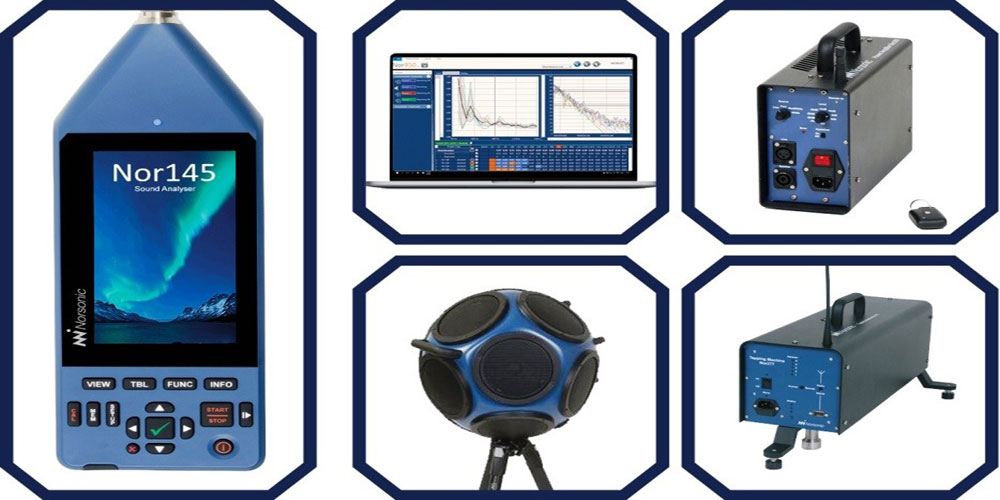
What sets us apart is that we are UKAS-accredited to carry out both Air and Sound Testing in accordance with Building Regulations and industry standards. Because our engineers are multi-skilled and fully accredited, we can perform Air, Sound, and Ventilation Testing during the same visit. This combined approach saves our clients time and money while improving on-site coordination. Unlike many providers, all of our testing is carried out by our own in-house engineers, we never subcontract our work.
Why Air Tightness Testing Is Required
Air tightness testing became a legal requirement in 2006 in England and Wales under Building Regulations Part L, which focuses on the conservation of fuel and power. The goal is to create more energy-efficient buildings by reducing uncontrolled air leakage.
Air leakage refers to the uncontrolled movement of air through gaps, cracks, and joints in the building fabric, something most people simply recognise as draughts.
Reducing these air leakage paths helps:
- Improve energy efficiency
- Reduce carbon emissions
- Lower heating and cooling costs
- Improve indoor comfort
When energy escapes through a building’s fabric, it contributes to what is known as the Building Emission Rate (BER). To meet regulatory standards, new developments must achieve specific air leakage targets.
Typical targets include:
- Standard dwellings: around 5.0 m³/hr/m²
- Commercial buildings: often 3.0 m³/hr/m² or lower
The Impact of Poor Air Tightness
Air infiltration and exfiltration occur simultaneously in buildings. If air enters in one location, it must exit somewhere else.
Poor air tightness can lead to several problems:
1. Increased Energy Loss
Air leaking out of a building must be replaced by conditioned air that needs heating or cooling. This significantly increases energy consumption and operational costs.
2. Condensation and Moisture Issues
In winter, warm indoor air can escape into colder wall cavities where moisture condenses. This can lead to:
- Mould growth
- Rot
- Structural damage
- Poor indoor air quality
3. Indoor Comfort Problems
Draughts can make buildings uncomfortable for occupants. In extreme cases, excessive air leakage can disrupt normal building use.
For example, during one investigation we conducted smoke testing on a building where employees refused to work due to constant draughts. The building had an air leakage rate of 25 m³/hr/m². After identifying and sealing the leakage paths, the building achieved below 5 m³/hr/m², resolving the issue.
4. Pollution Ingress
Excessive air leakage can draw polluted air into buildings from nearby sources such as:
- Busy roads
- Fuel stations
- Waste areas
- Restaurants
Creating a well-sealed air barrier helps control indoor air quality and minimise pollutant entry.
Our Air Tightness Testing Process
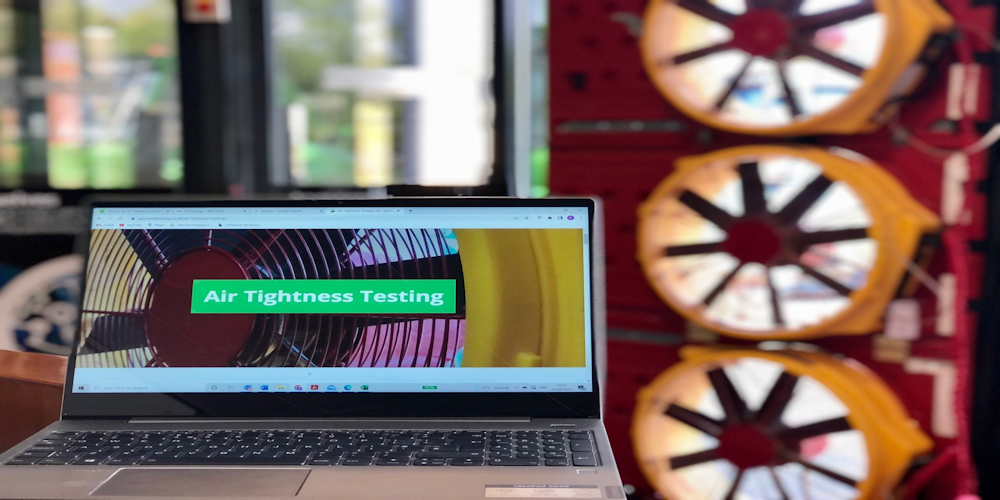
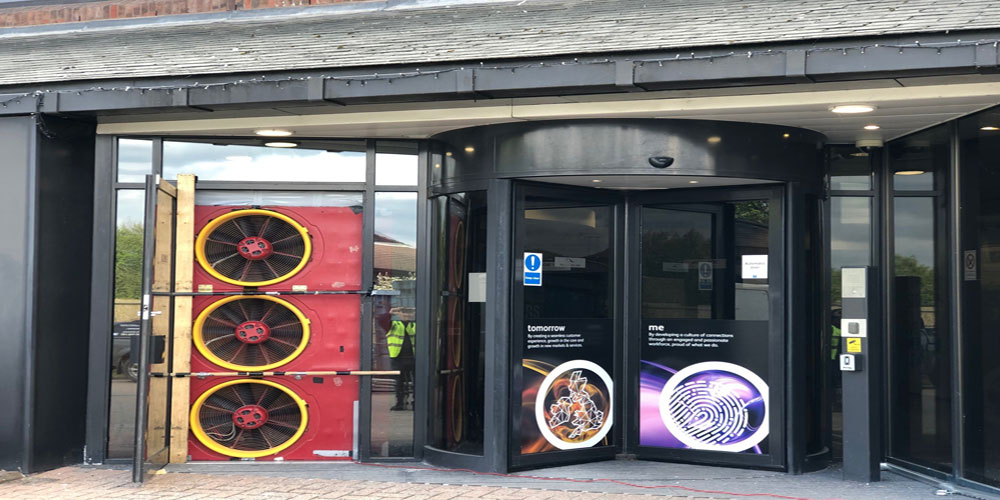
At APT Sound Testing, we use professional blower door testing equipment to measure air leakage accurately.
Step 1: Install the Blower Door System
Our fan system is mounted into a standard door opening (approximately 900mm x 2000mm) and adjusted to fit securely within the frame.
Step 2: Environmental Measurements
Before testing begins, we record environmental data including:
- Internal and external temperatures
- Barometric pressure
- Ambient conditions
Step 3: Pressure Testing
The fan system is activated and pressure readings are taken between 25 Pa and 70 Pa in 5 Pa increments. These readings allow us to measure airflow through the building envelope.
Step 4: Final Calculations
Once measurements are complete, our technicians calculate the air leakage rate at 50 Pascals (m³/h·m² @ 50Pa) based on the airflow required to maintain that pressure difference.
Step 5: Smoke Testing (Leak Detection)
The building is then pressurised to around 50 Pascals, forcing air through any gaps or leakage paths. Using smoke testing equipment, our engineers walk through the property to identify and record the exact locations of air leaks.
This diagnostic stage helps contractors quickly locate and seal problem areas.
How Long Does Testing Take?
A typical air tightness test and smoke investigation usually takes 2–3 hours per building.
However, we can remain on site for the full day if required. This allows contractors to carry out sealing works immediately, followed by re-testing if necessary.
If you plan to undertake remedial work during the test day, it is helpful to have materials such as:
- Mastic sealant
- Expanding foam
- Draught excluders
- Plasterboard
- Grip fill adhesive
- Safe access equipment
Air Tightness Consultancy and Design Support
Achieving the required air tightness target is becoming increasingly challenging as regulations continue to tighten. That is why we strongly recommend considering air leakage control during the design stage of a project.
Our consultancy services include:
- Air tightness design reviews
- Construction stage advice
- Pre-completion testing support
- Leakage investigation and reporting
By working with our clients throughout the design and construction process, we can help identify potential issues early and significantly reduce the risk of failing the final test.
Combined Air and Sound Testing Packages
Most of our clients now choose our combined pre-completion testing packages, which include:
- Air Tightness Testing
- Sound Insulation Testing
- Ventilation Testing
Because our engineers are UKAS accredited in multiple disciplines, we can complete all tests during the same site visit. This eliminates the need to coordinate multiple companies and greatly simplifies site scheduling.
Additional benefits include:
- Reduced testing costs
- Faster project completion
- Improved on-site coordination
We also offer out-of-hours testing, including weekend appointments, to minimise disruption during working hours.
Nationwide Air Tightness Testing You Can Trust
APT Sound Testing has extensive experience conducting thousands of successful air tightness tests across London and the UK. Our knowledgeable consultants provide friendly, practical advice to help your project meet regulatory requirements quickly and efficiently.
If you’re preparing for an upcoming test, we also provide a helpful air tightness checklist to ensure your building is fully prepared.
✅ Need help with air tightness testing?
Contact our team today to discuss your project requirements and receive expert guidance from our experienced air tightness consultants. Call 01525 303905 or email: info@aptsoundtesting.co.uk and we will respond as quickly as we can.