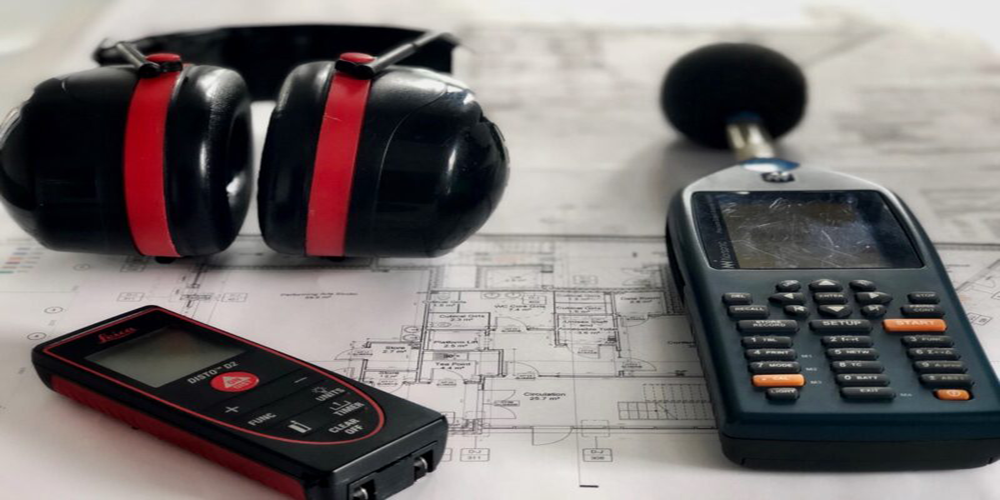
The BS8233 Noise Assessment
The BS8233 Noise Assessment: What You Need to Know
Navigating the planning process for a residential development can be confusing. With numerous permissions, regulations, and assessments to consider, it’s not always clear which are necessary, or what they actually mean.
One assessment you’re likely to encounter is the BS8233 noise assessment. This evaluation focuses on noise levels associated with your development and is often a requirement for obtaining planning permission. If you’re planning a residential project in London or elsewhere in the UK. This guide is designed to help you understand what a BS8233 noise assessment involves and why it matters.
What Is a BS8233 Noise Assessment?
A BS8233 noise assessment is based on the standard “Guidance on Sound Insulation and Noise Reduction for Buildings”. It’s designed to assess noise from external sources, such as traffic or neighbouring properties, as well as internal sources, like plant or building services. The goal is to understand the impact of noise on future occupiers and provide guidance on how to mitigate it.
The assessment outlines recommended noise levels for different scenarios, both inside and outside the building, during the day and at night. It also gives advice on sound insulation design and noise reduction strategies, applicable to both new builds and refurbishment projects.
Why Might You Need One?
Local authorities often request a BS8233 2014 noise assessment when reviewing planning applications for:
>>> New residential apartments or houses
>>> Hotels or mixed-use developments
>>> Sites near busy roads, railways, or other noisy environments
The assessment helps the council determine how much additional noise your development may generate and what measures can be implemented to reduce it.
Typically, the process involves:
>>> Measuring existing ambient noise levels
>>> Predicting noise generated by the development
>>> Considering secondary impacts, like increased traffic on nearby roads
>>> Modelling and testing potential noise mitigation solutions
BS8233 Noise Exposure Categories (NECs)
In the UK, noise planning guidance is structured around Noise Exposure Categories (NECs). These categories, determined by on-site noise measurements, guide how much noise should influence planning decisions.
>>> Noise-sensitive developments in high-noise areas are closely scrutinized
>>> Brownfield sites, often noisier than greenfield sites, require special consideration
>>> NECs inform the design of noise mitigation measures, such as enhanced glazing or ventilation
For most residential buildings, achieving the required internal noise levels depends heavily on the building envelope, particularly the glazing system. Sound insulation testing is then carried out in line with Approved Document E of the Building Regulations.
How APT Sound Testing Can Help
At APT Sound Testing, we have extensive experience carrying out BS8233 noise assessments for planning applications across all types of developments. Our team provides:
>>> ISO-compliant, UKAS-accredited surveys and sound testing
>>> Advanced noise modelling to evaluate potential mitigation options
S>>> tate-of-the-art Norsonic sound testing equipment
If you’re unsure about your project’s acoustic requirements, or if your local authority has requested a BS8233 2014 noise survey, our experts are ready to help. Call us on 01525 303905 or email info@aptsoundtesting.co.uk today.