Guide to a BS8233 Noise Impact Assessment
How to Prepare for a BS8233 Noise Impact Assessment
The accuracy of a BS8233 Noise Impact Assessment, also known as a BS8233 noise survey, depends heavily on how well you prepare the site before monitoring begins.
BS8233:2014 requires noise measurements to reflect the existing noise environment. This means the site must be in suitable condition for reliable, meaningful measurements.
Whether you are preparing for a planning application, discharging a planning condition, or assessing a proposed residential development, a little preparation can help the survey run smoothly and produce accurate results.
Below is a practical guide to preparing your site for a BS8233 noise assessment.
1. Ensure Safe and Unrestricted Access to the Monitoring Location
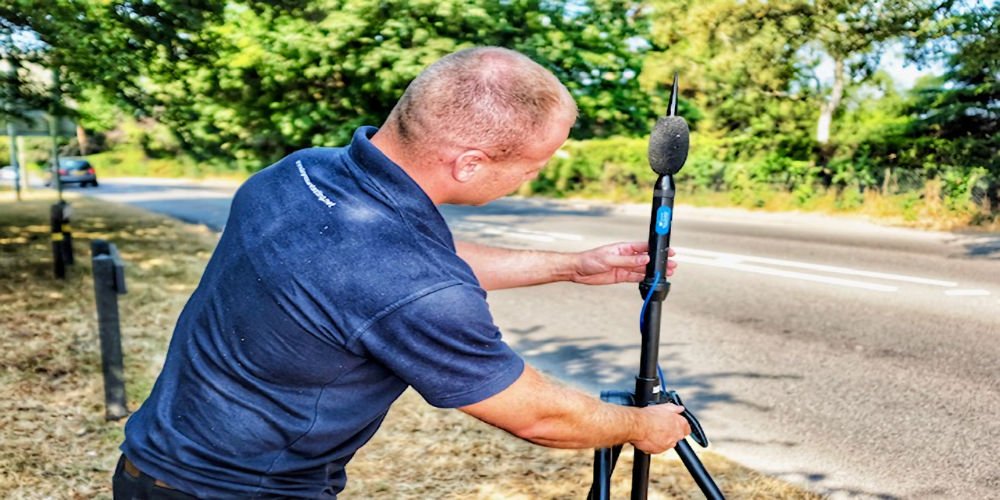
Position noise monitoring equipment in a secure, representative location. Before the survey begins, make sure the agreed monitoring position is easy to access.
You should:
- Provide clear access to the agreed monitoring location.
- Remove stored materials, vehicles or temporary structures that could obstruct the equipment.
- Ensure the area is safe, dry and free from potential hazards.
- Avoid locations where equipment could be accidentally damaged, moved or tampered with.
Provide suitable access so the acoustic consultant can position the microphone correctly and capture representative baseline noise levels.
2. Maintain Normal Site Conditions
For the results to be representative, the survey should reflect the site’s normal environmental conditions.
Where possible:
- Do not change normal site operations unless specifically instructed by the acoustic consultant.
- Avoid introducing temporary noise sources such as generators, radios or additional plant.
- Ensure unusual activities are not taking place during the monitoring period.
The objective is to measure the typical ambient noise climate, not conditions that are unusually quiet or noisy.
3. Avoid Short-Term or Artificial Noise Sources
Temporary noise sources can affect the results and may make the recorded data less representative of typical conditions.
Before monitoring begins:
- Switch off temporary plant or equipment that is not normally in use.
- Avoid scheduling deliveries or construction activities during equipment installation where possible.
- Keep windows and doors in their usual positions rather than changing them specifically for the survey.
- Inform contractors and site staff that noise monitoring is taking place.
This helps ensure that the survey data provides a realistic indication of the existing noise environment relevant to the proposed development.
4. Confirm Power Availability Where Required
Many BS8233 noise surveys use autonomous Class 1 sound level meters that can operate independently for extended periods. However, some monitoring arrangements may require a mains electricity supply.
If mains power is required, ensure that:
- A stable 240V supply is available.
- There is a safe and suitable indoor location for any powered equipment.
- The equipment does not need to rely on a generator, as generators can introduce additional noise and potential power fluctuations.
Your acoustic consultant should confirm any power requirements before the survey date.
5. Provide Accurate Site Information
Good information before the survey allows the acoustic consultant to plan the assessment effectively and select appropriate monitoring locations.
Where available, provide:
- Site layout plans.
- Proposed development drawings.
- Operating hours for commercial premises.
- Details of known noise sources, such as industrial premises, public houses, commercial premises or busy roads.
- Site access instructions.
- Contact details for the person responsible for providing access.
The more accurate the information provided, the easier it is to identify potential noise sources and determine appropriate monitoring positions and durations.
6. Keep the Monitoring Equipment Secure
If equipment is left on site for 24 hours or longer, it must remain undisturbed throughout the monitoring period.
To help protect the equipment:
- Ensure the monitoring location is secure.
- Notify relevant staff, tenants or site personnel that monitoring equipment has been installed.
- Do not move, switch off or interfere with the equipment.
- Keep vehicles, materials and other objects away from the microphone.
Moving or interfering with monitoring equipment can affect the validity and reliability of the recorded data.
7. Inform Neighbours or Occupants Where Necessary
For residential and mixed-use developments, it may be useful to inform occupants or nearby residents that noise monitoring will take place.
You can:
- Let occupants know when you will install the equipment.
- Explain that the monitoring equipment is safe and designed to operate unobtrusively.
- Ask occupants not to move or interfere with the equipment.
- Explain that the purpose of the survey is to establish the existing noise environment.
Good communication can help prevent accidental interference and ensure the equipment remains undisturbed.
8. Consider Weather Conditions
Weather conditions can affect outdoor noise measurements, particularly during heavy rain or strong winds.
Before the survey:
- Avoid installing equipment during extreme weather where possible.
- Ensure the microphone has an appropriate windscreen fitted.
- Protect equipment from direct rainfall.
- Follow your acoustic consultant’s advice if weather conditions become unsuitable.
The acoustic consultant will assess weather conditions and determine whether the measurements remain suitable for use in the assessment.
9. Allow Sufficient Monitoring Time
The required monitoring period will depend on the development, site conditions and requirements of the assessment.
For many residential developments, monitoring may include:
- 24-hour noise monitoring to establish daytime and night-time noise levels.
- Longer monitoring periods where site conditions or planning requirements make this appropriate.
- Additional night-time measurements where required by the local authority or Environmental Health.
The site must remain accessible, and the monitoring equipment must remain undisturbed for the full agreed monitoring period.
BS8233 Noise Survey Preparation Checklist
Proper site preparation helps ensure the acoustic consultant obtains accurate, representative results.
Before the survey, make sure you have:
- Provided safe and unrestricted access to the monitoring location.
- Maintained normal site conditions.
- Removed or avoided temporary noise sources where appropriate.
- Confirmed power availability if required.
- Supplied relevant drawings and site information.
- Kept the monitoring equipment secure.
- Informed occupants or site staff where necessary.
- Maintained typical environmental conditions.
- Considered weather conditions.
- Allowed sufficient time for the agreed monitoring period.
Good preparation helps the acoustic consultant obtain reliable data to assess the site’s existing noise environment in accordance with BS8233:2014.
Need a BS8233 Noise Impact Assessment?
If you need a BS8233 Noise Impact Assessment, our UKAS-accredited acoustic consultants can help.
With more than 25 years of industry experience, we provide BS8233 noise surveys across London and the South East for residential developments, planning applications and noise-related planning conditions.
Whether you are submitting a planning application, discharging a noise condition or assessing a proposed development, we can provide professional noise monitoring and clear, practical reports designed to meet local authority requirements.
Email: info@aptsoundtesting.co.uk
Call APT Sound Testing: 01525 303905
You can also download our BS8233 Noise Assessment Checklist to help prepare your site before monitoring begins.