Your Smoke Shaft & a Successful Air Test
Preparing Your Smoke Shaft for a Successful Air Test
Achieving a compliant air test for your smoke shaft is a critical step toward project sign-off, especially for systems designed for Automatic Opening Ventilation (AOV). With strict airtightness targets and challenging access conditions, careful planning and preparation are essential.
Here’s our practical roadmap to help you pass your smoke shaft air test first time.
Know Your Airtightness Target
Smoke shafts serving AOV systems are typically required to achieve an airtightness level of less than 3.8 m³/h/m² @ 50 Pa.
This is a stringent standard, particularly when you consider the relatively small envelope area of smoke shafts compared to their internal volume. Even minor gaps or incomplete sealing can result in a failed test.
Understanding your target early allows you to plan construction and sealing strategies accordingly.
Seal All Potential Leakage Paths
Smoke shafts are often constructed from a mix of materials. Each element must be carefully sealed to ensure compliance.
Concrete Casting
Concrete walls generally provide the most robust and airtight barrier.
Blockwork
High-density blocks perform well, provided mortar joints are continuous and free from gaps.
Stud Wall and Plasterboard
Particular attention is required here. Ensure:
- Full sealing between plasterboard panels
- Proper sealing at junctions with concrete elements
- No service penetrations left untreated
Penetrations and Openings
Any opening within the shaft wall must be sealed internally, including:
- Service penetrations
- AOV fans
- Louvres
- Shutters
- Floor grilles
Use appropriate sealing methods such as:
- Taping and jointing
- Fire stopping materials
- Mastic or expanding foam
All sealing should be completed from inside the smoke shaft to prevent hidden leakage paths.
Timing of the Air Test
The timing of your air test is just as important as preparation.
The test should take place when:
- The smoke shaft is fully constructed and sealed
- AOV fans and louvres/shutters are not yet installed
- All AOV doors are shut
- The top of the shaft is temporarily sealed
Testing at the correct stage avoids unnecessary retesting and programme delays.
The Smoke Shaft Air Test Method
Smoke shaft testing should be carried out by a UKAS-accredited, ATTMA-registered company using pressurisation in accordance with CIBSE TM23 methodology.
The process typically involves:
- Selecting the correctly sized blower door fan to fit within a shaft opening (ideally midway up the shaft)
- Installing the fan into a temporary board sealing one of the louvre or shutter openings
- Pressurising the shaft using a UKAS-calibrated blower door system
The test itself takes only a few minutes, although the total site time is usually around 3–4 hours.
The shaft is tested to confirm it achieves the required 3.8 m³/h/m² target.
What If the Smoke Shaft Fails?
Due to restricted access, identifying leakage paths inside a smoke shaft requires specialist techniques.
Diagnostic Methods Include:
1. Smoke Testing
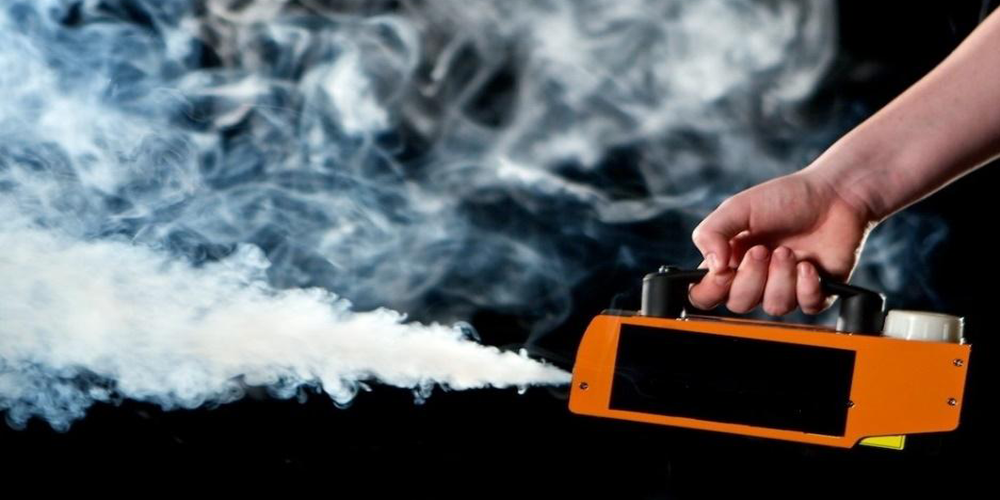
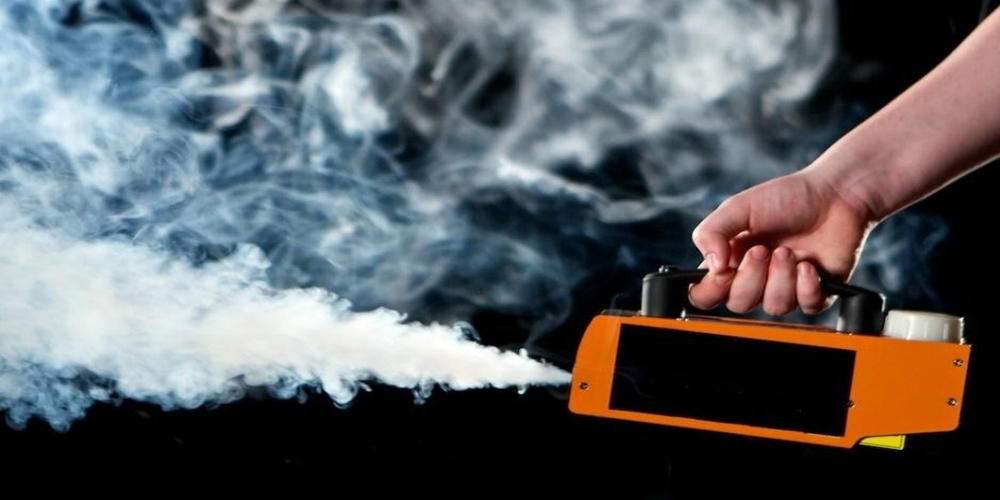
The shaft is pressurised and theatrical smoke is introduced using high-powered smoke machines. Escaping smoke highlights cracks and gaps.
2. Thermal Imaging Surveys
The shaft is heated and pressurised while thermal cameras detect areas of heat loss.
3. Multi-Level Spotters
Operatives positioned on multiple floors identify leakage points while the engineer controls the test equipment.
All findings should be documented in a formal air leakage report and reviewed with the client before leaving site.
If smoke testing is required, notify relevant parties—including the local fire brigade—and consider restricting access during and shortly after testing while smoke disperses.
How APT Can Help You Pass Your Smoke Shaft Air Test
At APT Sound Testing, our engineers have over 10 years of specialist experience in smoke shaft testing. We understand the common failure points—and more importantly, how to prevent them.
Our premium smoke shaft testing service includes:
- Pre-test smoke shaft survey visits by experienced consultants
- Testing by a UKAS-accredited, ATTMA Level 2 air testing company
- Official UKAS smoke shaft air test certification
- The latest high-powered fan equipment
- Fully UKAS-calibrated testing systems
- Diagnostic leakage surveys using smoke machines and thermal imaging
- Rapid response and testing turnaround
We provide expert design advice, consultancy, and compliance support across your entire project, delivering a professional and stress-free experience from start to finish.
For more information about our smoke shaft air testing services, contact APT Sound Testing on 01525 303905 or email info@airpressuretesting.net.