Category: Uncategorized

Sound Testing Explained

Sound Testing Explained

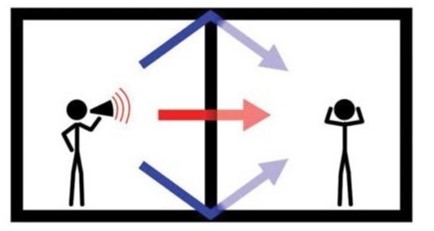
Airborne and Impact Sound is transmitted through most walls and floors by setting the entire structure into vibration. This vibration generates new sound waves of reduced intensity on the other side. The passage of sound into one room of a building from a source located in another room or outside the building is termed ”sound transmission”. 
Designing Buildings to Pass Sound Testing

Understanding Sound Testing
Sound transmission loss or Sound Reduction Index, R dB, is a measure of the effectiveness of a wall, floor, door, or another barrier in restricting the passage of sound. The sound transmission loss varies with frequency and the loss is usually greater at higher frequencies. The unit of measure of sound transmission loss is the decibel (dB). The higher the transmission loss of a wall, the better it functions as a barrier to the passage of unwanted noise across the dividing (acoustic) partitions.

Approved Document E stipulates that there are two types of sound insulation in buildings: airborne and impact. Airborne sound insulation is used when the sound produced directly into the air is insulated and it is determined by using the sound reduction index. Impact sound insulation is used for floating floors and it is determined by the sound pressure level in the adjacent room below.

A sound insulation test of a separating partition will be considered as a pass if the airborne sound insulation is equal to or greater than the DnT,w + Ctr value shown for the appropriate dwelling in the table, for airborne testing in new builds properties a figure of 45dB or greater is required and for Impact testing 62dB and below. For conversion properties a figure of 43dB or greater is required and for Impact testing 64dB and below.

What is DnT,w

DnT,w is an in-situ measured performance parameter that demonstrates the level of resistance to sound transmission between two adjacent spaces, such as flats or houses. The measurement will include both direct sound transmission and flanking sound transmission of the construction. Flanking transmission is the effect of sound travelling through the building and may be particularly evident where beams and joists bridge a common partition or along poorly isolated lightweight wall constructions.

The DnT,w of a separating wall or floor will typically be of the order 5 to 7 dB lower than the manufacturers specified Rw (single figure quantity of sound insulation) for the single element, due principally to the contribution from flanking sound transmission around the element when it is built on site – this should always be accounted for in the initial acoustic design.

What is Ctr

Ctr is the spectrum adaption term. It is a correction attributed to the sound insulation quantity to account for urban traffic noise.

What is L’nT,w

L’nT,w is an in-situ measured performance parameter that demonstrates the level of resistance to impact sound transmission between floors. The impact measurement includes both direct sound transmission and flanking sound transmission.

Weighted Sound Reduction Index Rw

When specifying the acoustic performance of an acoustic partition in a more general manner, it can be useful to describe the sound insulation by a single number. The weighted sound reduction index, Rw , is a rating method given in EN ISO 717-1. This standard fits a standard reference curve to the measured sound reduction index curve.

Within the EN ISO 717-1 standard, a rating method is also given where the Rw value is completed by two C-terms which are applied to two models of the noise spectra for various types of noise. These two terms, Rw + C and Rw + Ctr, also include the frequency range 100 – 3150 Hz but can be extended to 50 – 5000 Hz. As industrial and traffic noise often have high sound levels which are also below 100 Hz, it is recommended that the extended frequency area is used.

The summary value, Rw + C, gives the reduction value in dBA for a spectrum with a level that is equally high in all third-octave bands. This can be used for:

•             Highway road traffic travelling at speeds in excess of 80 km/h

•             Factories emitting mainly medium and high-frequency noise

•             Living activities (talking, music, radio, TV)

•             Railway traffic at medium and high speed

•             Jet aircraft at a short distance

The summary value Rw + Ctr also gives the reduction value in dBA, spectrum with low-frequency dominance such as:

•             Disco music

•             Urban road traffic

•             Railway traffic at low speeds

•             Factories emitting mainly low and medium-frequency noise

Both the impact and airborne insulation performance of floors and walls should be carefully considered from the start of the project to ensure that the minimum performance requirements for new and converted developments are met in line with Approved Document E

If you would like more information in regard to our sound testing and/or noise survey services, please contact us now at info@aptsoundtesting.co.uk or call 01525 303 905 today.
Sound Insulation on Conversion Projects

Sound Insulation on Conversion Projects

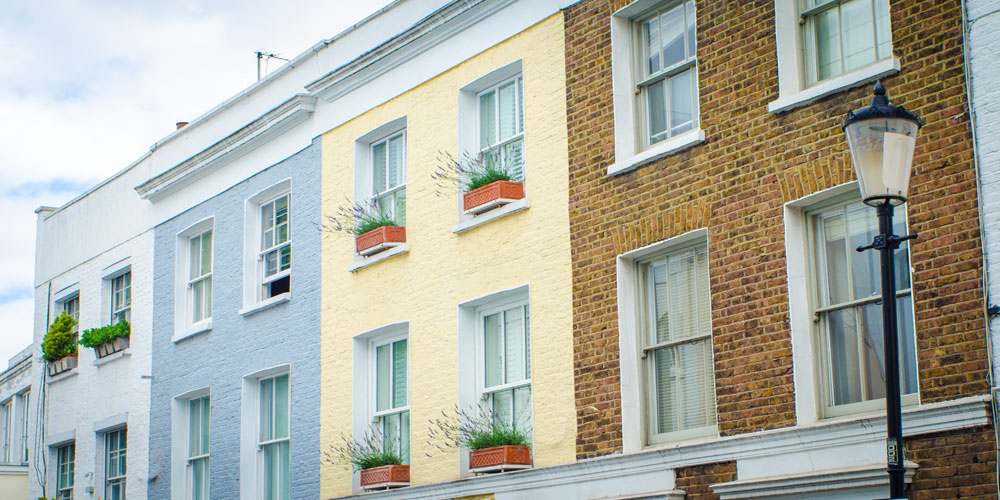
Many of the dwellings in London and other UK Cities consist of flats that have been converted from large Victorian or Georgian houses, or more recently office blocks. Unfortunately designing for sound insulation is not always shown the highest priority so many converted dwellings suffer from adverse noise transference between the floor and wall partitions. This can be extremely stressful to the occupant’s well-being is a major cause for concern.

APT Sound Testing have helped many of our clients achieve compliance with Part E, by undertaking some simple steps. We can undertake an initial sample sound test of the existing wall and floor construction to ascertain the existing sound insulation levels. Once we have established the sound levels for the existing construction, we can then look at the extent of the acoustic upgrades to attain Part E Compliance. This is much more effective than just forwarding an acoustic design that may be to excessive and expensive, especially if the existing floor and/or wall only needs to improve by a minimal amount such as 1-3dB. By having the existing sound levels of the partitions we can recommend targeted, acoustic upgrades to comply with Building Regulations Part E. 

The sound insulation levels required to pass Part E for refurbishment projects are less stringent than new build projects. Instead of 45dB for airborne its 43dB (2 dB less), and for instead of 62dB for Impact Sound Testing its 64dB on new build (2 dB more).

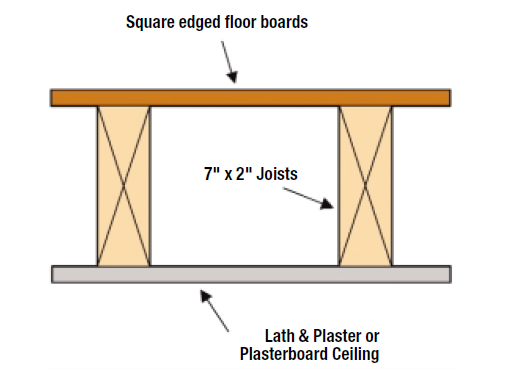
In our experience, refurbishment projects usually achieve 30-35dB for airborne sound and 70dB for Impact Sound during the sample sound test – if the existing construction has not been acoustically upgraded. These figures do not meet the required 43dB & 64dB as stipulated in Part E of Building Regulations. As sound double every 10dB this is a massive failure and major acoustic improvements must be made. Many existing constructions consists of similar construction as shown in as detail 1 below.

Detail 1: Existing Floor Partitions Rated At Approx. 30dB

Improving Sound Insulation

Improving Wall and Floor Partitions

There are ways you can improve the airborne and impact performance by improving the wall/floor partition’s ability to reduce the amount of sound transmission from one side of a construction element to the other. However; by isolating the different materials may not be enough its own and you may need to improve the mass of the partition as well.

Existing Floor Partitions

In our experience, refurbishment projects usually achieve 30-35dB for airborne sound and 70dB for Impact Sound, if the existing construction has not been acoustically upgraded. These figures do not meet the required 43dB & 64dB as stipulated in Part E of Building Regulations. As sound double every 10dB this is a massive failure and acoustic improvements must be made.

Improving Existing Floor Partitions

To reduce airborne and impact sound transmission usually means adding density and isolation to the floor construction. This can be as simple as adding a drop ceiling consisting of 125mm timber frame. The top of the frame must be a minimum of 25mm below the existing ceiling finish – such as lathe and plaster. Then, to the inside of the timber frame add 100mm of Acoustic Wool and two layers of sound-board tacked to the bottom of the timber frame – all boards to be lapped. This should improve your sound test results by approx. 10-15dB depending on the existing site conditions and quality of the installation.

Existing Wall Partitions

The standard onsite construction for existing internal walls may be a mixture of 100mm masonry with render applied to either side; or, 100mm timber partition with lathe and plaster to either side. Unfortunately, neither of these existing wall constructions will usually have the acoustic properties to pass Part E in their existing state due to lack of mass and poor isolation values. 

Improving Wall Partitions

One quick and simple way to improve the acoustic performance of the dividing wall partition is to install a 70mm met-sec partition in front of the existing wall – it’s usually best to install this in the largest room backing onto the dividing partition. Leave approx. 25mm gap between the back of the met-sec and the wall. Then install 50mm acoustic wool to the inside of the met-sec and add two layers of the soundboard to the outside of the met-sec frame, ensuring all boards are properly lapped and the perimeter joints are filled with acoustic mastic.

Taking the above into account is it essential that good acoustic design is addressed right from the start of the refurbishment project, so it prevents delays in handover, i.e. to prevent the dwelling failing the sound testing at building control signoff stage.– a common problem.

If you would like advice on your acoustic design or require sound insulation testing in London, please contact us now on 01525 303 905 or contact us at info@aptsoundtesting.co.uk.

Airborne & Impact Sound Testing in London

Airborne & Impact Sound Testing in London

Sound Testing usually needs to be carried out between pairs of rooms separated by party walls and/or floors. Most sound tests are carried out between living rooms and bedrooms as these are classed as the two main habitable rooms; however, other rooms can be used if this is not possible such as studies, kitchens, and dining rooms.

Our Sound insulation testing procedure is fairly simple and straightforward. Essentially, for party walls there is only one type of sound insulation test which is the airborne sound test; however, for party floors, there is a requirement for two types of sound insulation testing – airborne & impact sound testing. Here is a brief description of each type:

Airborne Sound Testing in London

Airborne Sound Testing is carried out by means of a loudspeaker emitting a steady source of noise on one side of the partition (wall or floor) to be measured. The corresponding sound level is measured on the other side of the partition. Impact sound insulation tests are carried out by means of a tapping machine placed on the floor sample to be measured and the noise measured in the room or space below. Calculations are done based on these measurements and the above-mentioned parameters are calculated and compared to the Building Regulations Part E sound insulation requirements for the given type of building. It is important that the building to be sound tested is completely finished and sealed with no sound leakage through doors and windows.  Please see our checklist for sound testing for more information.

Sound Testing in London

Sound Testing in London
Airborne sound insulation testing is undertaken on walls & floors. Firstly a controlled noise is generated by an amplifier and loudspeaker across a broad range of frequencies. The generated noise is very loud and is often in excess of 100dB. Initial measurements are taken using a class 1 sound level meter within the ‘source room’ followed by further measurements in the ‘receiver room’ on the other side of the wall or floor under investigation. The source room speaker position is then changed and the measurements are repeated on either side of the partition under test. Thereafter background noise measurements are made using a class 1 sound level meter in the receiving room and are used to apply appropriate corrections for external sounds such as traffic noise. Similarly, the reverberation time (the time taken for sound to decay by 60dB) is measured within the receiving room using the sound source and a sound level meter to determine the corrections that must be applied to account for the characteristics and absorptiveness of the room. The difference in the two airborne noise levels (for walls and floors), corrected for background and reverberation characteristics determines the airborne sound insulation performance of the wall or floor. A greater airborne noise difference between the source room and the receiver room determines a higher airborne sound insulation performance.

The time taken to undertake sound testing varies from project to project as no site is exactly the same. Taking into account standard site conditions a set of tests on houses -two airborne walls will take one to two hours. A six-pack of tests on flats – 2 airborne wall tests will usually take between one and two hours, although this is dependent on our engineers having full free uninterrupted access between all the units/rooms under investigation.

Impact Sound Testing in London

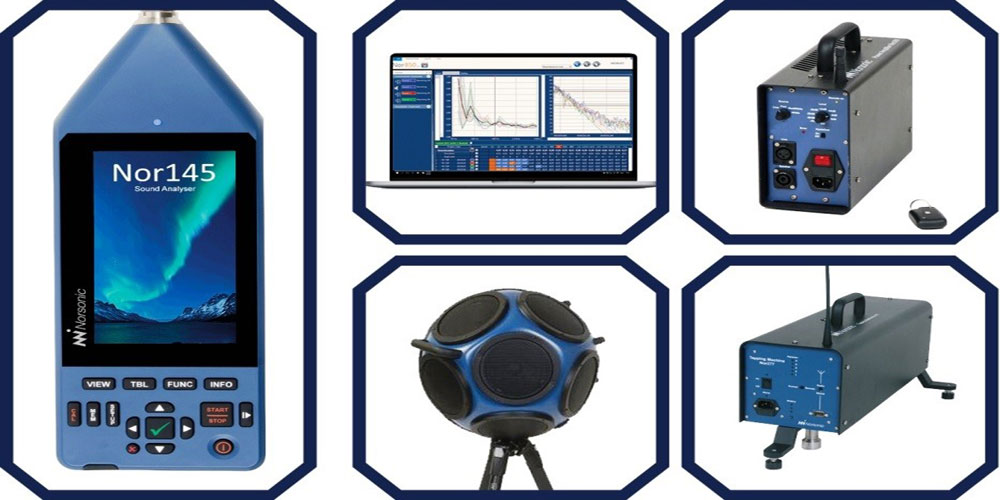
Impact sound testing is undertaken on floors only. This test is different; a calibrated Norsonic ‘tapping machine’ which comprises five ‘hammers’ driven up and down by a cam and electric motor is used to “tap” the floor surface by applying a known force on the floor structure. The machine is placed in several pre-determined positions. The resulting noise is measured in the dwelling below, using a sound level meter. Thereafter, background noise measurements are made using a class 1 sound level meter in the receiving room and are used to apply appropriate corrections for external sounds such as traffic noise. Similarly, the reverberation time (the time taken for sound to decay by 60dB) is measured within the receiving room using the sound source and a sound level meter to determine the corrections that must be applied to allow for the characteristics and absorptiveness of the room.

The time undertaken to test each project varies from project to project as no building/development is exactly the same. Taking into account standard site conditions a set of tests on houses that consist of two airborne walls will take approx. 1-2 hours. A six-pack of tests on flats consisting of 2 airborne walls, 2 airborne floors, and 2 impact floor tests will usually take approx. 2-3 hours, although this is dependent on our engineers having full free uninterrupted access between all the units/rooms under investigation.

If you require sound testing, and/or acoustic design advice then please contact us now at info@aptsoundtesting.co.uk or direct on 01525 303 905 or visit our website at www.aptsoundtesting.co.uk

Compliance with Leasehold Agreement via Sound Testing

Compliance with Leasehold Agreement via Sound Testing

Clients often get in touch with us when they have run into trouble whilst undertaking refurbishments to their London apartments. In many cases, they have a lease agreement to the commencement of works and sound testing upon completion of the works. However many people don’t abide by the lease agreement as they may not know about the condition.

Thereafter, once the works are complete they may often receive complaints from neighbours that they can hear extra noise; this is often because they have changed their floor finish from carpet to wood. Unless extra acoustic design consideration is undertaken to try and negate the extra noise resulting from the change of floor finish, it may result in extra airborne and impact noise being heard in the unit below.

Sound Testing in London

APT Sound Testing Compliance with Leasehold Agreement
Usually, the lease agreements contain something similar to the following conditions ‘If the tenant wants to change the floor construction within his dwelling he shall:

• Commission an independent acoustic consultant to carry out a pre-installation test, design the new acoustic installation and carry out a post-installation test and provide the results to the landlord’s surveyors for approval; and

• Invite the Landlord’s surveyor to inspect the acoustic insulation before it is concealed; and

• Accept that the Landlord, whilst granting this Licence, does not accept any responsibility for the design or performance of the insulation provided and that if any issues arise, the Tenant will address these immediately.

In the event of a reasonable complaint being upheld by the Landlord or his agent concerning noise affecting other Tenants within The Building, the Tenant will arrange for carpeting (the provision of which shall be determined by the Landlord) to be positioned and maintained at the Tenant’s sole cost.

To try and cater to the above requirements we offer an acoustic package comprising of the following:

  1. Sample Sound Testing of the existing construction. This offers an accurate overview of the acoustic performance of the existing floor partition/s prior to the commencement of construction works. It also enables us to offer a targeted acoustic design using the sound insulation performance of the existing construction.
  2. Acoustic design review – once we have the performance figures from the sample sound testing have been established, we can forward a design that should improve the performance of the existing floor partition – even if you are changing the floor finish from carpet (soft finish) to engineered timber floor (Hard finish)
  3. Site Visit – This allows us to check that the installation team is installing the acoustic materials as per the manufacturer’s guidelines.
  4. Pre-completion Sound Testing in-line with Approved Document E. This provides an accurate overview of the acoustic performance of the upgraded partition/s, the results of which can be handed over to the relevant person for sign-off.

In our experience the usual noise problems range from airborne noise transmission from voices TVs and music to footfall impact noise caused by high heels on wooden/tiled floors – it is usually the impact noise that is picked up by the residents below as its impact sound that usually increases if the floor finish has been changed from carpet to wood.

Even if the floor assembly has been designed and constructed to provide adequate airborne isolation, impact noise can still be a major problem. If the finished floor surface had previously been carpeted, the carpeting and underlay will normally provide a good degree of impact sound isolation. On the other hand, when the finished floor is floor is constructed in hardwood, stone or ceramic tile. Achieving good impact sound isolation requires much more attention.

If you think you may have a problem with sound in your dwelling and/or you have encountered complaints from a neighbour due to modifications you have made to your floor, then please contact us now. Always try to describe the problem in as much detail as possible.

Describe the nature of the sounds, and when and where you or your neighbour can hear it. Is it impact noise or airborne noise or a combination of both? The more information you can provide us, the quicker we can try to determine the nature of the problem and subsequently find a solution.

In many cases, due to varying constructions, there may be varying noise problems; however, if we are employed from the beginning of a project it usually results in our clients complying fully with Building Regulations Part E and /or compliance with their leasehold agreements, which in turn may avert costly legal battles at the end of the project.

If you are about to make changes to your apartment, and you think you require acoustic design advice, then please contact us now via the APT Sound Testing website, or phone me directly at 01525 303 905.

Improving Acoustics in Dwellings

Improving Acoustics in Dwellings

When designing a new project containing multiple dwellings, why go further than just meeting the basic regulations. For instance, if you only manage to achieve the minimum requirements for compliance with Building Regulations Part E for sound testing, then the chance of noise complaints will usually be higher than if you better it by 5-7dB.  

We provide full turnkey solution to help our clients achieve Building Regulations Part E compliance.

Improving Acoustics
The World Health Organisation defines noise as ‘unwanted sound’ and such noise in buildings can have significant effects on the people (residents) who occupy them. If a person is subjected to excess noise for long periods, it can result in physical discomfort or mental distress and in many cases noise complaints. The WHO estimates that around 50% of the population of the European Union live in areas are exposed to noise levels that do not ensure acoustic comfort to their inhabitants and more than 30% are exposed to noise levels at night which is at a level disturbing to sleep this is simply not good enough.

Within homes, a noisy neighbour can be one of the main problems experienced in attached housing. It’s estimated that up to 4 million people in Britain have had their lives disturbed by noisy neighbours.

The best way to combat excess noise is to ensure that proper precautions are taken at the design stage of the project and thereafter during construction of the building. Noise transmission levels should be compatible with the building’s usage with the correct acoustic climate provided in each space.

The UK has the building regulations and a number of sector specific guidance documents covering noise, these are:

  • Approved Document E
  • Building Bulletin 93
  • Health Technical Memorandum 08-01
  • BS8233
  • BS4142

There are strong arguments for considering solutions which go above and beyond just meeting the minimum requirements in the above regulations. For instance using acoustic ceiling products and partition systems it is possible to create environments that offer greater acoustic comfort for occupants go above and beyond the standard Building Regulations requirements, which should have a positive impact on health, well-being and productivity.

The two main areas to take into consideration are usually the dividing wall and floor partitions. If you are unsure of how to build the separating wall and floor partitions and associated junctions across your project don’t panic, we can offer an acoustic design service. The degree of guidance you require can vary from site to site; however, we can cater for every eventuality by offering sample sound testing to establish the sound insulation performance of your existing wall and floors. Thereafter we can undertake more targeted design review using the information at hand.

When your project is underway, we can visit site and check the construction is being constructed as designed. Even minor alterations can have a significant impact on the effectiveness of your sound insulation measures.

If you have a new project and you need help with your improving acoustics or sound testing then please email us at: info@aptsoundtesting.co.uk  or call us on 01525 303905. If you want more information on our full range of services please visit our website at: www.aptsoundtesting.co.uk

If you would like to download more information on how to prepare for your sound testing, please click download our sound testing checklist.

Why Have I Failed my Sound Insulation Test?

Why Have I Failed my Sound Insulation Test?

This is one of the most common questions we get asked by clients when their property has failed the sound insulation test. One of the main reasons for acoustic partitions failing the Part E sound test is often down to poor isolation of material/s, which can lead to excessive noise flanking. Noise Flanking is a term used by acoustic engineers to describe where sound passes through an acoustic partition due to the abutment of materials.

The noise simply hits the one side of the wall and then travels through the construction via a noise bridge. This can be areas such as the incorrect use of masonry wall ties i.e. solid fishtail ties, used in place of specified acoustic wall ties.

Sound Insulation Test

Sound Insulation Testing
Unwanted noise travelling along flanking paths can make the building structure vibrate, which can cause sound to radiate into your room. One simple cost effective solution is to build another wall or ceiling in front of the original, to offer extra isolation. For this upgrade to work you need to make sure that the independent wall or ceiling is not directly connected to the existing failed partition; so it provides isolation between materials.

Another reason for excessive noise flanking is often down to the use of down to the use of lightweight blocks in the construction of the building envelope. Due to the lightweight mas of the inner wall it allows sound to transmit from dwelling to another, both vertically and horizontally. If a building has failed its sound testing, it is essential to establish if the problem is due to direct transmission, flanking transmission or a combination of both so that the most cost and time effective remedial treatment can be designed and applied to the failed partitions. 

One of the easiest ways to reduce the chance of sound testing failures due to excessive noise flanking transmission is through a careful consideration to the acoustic design at the start of the project.  Unfortunately, by simply specifying high performance wall and floor partitions, it is no guarantee to adequate sound isolation and successful sound testing.

We offer preconstruction design advice to help you achieve successful sound testing in-line with Building Regulations Part E. We also offer onsite inspection services to ensure that the sound insulation elements are being installed as per manufactures guild-lines, as it’s no use having good acoustic design if it not being installed properly on site.

During early design and construction process, we visit site to conduct a comprehensive acoustic design survey and review, we also take this opportunity to meet; where possible, the site/project manager, architects etc.

The first stage of the acoustic design is to send through the design drawings – to include sections etc. We then review the design to check that the construction details proposed are capable of passing the sound tests. This usually takes place straight after planning has been approved as increased cost savings can be realised at the earliest stage, we will evaluate the construction methods and materials specified to ensure that they are capable of meeting the acoustic requirements of Approved document E.

The typical areas we check are:

a.            There are no flanking points, where isolated partitions are wrongly mechanically fixed together to caused noise bridging.

b.            The walls and floors design are acoustically robust, to comply with Building Regulations Part E.

c.             The acoustic treatments for Soil Pipes, Stair Cases Steel Beams etc. to ensure they are acoustically fit for purpose, as these are some of the areas that get usually missed.

d.            Acoustic floor treatments are compatible with the proposed floor finishes i.e. Carpets, Laminates, Floor Tiles and under floor heating systems.

We also provide on-going design support service, so you will have direct contact with the allocated acoustician from the start of the process through to the successful completion of the project. One of the most important services is the going site survey visits which allow our clients to feel confident about the outcome of testing at the end of the build.

The site visits let us check that the installation teams are installing the acoustic materials as per manufacturers avoiding crucial onsite mistakes. You can often have a compliant design which still fails due to poor workmanship; the site survey visits negate the risk of sound test failure.

We also offer an acoustic advice service for clients that have failed their sound testing. We offer simple solutions to reduce the noise levels and achieve compliance with Part E. We can supply simple easy to follow acoustic design reviews, utilising our extensive knowledge of different materials and construction methods

If you require more information about acoustic design and/or sound testing on your project, please visit the APT Sound Testing website or call direct on 01525 303 905.

Sound Testing to Minimise Noise Transference

Sound Testing to Minimise Noise Transference

Sound Testing to Minimise Noise Transference
There are many different types of intrusive sounds that can penetrate through external walls, party walls and separating floors. And these are a major concern for the inhabitants and users of both residential and commercial buildings.

In many existing buildings, where noise is a problem, any noise reduction is welcomed, giving comfort and relief by improving the quality of the living space. In residential building conversions, alterations must be designed to minimise the risk of disturbance from external noise sources from both neighbouring properties or from outside noise sources via the building façade.

Defining Noise

There are many ways to define noise; usually it’s any unwanted, unpleasant or unexpected loud sound’. Most people will be disturbed by any unexpected loud noise, but many are able to become accustomed and de-sensitised to constant background noises as long as these do not vary in pitch or become too loud or intense. A couple of examples of this are:  residents living under an airport flight-path or adjacent to a railway line.

Noise usually originates from outside the building envelope, via sound sources such as  traffic, horns, alarms and sirens, however noise can also be generated from within buildings via household activities such as televisions, radios and washing machines or badly maintained mechanical plant. Equipment such as old central heating boilers and air conditioning units, can generate significant whine and hum acoustics which can be very upsetting to certain ‘sensitive’ people and can greatly affect the person/s wellbeing. The preferred background (ambient) noise level in dwellings is 35dB. This is very often reduced to 30dB for sleeping areas as this is seen as the most sensitive area within a dwelling.

The subsequent noise intensity is measured in decibel (dB) units and uses a logarithmic scale. A 10dB increase in noise is normally perceived as a ‘doubling’ in loudness. The table below gives the typical decibel level of some example sound sources.

SOUND LEVEL (dB)DESCRIPTIONSOURCE EXAMPLE
10
20
40-50
50-60
70
80
Very faint
Quiet
Normal
Noisy
Loud
Very loud
Normal breathing
Whisper at 1.0 metre
Light traffic at 50 metres
Loud speech
Busy street, pub or restaurant
Vacuum cleaner or hairdryer

Improving Sound Insulation

In order to consider the options for tackling noise problems, it is necessary to have a basic understanding of sound behaviour and acoustic design.

In most instances the weakest acoustic area of the external walls will be window units. In existing buildings these are often Sash units and many councils do want them replaced as they are one of the most important features within the external façade of existing buildings.

As a result many councils/local authorities will not let you remove and replace original window units unless the frames are rotten and beyond reasonable repair, however despite this decent acoustic improvements can still be made by installing a draught-proofing strip to the opening lights, and by providing an acoustic caulk seal around the window frame. If it’s extremely noise secondary glazing units can be installed along with demountable shutters. One of the simplest improvements can be made via the installation of good quality heavy curtains fixed close to the wall; this can also be one of the most attractive upgrades and can also help keep heat within the home – a double winner!

If the building is being subdivided into new apartments then the walls between apartments will need to be sound tested in-line with Part E for Converted Dwellings. In this instance we can undertake sample sound testing on walls and floors to check the existing sound insulation performance.  We have considerable experience in all matters related to architectural acoustic design and detailing. We can help develop the initial acoustic design from the initial design scheme stage right through to the pre-completion sound testing. Our approach is robust and does not leave any room for errors using our In-depth knowledge of acoustic materials, construction systems and Regulations we can provide the following:

  1. Sample sound testing to identify the acoustic performance of the existing building to allow for targeted acoustic upgrades.
  2. Acoustic testing of existing wall façades to ISO 140-5, to check the existing sound levels so new targeted wall upgrades can be specified.
  3. Provision of cost-effective and practical acoustic solutions
  4. Thorough understanding of the desired character of the space
  5. Specification of External Building Fabric and including walls, doors and windows in order to minimise noise break-in, or break-out for privacy and overall acoustic quality

If you would like more information in regards to acoustic design or sound testing on your project, please contact us now at: info@aptsoundtesting.co.uk or call us direct on 01525 303 905.

Designing Buildings to Pass Sound Testing

Designing Buildings to Pass Sound Testing

Designing Buildings to Pass Sound Testing
From the very start of the design phase of a new building, it’s extremely important that careful consideration is given to the acoustic element the building.

By getting us involved at the start of the design process we can undertake a comprehensive acoustic design reviews and on-going site surveys. We always advocate meeting with the design team at the earliest opportunity to go through all acoustic elements for the building’s design, taking into account the site constraints and the most cost effective method of achieving Part E of Building Regulations. We try to forward of any possible ‘onsite’ construction problems and difficulties in achieving successful acoustic construction and subsequently the sound testing for Part E.

Designing Buildings to Pass Sound Testing

Completing the Acoustic Design Review
Once we have completed the acoustic design review our services don’t finish there. We provide the site team with on-going design support and site visits. You will have direct contact with the allocated acoustician from the start of the process through to the successful completion of the project.

Once the first phase of the building is completed, we can undertake sample sound testing to ensure the acoustic design and onsite construction methods are sufficient to pass Part E sound testing.

When it comes to refurbishment projects i.e. house converted into flats and/or an office block into flats we can undertake a sample test of the existing wall and floor construction. Once we have established the sound levels for the existing construction we can then look at extent of the acoustic upgrades to attain Part E Complaisance. This is much more effective than just forwarding an acoustic design that may be to excessive and expensive when the existing construction is already ‘acoustically’ robust and therefore only needs to improve by a few dB.

One problem we often encounter (without our design input) is that the building marginally fails during the sound test. The potential problem that is often overlooked is that many types of acoustic design/materials have attained an acoustic rating within a laboratory. It is very difficult and extremely unlikely that the sound levels achieved on a construction site will be as good as in the confines of a stringent laboratory environment.

When the construction assembly is tested in the lab, it is also certified and an exact description of the materials and the installation techniques are described in detail and followed to the letter, obviously this should be replicated on the your site as closely as possible, however this seldom happens. This is one of the reasons why a 5dB point difference is allowed between the construction design on paper and the actual on site construction performance. When you consider that sound doubles every 10dB, then 5dB can make a huge difference to the overall performance of the dividing partition under test. If consideration is not allowed for during the design process then there will be a greater chance of a sound test failure on your project. 

Another potential problematic area of sound transference and potential sound test failures is down to flanking sound. Noise flanking is when travels along a continuous path due to insufficient isolation/break within the building wall & floor elements. One of the most common flanking paths is along the inner leaf of an external cavity wall. This may be due to lightweight block construction resulting insufficient mass to prevent noise transference.  

Unwanted noise travelling along flanking paths makes the building structure vibrate and this causes the sound to radiate into your room. One solution is to build another wall or ceiling in front of the original, but not connected to it (often called an independent wall or ceiling). APT can help to locate the flanking sound and propose a cost effective design that will pass the sound testing and satisfy Part E of Building Regulations.

For the smaller projects, we undertake a more simplified acoustic design service consisting of a review of the design drawings, such as to floor plans and sections. This usually takes place straight after planning has been approved as increased cost savings can be realised at the earliest stage. We can also undertake sample sound testing if the client is not sure of the existing onsite construction.

We can then evaluate the building design to ensure that it the walls and floors are capable of meeting the acoustic requirements of Approved document E.

Some of the main areas we consider are:

•             There are no potential flanking points, where isolated partitions are wrongly mechanically fixed together to caused noise bridging or the wrong materials have been specified such as lightweight blocks etc.

•             The acoustic treatments for Soil Pipes, Stair Cases Steel Beams etc. to ensure they are acoustically fit for purpose, as these are some of the many areas that get missed.

•             Acoustic floor treatments are compatible with the proposed floor finishes i.e. Carpets, Laminates, Floor Tiles and under floor heating systems.

•             The Lighting specification to, ensure they are acoustically complaint to the overall design i.e. down lighter design etc.

If you would like more information in regards to sound testing please follow our blog at: http://soundtestinguk.blogspot.co.uk or contact us on 01525 303 905 or visit the APT Sound Testing website.

Sound Insulation Testing for Part E

Sound Insulation Testing for Part E

Sound Insulation Testing for Part E – Common Questions & Answers
Over the last couple of years APT have collated and answered the most common asked questions in regards to sound insulation testing.


What is Sound Testing for Part E of Building Regulations?
Sound insulation is the property of a wall and /or dividing partition to resist the passage of noise. The sound Insulation testing is a method of quantifying the sound insulation performance of walls and/or floors. Sound Insulation testing can be carried out on party walls, party floors or facades of any building.

How many sound tests should I need on my Project?
Approved Document E states that one set of sound tests is required for every 10 units in a group or sub-group. A group or sub-group is defined where significant differences in construction or layout occur, for instance:

• For a pair of semi-detached Houses – a set of tests would usually comprise two airborne sound insulation tests of a separating wall.
• For Flats (up to 10 units) – a six pack would normally be required, this comprises of: two airborne wall tests, two airborne floor tests and two impact floor sound tests. The easiest way to work out the number of tests required is to multiply 1 x 6 packs for every 10 flats, i.e. if you have 22 flats you will require 3 x 6 packs which equals 18 sound tests in total
• For Rooms for Residential Purposes (student accommodation, hotel rooms, care homes etc.) – a set of tests would usually comprise: one airborne sound insulation tests of a separating wall; one airborne sound insulation test of a separating floor; one impact sound transmission test of a separating floor.
How are plots selected for sound testing?

APT will usually specify the amount of sound insulation tests that are required. We first look at the floor plans then work out a testing schedule taking into account testing through the projects ‘habitable rooms’ i.e. lounges & bedrooms where possible.

We will also try and undertake testing across walls and floors in different areas of the building and through different partition types i.e. if one wall is made of masonry and the other met-sec partitioning. When we have specified the sound testing schedule it should always be checked by building control and/or the client to seek their approval before the commencement of sound testing.

How do I Prepare my Site for Sound Insulation Testing?
APT always send out a checklist with our fee proposals to help you prepare for the sound testing, as we always want our clients to be fully prepared so they can pass their sound testing at the first attempt.

How long will the sound testing take?
The time taken to undertake the sound testing varies with site conditions, but generally a ‘6 pack’ set of tests on houses and flats takes about one to two hours. Obviously this depends on the site being fully prepared in line with our sound testing checklist.

Will the sound insulation testing disrupt work on site?
Relatively quiet conditions are needed to take accurate measurements. This means that anyone working in the testing area will have to leave temporarily and any noisy works in the vicinity of the test rooms will need to be halted i.e. using power tools or loud hammering etc.

How do I know if I’m ready for a sound insulation test?
We send out a checklist with all quotations to allow our clients to check they are ready for the sound testing. Basically the plots should be at least at second fix stage – for further details please refer to our checklist.

What if I only have 110V and not 240V on site?
Unfortunately we cannot undertake the testing; we will need 240V to undertake the sound testing.

Should I inform my neighbours of the impending sound testing?
If the building is attached in any way to occupied properties then you will need to inform the neighbours. We need to gain access to the neighbouring properties to undertake the sound test as we test the wall partition. You will also need to ensure that access is provided to the neighbouring properties throughout the sound testing.

Can you offer acoustic advice to help me to pass my sound testing?
APT offer an acoustic design service to help you design your buildings partitions to pass Part E sound testing. If you send through the relevant drawings such as sections and floor plans during the design stages of the project, we can check the design to see if there are any junctions or details where ‘noise flanking’ may occur, we can then advise if any changes are required to lower the chance of sound test failures.

Rest Assured. We believe in working with our clients on all types of projects from small end of terrace developments up to large blocks of flats. We believe that by being involved at the beginning of a project we can often save our clients expensive and difficult remedial works at the completion stage of a project.

If you would like more information on our full range of our acoustic services please contact us now at info@aptsoundtesting.co.uk or call us on 01525 303905.

Precompletion Sound Testing for Part E

Precompletion Sound Testing for Part E

Precompletion Sound Testing for Part E
Over the last decade the APT team has provided thousands of sound insulation tests across London and the Southeast, and using this amassed knowledge of how different construction types effects the acoustic performance of party walls and floors, we have managed to help customers such as architects, developers and homeowners to pass their sound insulation testing at the first attempt.  

Many people fail to achieve the minimum requirements of Building Regulations Part E, due to poor-design and construction. Good acoustic design is not difficult to achieve if the following four elements are considered during the design phase of the project. The four main elements are: Mass, Decoupling, Absorption and Damping – consider these from the beginning of your design and you will usually pass the sound test for Building Regulations Part E.

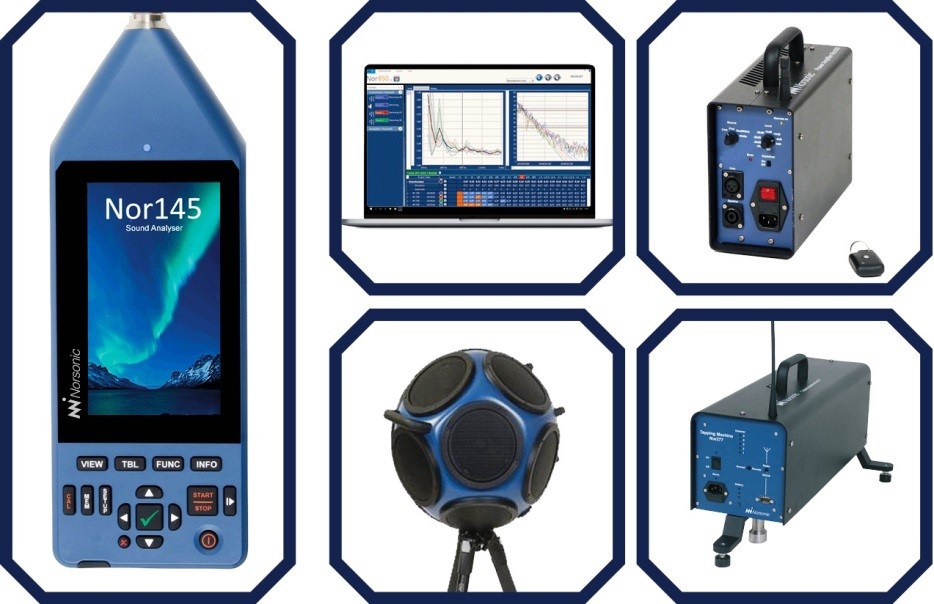
Acoustic Design and sound insulation test equipment used for Part E.

The usual culprits for excess noise are often televisions, music systems, and voices. Heightened airborne sound wave can strikes walls and floors, and the pressure variations cause the wall to vibrate resulting in noise. This noise (vibrational energy) is transferred through the wall and floor partitions, which is radiated as airborne sound into neighbouring dwellings.

The 4 elements of robust soundproof design to pass party wall sound testing

There are 4 main elements of soundproofing that need to be considered to pass sound testing through walls. It’s worth noting that all 4 elements throughout the process, all of which have a direct relation to the conduction and transmission of sound vibrations, they are: Mass, Decoupling, Absorption and Damping. If you incorporate all the four elements into your party wall design, then airborne sound transference should be kept to a minimum and you will pass your precompletion sound testing.

Here is more information on each of the four main elements:

Adding mass

The first (and often the most important) element of any acoustic upgrade is adding mass. If you add mass to the wall and floor construction the soundwaves will struggle to vibrate the wall/floor partition as it will have less movability, making it more tortuous for the sound vibrations to travel through the partitions.  One the most common ways to add mass to a new or existing wall is by adding soundboard to each side of the wall. Soundboard is quick to install and is one of the easiest ways to decrease sound vibration, although its’ not so good at reducing deep bass sound at lower frequencies.

Add Decoupling

The second element of good soundproofing design is the introduction of decoupling. The term ‘decoupling’ in acoustic construction,  is to separate objects or constructions such as introducing a cavity between two layers of drywall, thus separating the two main wall constructions. This provides a layer of air between the walls which provides good sound insulation and direct noise transference via noise flanking etc.  Decoupling can also be achieved with resilient sound clips and/or resilient acoustic bars or channels. Extra framing via double stud or staggered stud walls is also an efficient way to decouple walls. In almost every instance sound vibrations transfer easiest via solid connections, so decoupling reduces this risk.

Resilient sound clips are small metal and rubber connections that attach to the timber of blockwork with screws. Resilient bars are then installed to the clips and plasterboard is then fastened to the channel. Sound clips provide acoustic decoupling by suspending the plasterboard on the resilient bars approx. 25-40mm from the timber or blockwork wall. This type of system is often favoured by customers as provides a minimal build up in comparison to constructing double leaf walls.

Adding absorption

The addition of absorption is the third element of good acoustic design is the introduction of noise absorption materials such as acoustic slabs and roll insulation.

The introduction of acoustic insulation materials such as Gyproc RW3 mineral wool (min mass 45kg/m3) can be a good place to start. The material is placed into the wall to absorb soundwaves and is very good reducing low-level noise issues. The other good thing about acoustic insulation is it’s easy to handle and install.  The acoustic slabs are dense and effectively block out noise frequencies crossing the party wall and/or floors.

If you are installing a metal and/or timber stud wall/floor, you can simply insert the acoustic slab straight into the void, making sure it’s fitted neatly between the metal /timber wall studs, or timber/metal floor joists. Double check that there isn’t any sagging or holes in the material as you are installing the insulation and that should be it.

Add damping

The fourth element of robust soundproofing design is the introduction of noise damping within the party wall and floor. Noise damping materials can be acoustic resilient layers and rubber panels which help to reduce vibration within the partition construction. Dense rubber panel systems are high performance wall soundproofing solution aimed at providing good noise damping performance. The dense recycled rubber membrane is fairly easy to install and will provide a reliable soundproofing-barrier.

Noise damping materials such as Regupol, are usually quite easy to fit, as the acoustic rubber membrane just needs to be cut to size and stuck to the party wall and/or floor. also, the supplier usually provides an adhesive as part of rubber membrane system.  

Acoustic Design and sound insulation test equipment used for Part E.

Let us help you with your acoustic design and sound testing

Getting the soundproofing design right from the word go, is essential for building designers and construction companies. APT Sound Testing can help in all areas of acoustic design and sound insulation testing. For more information on our UKAS accredited sound testing or acoustic  design services, please contact us at info@aptsoundtesting.co.uk  or call us on 01525 303905. 

Alternately for more information on how to prepare for your precompletion sound testing please download our sound testing checklist, or visit our website at www.aptsoundtesting.co.uk

Please Note: although we take every care to ensure the information was correct at the time of publication. Any written guidance provided does not replace the user’s professional judgement. It is the responsibility of the duty-holder or person carrying out the work to ensure compliance with relevant building regulations or applicable technical standards.

Adding damping

The fourth element of robust soundproofing design (or acoustic design) is the introduction of noise damping within the party wall construction. Noise damping materials can be acoustic resilient layers and rubber panels which help to reduce vibration within the party wall construction. Dense recycled rubber panel systems are high performance wall soundproofing solution aimed at providing good noise damping performance. Unlike other acoustic solutions, this dense recycled rubber is fairly easy to install and will provide a reliable soundproofing-barrier