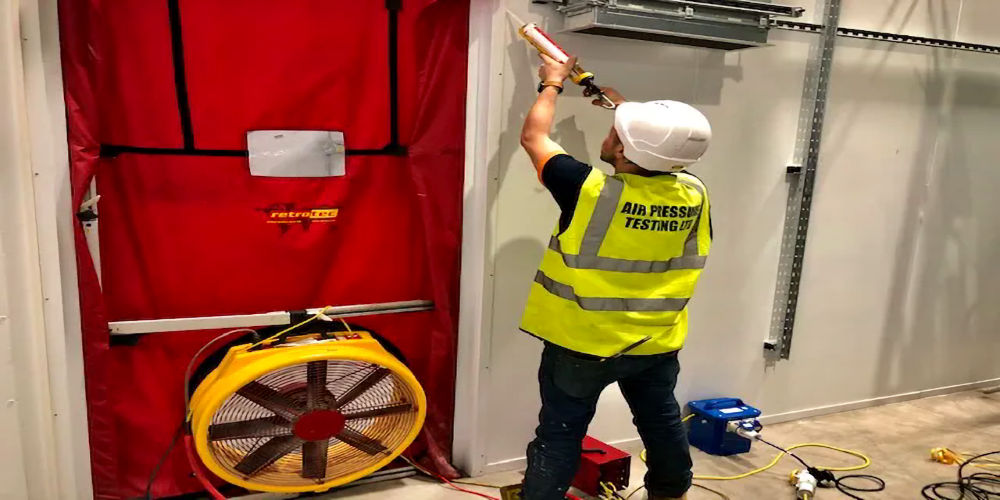
PAS 2035 Air Tightness Testing
Common Air Leakage Paths: PAS 2035 Air Tightness Testing
One of the key observations from our extensive experience in air tightness testing is that the more complete a development is at the time of testing, the more likely it is to achieve a low air leakage result.
To help our clients prepare, we provide a comprehensive Air Leakage Checklist alongside every quotation. By engaging with projects throughout the retrofit process, we can offer practical advice and guidance on the most effective ways to minimise air leakage and achieve PAS 2035 Compliance first time.
Most Common Air Leakage Paths We Identify
During air tightness and smoke leakage testing, we frequently identify air leakage from:
• Poorly installed windows and doors that do not seal correctly against frames
• Missing or damaged window and door seals
• Faulty or damaged trickle vents
• Gaps at wall and skirting board junctions
• Gaps through existing floorboards on all levels
• Perimeter and internal wall-to-floor junctions
• Service penetrations for electrical, plumbing and mechanical installations
• Ceiling voids connecting to masonry cavity walls
• Eaves and roof cavity pathways
• Gaps around window sills and door reveals
• Bathroom and WC service penetrations
• Kitchen and utility service penetrations
• Gaps between dry lining systems and ceilings
• Unsealed chimneys and fireplaces
• Electrical, data and IT installations
• Loft hatches and access panels
• Ventilation penetrations through walls, roofs and ceilings
• Poorly installed extractor fans in kitchens, utilities and bathrooms
Failed an Air Tightness Test?
If your building doesn’t achieve the required result, there is no need to panic.
Our smoke leakage testing service can accurately identify the source of air leakage throughout the building envelope. We provide a detailed smoke survey report, allowing your team to carry out targeted remedial sealing works before retesting.
How We Can Help
APT Sound Testing has extensive experience supporting PAS 2035 retrofit projects and helping clients achieve compliance with Approved Document L and air tightness requirements.
As a UKAS-accredited ISO/IEC 17025 testing laboratory, we specialise in on-site air tightness testing for commercial and large-scale developments. We are also an ATTMA Level 2 registered organisation, qualified to test Large, Complex and High-Rise (LCHR) buildings, as well as phased and zonal handover projects.
Using the latest UKAS-calibrated Retrotec blower door equipment, our engineers have successfully delivered thousands of air tightness tests across the UK, including landmark developments such as Battersea Power Station and the Imperial War Museum London.
Our combination of accredited competence, technical expertise and over 20 years of industry experience ensures reliable, repeatable and fully compliant testing on every project.
📞 Need help preparing for your PAS 2035 air tightness test?
Preparing for your PAS 2035 air tightness test? Contact the APT Team on 01525 303905 or email info@aptsoundtesting.co.uk to discuss your project and avoid costly delays or test failures.