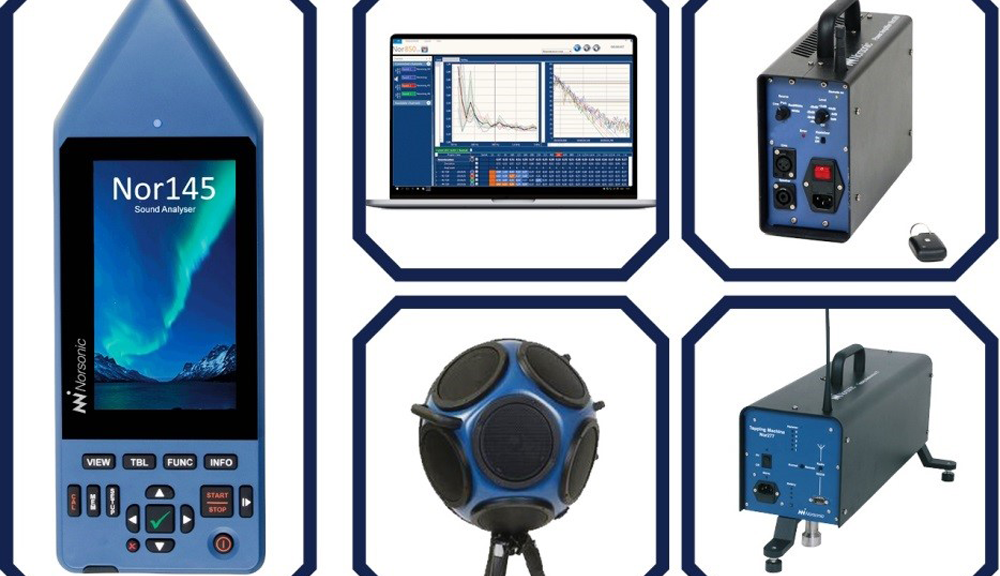
Sound Testing Services in the UK
Sound Testing in London and the UK
When planning a property development in London or the wider UK, sound insulation isn’t just a design consideration, it’s a regulatory requirement. Unless your plans were fully approved before 1 July 2003, you’ll need to carry out sound testing between rooms or spaces that share separating walls or floors, in line with Building Regulations Part E. This ensures that sound transmission between adjoining areas is kept within acceptable limits.
It’s worth noting that sound testing is not typically required for internal walls and floors within a single dwelling, flat, or residential room. However, these internal partitions should still be designed to achieve a minimum performance of 40dB to maintain a good standard of acoustic comfort.
Which developments require sound testing?
Sound testing applies to:
- Residential units created through the conversion of existing buildings, as well as new-build rooms for residential use, where work started after 1 July 2004.
- New-build houses and flats where construction began after the same date.
The primary goal of sound insulation testing is to confirm that the required standards haven’t been compromised by poor design or workmanship. In practice, this means testing each type of construction used within a development. For example, if your project includes a mix of brick, blockwork, timber, and metal stud walls, each construction type must be tested, followed by a 10% sample of each.
To put this into perspective, a development of 25 flats would typically require three sets of six tests. Each “six-pack” includes:
- 2 airborne wall tests
- 2 airborne floor tests
- 2 impact sound tests
If any of these tests fail, additional testing may be required. More importantly, failures usually indicate issues with design or construction, meaning the affected partitions must be reviewed and improved before retesting.
Designing for acoustic performance
Achieving compliance with Part E starts at the design stage. Key considerations include:
- Planning layouts carefully to avoid placing noisy or “habitable” rooms directly next to each other
- Selecting materials with sufficient mass and density
- Ensuring proper isolation between structural elements
- Paying close attention to junctions between walls, floors, and ceilings
- Using appropriate components such as acoustic wall ties
- Avoiding back-to-back placement of sockets and flues
- Sealing all joints and service penetrations effectively
- Incorporating cavity closers around openings
- Containing noise in high-impact areas like lift shafts
- Reducing reverberation in communal spaces with absorbent materials
Without proper acoustic design, floors and ceilings often become the main pathways for sound transmission. This includes both airborne noise — such as voices and televisions — and impact noise, like footsteps or dropped objects. Controlling both types requires a well-thought-out combination of materials and detailing.
A practical acoustic upgrade example
For conversion projects, a cost-effective floor upgrade can significantly improve acoustic performance. A typical approach might include:
- Retaining existing floor joists
- Installing 22mm chipboard above the joists
- Adding an acoustic resilient membrane
- Laying a 22mm engineered floor finish
- Filling the joist cavity with 100mm acoustic mineral wool
- Fixing a resilient hanger system beneath the joists
- Installing two layers of 12.5mm acoustic plasterboard with staggered joints
This type of build-up helps reduce both airborne and impact sound transmission.
A structured approach to compliance
To help ensure compliance with Approved Document E, many developers follow a structured acoustic design process:
- Site survey visits to assess existing construction and identify potential issues
- Sample sound testing to establish baseline acoustic performance
- Acoustic design review of proposed walls and floors
- Pre-completion testing to confirm compliance before handover
Final thoughts
Sound testing is more than just a box-ticking exercise, it’s a critical part of delivering comfortable, high-quality living spaces. By considering acoustics early in the design process and following a structured testing approach, developers can avoid costly failures and ensure their projects meet the required standards from the outset.
APT UK Sound Testing Services
APT Sound Testing can advise on all types of acoustic design, whether it’s accomplished during initial construction or during a refurbishment/renovation project. We also undertake UKAS accredited sound testing across London and the wider UK, providing a ‘one stop’ solution for all your acoustic requirements.
If you would like more information in regard to sound testing please visit the APT Sound Testing website or call our friendly team on 01525 303905.