Category: Thermal Imaging

Understanding Thermal Imaging Inspections

Understanding Thermal Imaging Inspections

Thermal Imaging Inspections & Heating and Cooling Costs

As energy prices continue to climb, improving efficiency is no longer just a nice-to-have, it’s essential. Whether you manage a home or a commercial property, understanding where energy is being lost can make a measurable difference to both your bills and your comfort.

One of the most effective ways to uncover hidden inefficiencies is through thermal imaging inspections. This technology provides a clear, visual insight into how your building performs, highlighting exactly where heat is escaping or entering.

In this article, we’ll explore how thermal imaging works, why it matters, and how it can help you reduce energy costs.


Why Energy Efficiency Matters

Energy efficiency isn’t just about saving money, though that’s a major benefit. It also plays a key role in reducing environmental impact by lowering overall energy consumption and carbon emissions.

For property owners and facilities managers, better efficiency means:

  • Lower utility bills
  • Improved indoor comfort
  • More predictable energy costs
  • Increased property value

A well-insulated, properly sealed building maintains consistent temperatures, making it more comfortable to live or work in year-round.


What Is Thermal Imaging?

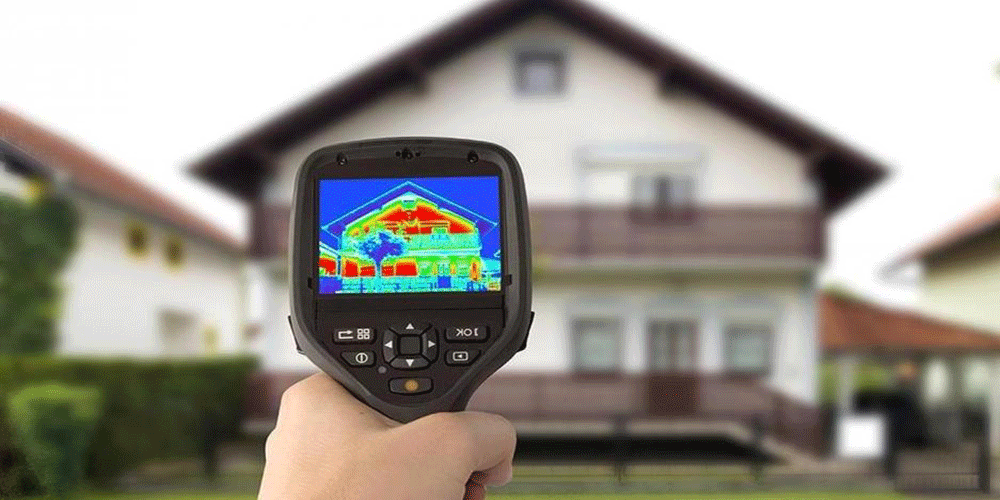
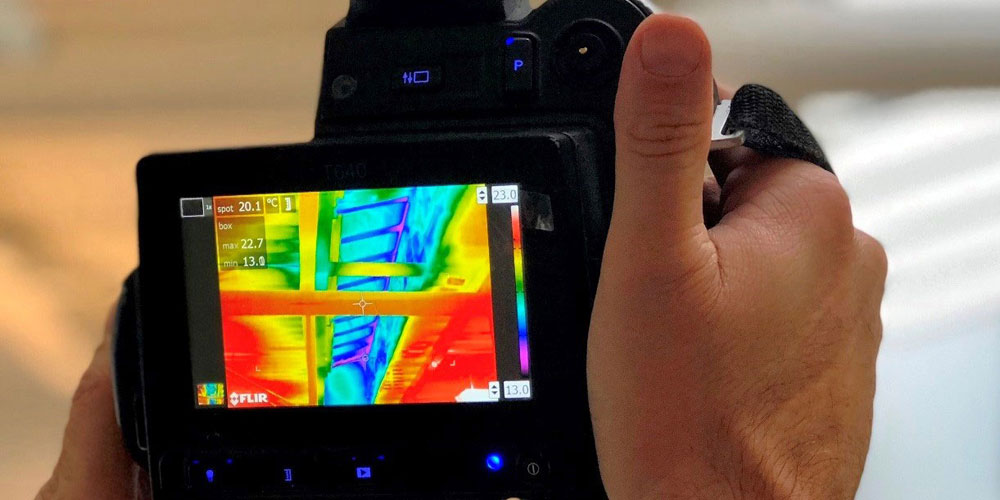
Thermal imaging uses infrared cameras to detect temperature differences across surfaces. The result is a visual output, called a thermogram, that highlights hot and cold spots within a building.

These images reveal issues that aren’t visible to the naked eye, such as:

  • Heat escaping through walls or roofs
  • Cold air entering through gaps
  • Hidden moisture or insulation defects

Originally used across industries like electrical diagnostics and maintenance, thermal imaging has become a powerful tool in building inspections.


How It Works

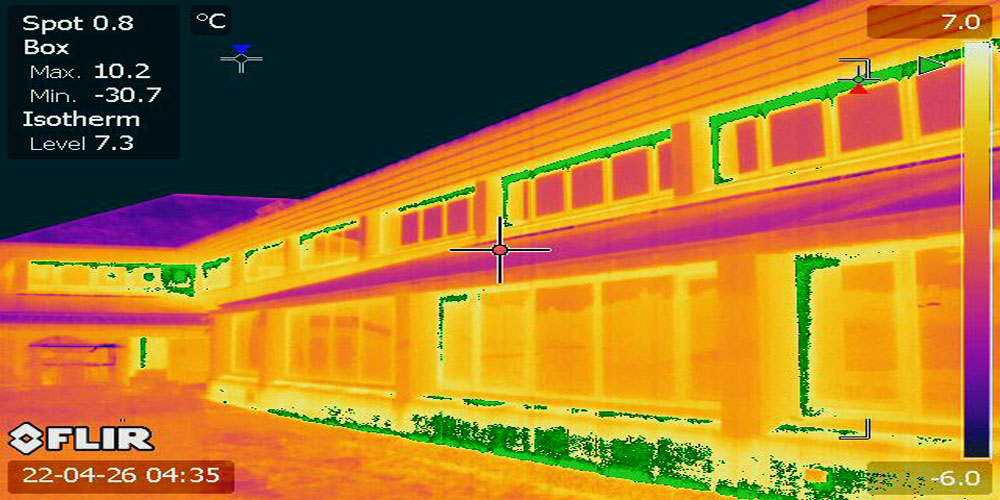
Every object emits heat in the form of infrared radiation. Thermal cameras detect this radiation and translate it into a colour-coded image:

  • Red/yellow = warmer areas
  • Blue/green = cooler areas

This contrast allows inspectors to quickly identify anomalies, such as insulation gaps or air leaks.

Accurate results depend on factors like weather conditions, building materials, and proper calibration, one reason professional inspections are often more reliable than DIY attempts.


Understanding the Building Envelope

The building envelope refers to everything that separates the indoors from the outdoors:

  • Walls
  • Roof
  • Windows and doors
  • Foundations

When functioning properly, the envelope regulates temperature, airflow, and moisture. But even small weaknesses can lead to significant energy loss.

Common Issues Found

Thermal imaging frequently uncovers:

  • Air leaks around windows, doors, and joints
  • Poor insulation in walls or attics
  • Thermal bridging, where heat bypasses insulation
  • Moisture intrusion, which can lead to mould or damage

Left unresolved, these problems can drive up heating and cooling costs.


Key Benefits of Thermal Imaging Inspections

1. Detect Heat Loss and Air Leaks

Thermal imaging makes invisible inefficiencies visible. Cold patches on walls or ceilings often indicate missing insulation or drafts.

Fixing these issues not only reduces energy waste but also improves indoor air quality by preventing outside pollutants from entering.


2. Improve Energy Efficiency

Once problem areas are identified, you can prioritise upgrades such as:

  • Adding insulation
  • Sealing gaps
  • Upgrading windows
  • Optimising HVAC systems

These improvements lead to lower energy consumption and long-term savings.


3. Reduce Costs Over Time

While there’s an upfront cost for an inspection, the long-term financial benefits can be significant:

  • Lower monthly energy bills
  • Reduced strain on heating and cooling systems
  • Longer equipment lifespan

In some cases, energy-efficiency upgrades may also qualify for grants or tax incentives.


Should You Hire a Professional?

While DIY thermal cameras are available, interpreting the results accurately requires training and experience.

A professional inspector will:

  • Use high-grade equipment
  • Understand building science principles
  • Provide a detailed report with actionable recommendations

In most cases, the savings gained from accurate diagnosis outweigh the initial inspection cost.


What to Expect During an Inspection

A typical inspection includes:

  • Scanning walls, ceilings, roofs, and windows
  • Identifying temperature anomalies
  • Assessing insulation performance

Afterward, you’ll receive a report outlining:

  • Key problem areas
  • Recommended fixes
  • Potential cost savings

Most inspections take between 1–3 hours, depending on the size of the property.


Real-World Results

Residential Example

A homeowner struggling with high winter heating bills discovered major air leaks and poor attic insulation through a thermal inspection. After sealing gaps and upgrading insulation, their heating costs dropped by around 25% in the following season.


Commercial Example

An office building undergoing an energy audit revealed thermal bridging and inadequate insulation. After improvements were made, the building achieved roughly a 20% reduction in energy costs, a substantial saving at scale.


Final Thoughts

Thermal imaging inspections offer a practical, data-driven way to improve energy efficiency. By identifying exactly where energy is being lost, they allow you to take targeted action, saving money while improving comfort.

With energy costs unlikely to fall anytime soon, investing in this kind of insight is a smart move for both homeowners and businesses.


FAQs

How much does a thermal imaging inspection cost?
Typically £300–£700 for residential properties and £700 – £2000+ for commercial buildings, depending on size and complexity.

How long does it take?
Usually between 1 and 3 hours.

Can I do it myself?
You can, but professional inspections are far more accurate and reliable.

How often should I get one?
Every few years, or after major renovations or insulation upgrades.

What improvements might be needed?
Common fixes include sealing air leaks, adding insulation, upgrading windows, and improving HVAC efficiency.


Need a Thermal Imaging Inspection?

If you’re looking to reduce energy costs and improve building performance, a professional thermal imaging inspection is a strong first step. An expert assessment can quickly identify inefficiencies and provide clear guidance on how to fix them, helping you save money and future-proof your property.

Thermal Imaging & Modern Data Centres

Thermal Imaging & Modern Data Centres

Why Thermal Imaging Is Essential for Modern Data Centres

In a digital-first world, data centres sit at the core of nearly every business operation. As demand for processing power continues to grow, server rack densities are increasing, and with them, energy consumption, heat output, and maintenance challenges.

Yet many facilities managers remain unaware of a critical risk: failing to carry out annual electrical thermal imaging inspections on key assets can, in some cases, invalidate building insurance in the event of serious incidents such as electrical fires.

Thermal imaging is no longer a “nice to have” — it’s a fundamental part of modern data centre risk management.

Unmatched Visibility Into Heat Patterns

Traditional temperature sensors only monitor specific points. Thermal imaging, by contrast, provides a complete, real-time picture of heat distribution across the entire facility.

From server racks and power distribution units to cooling systems and switchgear, thermal cameras reveal what conventional monitoring systems often miss. Hotspots can develop in minutes, long before alarms are triggered.

A blocked vent, failing fan, or overloaded circuit may seem minor, but each can rapidly escalate into a serious issue. Thermal imaging allows operators to detect these anomalies instantly and act before they become critical.

Preventing Downtime and Hardware Failure

In high-density data centre environments, even small temperature increases can have significant consequences. Excess heat accelerates component degradation, shortens equipment lifespan, and can trigger performance throttling.

In more severe cases, overheating can result in unexpected shutdowns or catastrophic failure.

For facilities operating under strict uptime requirements, this level of risk is unacceptable. Thermal imaging provides early warning, enabling teams to intervene before issues impact performance or availability.

Enabling Predictive Maintenance

One of the greatest strengths of thermal imaging lies in its ability to support predictive maintenance.

By conducting regular thermal surveys, operators can track temperature trends over time and identify subtle changes that indicate developing faults. This proactive approach allows teams to:

  • Schedule maintenance before failures occur
  • Reduce emergency callouts
  • Extend the lifespan of critical assets
  • Improve overall system reliability

Thermal imaging also highlights airflow inefficiencies, recirculation zones, and cooling imbalances, helping teams fine-tune performance across the facility.

Improving Energy Efficiency and Sustainability

Cooling systems account for a significant portion of a data centre’s energy usage. Even small inefficiencies can lead to substantial energy waste and increased operational costs.

Thermal imaging helps identify:

  • Over-cooled areas
  • Localised hotspots
  • Airflow imbalances
  • Cooling system inefficiencies

By addressing these issues, operators can reduce energy consumption without compromising performance. This not only improves Power Usage Effectiveness (PUE) but also supports sustainability targets and regulatory compliance.

From Reactive to Proactive Operations

Ultimately, thermal imaging transforms how data centres are managed. Instead of reacting to alarms or failures, operators gain continuous insight into the thermal health of their infrastructure.

This enables teams to:

  • Make informed, data-driven decisions
  • Optimise system performance
  • Reduce operational risk
  • Maintain high levels of uptime and reliability

As digital demand continues to accelerate, thermal imaging has become an indispensable tool, not just for troubleshooting, but as a strategic asset that underpins resilience and long-term operational stability.


Why Choose APT for Your Data Centre Thermal Imaging Inspection?

At APT, we take a structured, detail-driven approach to every thermal imaging survey.

We begin with a thorough consultation to understand your specific requirements, followed by a comprehensive site assessment to identify potential risks and optimise the inspection process. This ensures efficient delivery and complete coverage of critical assets.

What You Can Expect:

  • ITC-certified Level 3 thermographer
  • High-resolution FLIR T-Series thermal imaging cameras (640 × 480)
  • Full reporting suite including:
    • Executive summary and fault overview
    • Elevation inventory
    • Detailed fault analysis with root cause insights and remedial recommendations
    • Baseline infrared and digital imagery (100% coverage)
  • Application of advanced thermal indexing techniques
  • Eco-friendly digital report delivered within 24 hours

About the Author

Darren Helliwell is a building performance specialist with over 25 years of hands-on experience in thermal imaging, air tightness testing, and building diagnostics.

He has worked on major projects including Battersea Power Station, the Imperial War Museum, and Harrods, helping design teams and contractors improve building performance through advanced testing techniques.

Using infrared thermography, blower door testing, and smoke analysis, Darren and his team identify hidden air leaks, insulation defects, and thermal bridging, enabling targeted, energy-efficient improvements across both new-build and refurbishment projects.

His mission is to help the construction industry deliver airtight, high-performance buildings that reduce energy consumption and long-term operational costs.


Get in Touch

If you’d like to learn more about thermal imaging for your data centre, contact us directly:

📧 info@aptsoundtesting.co.uk
📞 01525 303 905

Or reach out to discuss how we can support your project with expert testing and fast, reliable results.

Thermal Imaging Inspections & APT Sound Testing

Thermal Imaging Inspections & APT Sound Testing

Thermal Imaging Inspections Can Save You Money and Improve Building Safety

Thermal imaging inspections are fast becoming an essential tool for property owners looking to reduce long-term maintenance costs and improve energy efficiency. By using advanced infrared technology, these inspections reveal hidden issues that would otherwise go unnoticed, helping you take action before small problems turn into costly repairs.

Let’s explore how thermal imaging can deliver real savings while enhancing the safety and performance of your building.


The Financial Benefits of Thermal Imaging

One of the biggest advantages of thermal imaging is its ability to support preventative maintenance. Instead of reacting to failures, you can identify and resolve issues early.

For example, a school carrying out routine inspections might detect insulation gaps before winter. Fixing these in advance helps maintain a comfortable indoor environment while significantly reducing heating costs.


Enhancing Safety Through Early Detection

Thermal imaging plays a crucial role in improving safety, particularly within electrical systems. Infrared inspections can identify overheating components, damaged cables, and electrical “hotspots” that could lead to fire risks.

In high-stakes environments like hospitals, this proactive approach is invaluable. Detecting faults early helps prevent electrical fires, ensuring both safety and uninterrupted operations.


Identifying Energy Loss

Heat loss is one of the most common, and expensive, issues in buildings. Thermal imaging pinpoints exactly where heat is escaping or entering, allowing for targeted improvements.

For instance, a retail store might discover heat escaping through its façade. By upgrading insulation or sealing gaps, the store can create a more comfortable environment for customers while reducing energy bills.


Uncovering Hidden Defects

Not all building issues are visible to the naked eye. Thermal imaging can reveal hidden problems such as moisture intrusion, leaks, and insulation failures.

Addressing these early can prevent more serious consequences like mould growth or structural damage. In residential properties, a small leak detected through thermal imaging can be fixed quickly, avoiding expensive repairs later on.


Lowering Energy Bills

Improving insulation and sealing inefficiencies can lead to substantial energy savings, often up to 20% annually.

For commercial buildings, this isn’t just a short-term win. Reduced energy consumption translates into long-term financial benefits, making thermal imaging a smart investment with measurable returns.


Preventing Costly Repairs

Early detection is key to avoiding major repair costs. Thermal imaging allows you to identify issues before they escalate into significant failures.

In industrial settings, for example, monitoring machinery for overheating components can prevent breakdowns, costly downtime, and expensive replacements.


Protecting Critical Assets

From server rooms to electrical installations, critical infrastructure must operate reliably. Thermal imaging helps detect abnormal temperature changes that could signal failure.

By addressing these issues early, businesses can avoid data loss, system downtime, and operational disruption.


A Professional Approach to Thermal Imaging

High-quality thermal imaging inspections go far beyond basic scans. They provide a detailed analysis of your building’s performance, helping you make informed decisions.

With advanced equipment and highly trained thermographers, inspections can identify even the smallest anomalies. Comprehensive reports ensure that findings are clear, actionable, and easy to understand.

Key features of a professional service include:

  • Fully calibrated, state-of-the-art thermal imaging equipment
  • Highly qualified thermographers with advanced certification
  • Clear, detailed reporting with severity grading and recommendations
  • Practical guidance tailored to your building’s needs

Why It Matters

Thermal imaging inspections are not just about identifying problems, they’re about creating a proactive maintenance strategy. By investing in regular inspections, property owners can improve safety, enhance comfort, and achieve significant cost savings over time.

Whether you manage a commercial facility, residential property, or industrial site, thermal imaging provides the insight needed to protect your investment and optimise building performance.


Getting Started

If you’re interested in learning more about how thermal imaging works or how to arrange an inspection, now is the perfect time to explore your options. A proactive approach today can save you substantial costs tomorrow while ensuring your building remains safe, efficient, and reliable.

If you would like to know more about how thermal imaging works or how to get started with an inspection, please contact us now at info@aptsoundtesting.co.uk or call APT Sound Testing today on 01525 303905. We’re here to help you maximise your investment in building performance through tailored thermal imaging inspection solutions.

Building Issues & Thermal Imaging Surveys

Building Issues & Thermal Imaging Surveys

Hidden Building Issues & Thermal Imaging Surveys

hen it comes to maintaining a building’s performance, comfort, and long-term value, thermal imaging surveys have become an essential part of modern property assessment. Using advanced infrared technology, these surveys detect subtle temperature differences across surfaces, highlighting issues that would otherwise remain hidden.

From pinpointing energy loss to uncovering water ingress and structural concerns, thermal imaging provides a clear, non-invasive way to diagnose problems early and accurately.

What Is Thermal Imaging?

Thermal imaging, also known as thermography, aptures infrared radiation emitted by objects. While this radiation is invisible to the human eye, thermal cameras translate it into visual images using colour variations to represent temperature differences.

These images reveal “thermal anomalies,” which can indicate underlying issues such as:

  • Heat loss from poor or damaged insulation
  • Moisture intrusion from leaks or damp
  • Overheating electrical systems
  • Structural defects affecting building integrity

Expertise You Can Trust

With over 15 years of experience delivering high-quality thermographic surveys across England and Wales, we support a wide range of industrial and commercial clients. Our detailed reports are designed to meet the requirements of construction professionals, insurers, facility managers, building control bodies, and sustainability assessors.

Thermal Imaging for Commercial Buildings

For commercial properties, thermal imaging surveys offer valuable insights into the performance of the building envelope, often at a relatively low cost. Many surveyors rely on us as a first point of contact when investigating building defects.

Beyond identifying heat loss, infrared surveys can help detect:

  • Energy inefficiencies – highlighting where improvements can reduce operational costs
  • Damp and moisture issues – locating water ingress in walls, ceilings, roofs, and rooflights
  • Water leaks – identifying faults within plumbing systems
  • Thermal bridging – spotting gaps or weaknesses in insulation around doors and windows
  • Insulation defects – revealing missing or poorly installed insulation
  • Air infiltration – detecting unwanted draughts affecting occupant comfort
  • Air leakage paths – showing where conditioned air is escaping, wasting energy

Thermal Imaging for Residential Properties

Thermal imaging surveys aren’t just for commercial buildings, they’re equally valuable for homeowners looking to improve comfort and reduce energy bills.

A residential survey can uncover:

  • Areas of significant heat loss
  • Damp or moisture problems, including roof or chimney leaks
  • Hidden plumbing leaks, including underfloor heating systems
  • Insulation gaps causing cold spots
  • Draughts entering through the building fabric
  • Warm air escaping unnecessarily

By identifying these issues early, homeowners can take targeted action to improve efficiency and reduce costs.

Supporting Sustainable Building Standards

Thermal imaging surveys also play a key role in sustainability assessments. They are widely recognised as part of best practice in evaluating building performance and are often required for environmental certification schemes.

Our surveys are carried out by highly qualified thermographers using advanced, high-resolution thermal imaging equipment. This ensures accurate, reliable results that support compliance with stringent environmental and performance standards.

A Smarter Way to Understand Your Building

Whether you’re managing a commercial property or improving your home, thermal imaging offers a powerful, non-destructive way to see what’s really happening beneath the surface.

If you’re looking to reduce energy costs, improve comfort, or diagnose hidden issues, a professional thermal imaging survey is a smart place to start.

To discuss your project requirements or arrange a site visit, contact APT Sound Testing on 01525 303905, email info@aptsoundtesting.co.uk, or visit www.aptsoundtesting.co.uk.

How Thermal Imaging Helps Surveyors

How Thermal Imaging Helps Surveyors

How Thermal Imaging Helps Surveyors on Commercial Properties

When purchasing a commercial property, whether it’s an office, retail unit, or industrial building, understanding its true condition is essential. One increasingly valuable tool for surveyors is thermal imaging. But how exactly does it help?

Thermal imaging provides a deeper level of insight than traditional visual inspections, helping surveyors uncover hidden issues and give clients a clearer, more informed picture before committing to a purchase.

Key Benefits of Thermal Imaging for Property Buyers

1. Detecting Hidden Building Issues
Thermal imaging can reveal problems that aren’t visible to the naked eye. This includes electrical faults, water ingress, and defects within the building envelope. By identifying these issues early, surveyors can provide clients with a more accurate assessment of the property’s condition.

2. Improving Energy Efficiency
Heat loss is one of the biggest contributors to high energy costs in commercial buildings. Thermal imaging highlights areas where insulation is missing or ineffective, allowing buyers to plan targeted improvements that can significantly reduce future energy bills.

3. Enhancing Safety
Overheating electrical components are a common fire risk. Thermal imaging allows surveyors to detect these hazards before they become serious problems, ensuring necessary repairs can be carried out prior to occupancy. It can also minimise the need for working at height or accessing restricted areas.

4. Non-Invasive Inspection
Unlike traditional investigative methods, thermal imaging does not require drilling or dismantling parts of the building. This means surveyors can carry out thorough inspections quickly and without causing damage.

5. Pest Detection
Thermal cameras can even detect the presence of pests by identifying heat signatures behind walls or within ceiling and floor voids. Early detection helps prevent structural damage and potential health risks.

6. Stronger Negotiation Position
Armed with clear evidence of defects, buyers are in a stronger position to negotiate. Whether requesting repairs or a reduction in purchase price, thermal imaging findings can provide valuable leverage during the transaction.


How Thermal Imaging Inspections Work

Thermal imaging surveys use advanced infrared technology to detect temperature variations across surfaces.

Infrared Technology
High-resolution thermal cameras capture heat signatures and translate them into colour-coded images. These images make it easy to identify abnormal temperature patterns that may indicate underlying issues.

Areas Covered
Surveyors typically scan key areas of the building, including walls, ceilings, floors, insulation, plumbing systems, and electrical installations. This comprehensive approach ensures that hidden defects are not overlooked.


Common Issues Identified

Thermal imaging can uncover a wide range of problems. Some of the most common include:

  • Water leaks and moisture – Cooler areas often indicate the presence of moisture within walls, ceilings, or floors.
  • Insulation gaps – Missing or inadequate insulation in roofs, walls, or floors becomes immediately visible.
  • Electrical faults – Overheating components can be identified before they lead to failure or fire.
  • Structural defects – Hidden cracks or irregularities within the building fabric can sometimes be detected through temperature variation.

Why It Matters

Ultimately, thermal imaging gives buyers confidence. By providing a detailed and non-invasive assessment, it ensures there are no costly surprises after purchase—helping clients make informed, strategic decisions.


Book a Thermal Imaging Survey

If you’re considering a thermal imaging survey for a commercial property, working with experienced and certified professionals is key.

At APT Sound Testing, inspections are carried out using high-specification equipment that exceeds industry standards, including BREEAM requirements. Surveys are conducted by Level 3 certified thermographers, the highest level of accreditation, using large-format FLIR thermal imaging cameras.

Each survey includes:

  • Level 3 thermographic certification
  • Level 3 qualified electrical thermographers
  • High-resolution FLIR cameras with 45-degree lenses
  • A detailed report with thermal indexing, fault diagnosis, and severity grading

If you need a thermal survey to a commercial property, please let us know and we will book in the first available date for you. If you have any further questions in regard to the above, please don’t hesitate to call APT Sound Testing on 01525 303905 or email: info@aptsoundtesting.co.uk

Thermal Imaging Surveys & Modern Buildings

Thermal Imaging Surveys & Modern Buildings

Thermal Imaging Surveys: Essential for Modern Buildings

Maintaining the performance, safety, and energy efficiency of a building isn’t always straightforward, especially when many issues remain hidden from view. That’s where thermal imaging surveys come in.

Using advanced infrared technology, thermal imaging allows us to see what the naked eye cannot. By detecting subtle temperature variations, these surveys help uncover hidden defects early, before they escalate into costly repairs or operational disruptions.

From heat loss and water ingress to electrical faults and structural concerns, thermal imaging provides a powerful, non-invasive way to assess the true condition of a building.

With over 15 years of experience delivering high-quality thermographic surveys across England and Wales, we support industrial and commercial clients with detailed reports that meet the standards required by construction and insurance companies, facility managers, building control, and BREEAM assessors.


What Is Thermal Imaging?

Thermal imaging — also known as thermography — is a technique that captures the infrared radiation naturally emitted by objects. While this type of radiation is invisible to the human eye, specialist thermal cameras can detect it and convert it into clear, colour-coded images.

These images highlight temperature differences across surfaces, making it easy to spot irregularities that may indicate underlying issues.

Common problems identified through thermal imaging include:

  • Heat loss caused by missing or poorly installed insulation
  • Moisture intrusion from leaks or damp conditions
  • Electrical faults due to overheating components or wiring issues
  • Structural defects linked to compromised building elements

In short, thermal imaging offers a fast, accurate, and highly effective way to diagnose problems that would otherwise go unnoticed.


The Value of Thermal Imaging for Commercial Buildings

For commercial properties, thermal imaging surveys are particularly valuable. They provide detailed insight into how a building performs thermally, without disruption and at a relatively low cost.

That’s why many surveyors and property professionals rely on thermal imaging as a first step in identifying defects.

An infrared survey can reveal much more than just heat loss. It can help identify:

  • Energy inefficiency – Pinpointing where energy is being lost and where savings can be made
  • Damp and water ingress – Locating leaks in roofs, walls, and floors
  • Plumbing issues – Detecting hidden water leaks within building systems
  • Thermal bridging – Highlighting weak points around doors, windows, and structural junctions
  • Insulation defects – Revealing gaps or poorly installed insulation
  • Air infiltration – Identifying cold draughts entering the building
  • Excess air leakage – Showing where warm air escapes, leading to energy waste or overheating

Thermal Imaging and BREEAM Compliance

Thermal imaging surveys now play a key role in BREEAM, the world’s leading environmental assessment method for buildings.

Both BREEAM New Construction and Domestic Refurbishment schemes award credits for thermal imaging inspections carried out by qualified professionals (Level 2 thermographers or above).

With more than a decade of experience delivering BREEAM-compliant surveys, APT Sound Testing provides reliable assessments to verify insulation continuity and overall thermal performance. All surveys are conducted by Level 3 certified thermographers using high-resolution FLIR cameras, ensuring precise and dependable results that meet strict industry standards.


Why Choose a Professional Thermal Imaging Survey?

A professional thermal imaging survey offers far more than just peace of mind. It delivers practical, measurable benefits, including:

  • Accurate identification of heat loss, moisture, and electrical issues
  • Improved energy efficiency and reduced running costs
  • Preventative maintenance, fixing issues before they become expensive problems
  • Non-invasive testing with no damage to the building
  • Safer inspections without the need for working at height
  • Fast turnaround times with clear, actionable reports
  • Expert analysis from certified Level 3 thermographers
  • High-resolution imaging using advanced infrared technology
  • Detailed reports with severity ratings and tailored recommendations
  • Long-term cost savings through early intervention

Common Issues Revealed by Thermal Imaging

Thermal imaging surveys regularly uncover:

  • Heat loss from poor insulation or structural gaps
  • Hidden moisture caused by leaks or damp conditions
  • Overheating electrical components and overloaded circuits
  • Structural movement, cracks, or material degradation

Identifying these issues early can make a significant difference—both in terms of cost and building performance.


Book Your Thermal Imaging Survey

If you want to improve your building’s efficiency, reduce energy costs, and catch problems before they escalate, a thermal imaging survey is a smart investment.

APT Sound Testing’s experienced team is ready to help you protect your property and optimise its performance with accurate, reliable diagnostics.

Phone: 01525 303905
Email: info@aptsoundtesting.co.uk
Website: www.aptsoundtesting.co.uk

The Power of Thermal Imaging Surveys

The Power of Thermal Imaging Surveys

Discover the Power of Thermal Imaging Surveys

APT Sound Testing provide UKAS accredited sound testing & Thermal Imaging Surveys for London and the whole of the UK as required by Approved Document E of the Building Regulations. We undertake projects on all types of residential buildings and commercial buildings. We also undertake sound testing on schools and buildings containing rooms for residential purposes.

Thermal Imaging Surveys in London

A thermal Imaging survey is a completely non-invasive method of investigating many aspects of a building that are virtually impossible by any other method.

Thermal Imaging Process

A thermal Imaging survey is an extraordinary method of investigating many aspects of a building that is completely non-invasive.

Thermal Imaging Inspections use IR Thermography to identify a wide range of issues such as:

• Incorrectly applied or inadequate insulation within the building envelope

• Locating air leakage paths into/out of your building

• Moisture infiltration

• Poor moisture barriers

There is no other low impact and accurate way to assess the unseen performance of insulation or the building fabric.

A thermal Imaging Survey can is also ideal for identifying water penetration through roofs or other parts of a building structure, alleviating the need for time consuming water dye tests which are not always accurate.

Flir Thermal Imaging Cameras

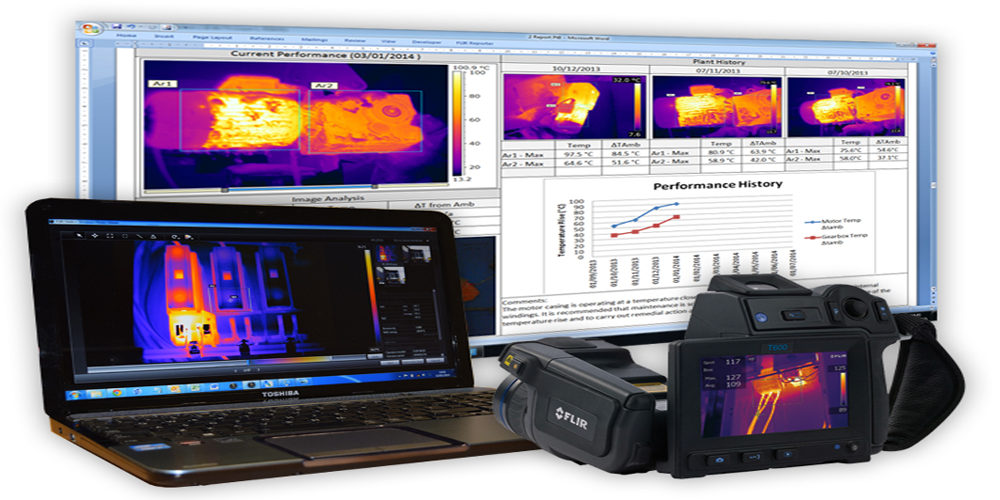
APT Sound Testing uses the latest Flir Thermal Imaging Cameras for our thermography report generation and as well as utilising the latest software for accurate reportage and trend analysis.

This means or thermal imaging reports can be issued within hours of the survey being completed with recommendations to help our clients deal with every eventuality.

How we Prepare for a Thermographic Survey

What is also important is that there must be no direct or residual solar loading from the sun in the building.

Many companies have their thermal imaging surveys undertaken an hour or so after sunset and this is usually flawed and may lead to inaccurate results. Whilst there may be rate exceptions to this, as a rule, there will be solar load in the building for many hours after sunset.

Therefore, we have learnt to undertake more accurate reportage the thermal imaging surveys should generally be conducted in the early hours of a cold morning, approx.

Two hours before the sun can fall on the building. It is more difficult to undertake conduct these types of heat loss survey during summer months when the ground temperatures and surrounding buildings are at high temperatures for months on end; however, this can be overcome by ramping up internal temperatures within the building and using the latest and more advanced thermal imaging cameras.

In all cases APT Sound Testing will check each project in isolation to ensure the correct site conditions are in place prior to undertaking the thermal imaging survey in compliance with the requirements with BS EN 13187. Building Regulations Part L and this link both offer lots of useful information in regards to Thermography Surveys.

We have years of experience working with a wide range of clients that span both the public and private sectors. We have clients ranging from self-builders through to the largest housing developers. We also work with the health authority and the banking sector on their cleanroom testing. Our clients have benefited from our wealth of knowledge and friendly, proactive service that we provide.

If you need more information on how to prepare your building for a Thermal Imaging Survey please download our air tightness testing checklist. If you would like more information in regards to our, please visit our website or call us direct on 01525 303905.

Commercial Property & Thermal Imaging Surveys

Commercial Property & Thermal Imaging Surveys

Thermal Imaging Surveys

Thermal imaging, also known as thermography, is a non-invasive inspection technique that detects infrared radiation emitted by objects. While infrared energy is invisible to the human eye, thermal imaging cameras can capture it and convert it into colour-coded images that clearly display temperature variations across a surface.

These temperature differences allow thermal imaging surveys to identify hidden issues within a building, including:

  • Heat loss caused by damaged or missing insulation
  • Moisture intrusion resulting from water leaks or damp penetration
  • Electrical faults linked to overheating components or faulty wiring
  • Structural defects where compromised elements affect thermal performance

By highlighting thermal anomalies early, potential problems can be addressed before they develop into costly repairs.


Commercial Thermal Imaging Surveys

Our thermal imaging surveys for commercial buildings provide invaluable insight into the thermal performance of the building envelope, often at minimal cost. As a trusted provider, we are frequently the first point of contact for surveyors requiring reliable thermal imaging defect surveys.

An infrared survey can be used for much more than identifying heat loss, including:

  • Building energy efficiency – pinpointing where the greatest energy cost savings can be achieved
  • Damp walls, ceilings, and floors – detecting water ingress, sources of damp, flat roof leaks, and issues around roof lights
  • Water leaks – identifying leaks within building water systems
  • Thermal bridging – locating missing or ineffective insulation at door and window reveals, heads, and junctions
  • Missing or damaged insulation – highlighting cold spots caused by poor workmanship in walls, floors, and roofs
  • Air infiltration – identifying cold draughts entering through the building envelope
  • Excess air leakage paths – revealing warm air escaping, leading to wasted energy or difficulty keeping buildings cool in summer

Thermal Imaging House Surveys to Reduce Heat Loss

Our residential thermal imaging surveys offer homeowners a clear understanding of their property’s thermal performance. A thermal camera survey goes beyond simple heat loss detection and can also identify:

  • Energy efficiency issues – highlighting where improvements will deliver the greatest savings
  • Damp walls, ceilings, and floors – locating water ingress, chimney leaks, and flat roof defects
  • Water leaks – detecting leaks in underfloor heating systems or concealed pipework
  • Thermal bridging – identifying insulation gaps around doors and windows
  • Missing or damaged insulation – revealing cold spots caused by poor installation
  • Air infiltration – identifying uncomfortable draughts entering the property
  • Air leakage paths – locating warm air escaping through the building envelope

BREEAM Thermal Imaging Surveys

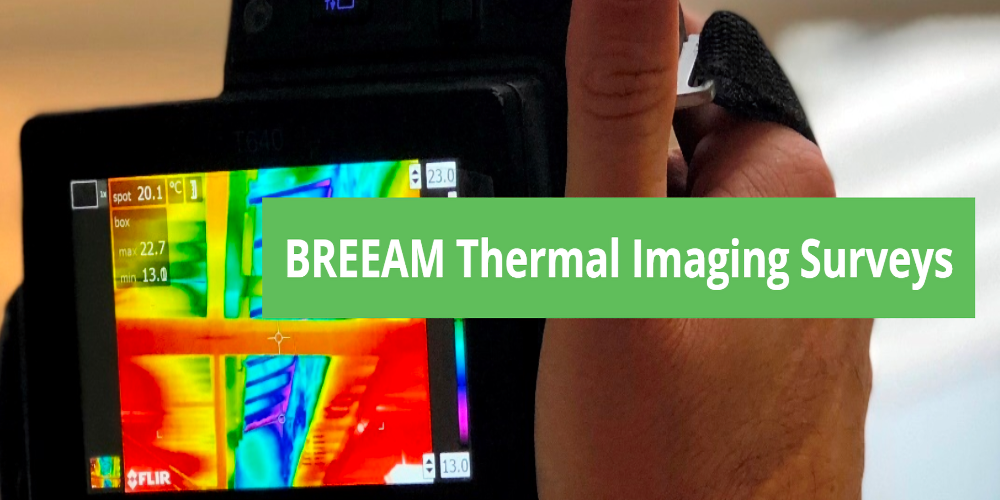
Thermal imaging surveys are a core requirement within BREEAM, the world’s leading environmental assessment and rating system for buildings. Both BREEAM New Construction and BREEAM Domestic Refurbishment schemes award credits for thermal imaging assessments carried out by certified thermographers.

For over a decade, APT Sound Testing has delivered professional BREEAM thermal imaging surveys to verify insulation continuity and compliance. Our surveys are undertaken by Level 3 certified thermographers, exceeding BREEAM requirements, and utilising high-resolution FLIR thermal imaging cameras to ensure precise, dependable results on every project.


How Thermal Imaging Improves Health & Safety

Thermal imaging significantly enhances health and safety by reducing the need for working at height, one of the leading causes of serious accidents in the construction and maintenance industries.

Key safety benefits include:

  • Remote inspections from ground level
    Inspections can be carried out safely without the need for ladders, scaffolding, or aerial platforms.
  • Early issue detection
    Identifying insulation failures, leaks, or electrical faults remotely allows maintenance to be planned efficiently and safely.
  • Improved safety planning
    Detailed thermal images help teams plan safer access methods when working at height is unavoidable.
  • Frequent monitoring without access equipment
    Regular surveys can be conducted without scaffolding, enabling early detection and reducing risk.

By incorporating thermal imaging into routine inspections, organisations can significantly reduce the need for extensive working-at-height surveys and lower the risk of falls.


Contact Us for Your Thermal Imaging Survey

Ready to uncover hidden issues and improve your building’s efficiency? Contact APT Sound Testing today to arrange your thermal imaging survey.

Phone: 01525 303905
Email: info@aptsoundtesting.co.uk
Website: www.aptsoundtesting.co.uk

Protect your assets, improve indoor comfort, and enhance building performance with our professional thermal imaging surveys. Detect issues early and take informed action with confidence.

Thermal Imaging & Commercial Buildings

Thermal Imaging & Commercial Buildings

Thermal Imaging Surveys for Commercial Buildings

Thermal imaging (thermographic) surveys are one of the most effective diagnostic tools for identifying heat loss in commercial buildings across London and the South East. Using advanced infrared technology, these surveys clearly highlight where energy is escaping, often revealing issues that building owners are completely unaware of.

Many of our clients are genuinely surprised by the number and scale of heat loss sources uncovered during a thermal imaging survey. Common problems include cold draughts caused by air leakage through cracks in the building envelope, as well as missing or poorly installed insulation within walls, floors, or roof spaces, sometimes entire sections are found to have been overlooked during installation.


How Do We Carry Out a Thermal Imaging Survey?

We aim to arrange a site visit at a time that is convenient for you. Thermal imaging surveys are typically carried out between November and April, as suitable weather conditions are essential for accurate results. In some cases, surveys may need to be rescheduled if conditions are unsuitable, such as during heavy rainfall or periods of high daytime and nighttime temperatures.

On arrival, our thermal engineer will discuss any known heat loss issues, draughts, or comfort concerns you have, as well as your objectives for the survey. Unlike many competitors, we always conduct both internal and external thermal surveys as standard, ensuring a comprehensive assessment of your building’s performance.


How Long Does a Thermal Imaging Survey Take?

The duration of a survey depends on the size of the building and how involved you wish to be. We strongly encourage building owners or site representatives to accompany our engineer during the inspection. This collaborative approach allows us to explain findings in real time and ensures you gain a clearer understanding of the issues identified.

  • Small to medium buildings: 1–2 hours
  • Large commercial buildings: 3–4 hours

Allow additional time if you have specific questions or multiple areas of concern.


When Will You Receive the Thermal Imaging Report?

Your comprehensive thermal imaging report is typically delivered within 1–2 working days in PDF format. The report includes:

  • Thermal and visual images
  • Clear interpretation of findings
  • Identification of defects and potential causes

Many other providers take 1–2 weeks to deliver reports, so our fast turnaround ensures you can act quickly.


Why Choose Us for Your Thermal Imaging Survey?

Our engineers are trained to Level 3 thermographic certification, the highest level achievable in the industry. Combined with our use of large-format FLIR thermal imaging cameras, this ensures the highest possible accuracy and clarity when identifying defects.

Our Specification Includes:

  • Level 3 thermographic certification
  • Level 3 qualified thermographers
  • Large-format FLIR cameras with 45-degree lenses

This combination gives you the best possible chance of accurately diagnosing and resolving thermal performance issues.


What Types of Buildings Benefit from Thermal Imaging Surveys?

Thermal imaging surveys are suitable for a wide range of building types, including:

  • Commercial buildings
  • Office blocks
  • Schools and colleges
  • Warehouses and storage facilities
  • Military infrastructure
  • Flats, houses, and residential tower blocks
  • Housing stock (local authorities and property managers)
  • Flat roofing systems

What Building Defects Can Thermal Imaging Identify?

Thermal imaging surveys can reveal hundreds of potential defects. Some of the most common issues we identify include:

  • Poor construction detailing
  • Missing or damaged insulation
  • Thermal and cold bridging
  • Air leakage and unintended openings
  • Moisture penetration and water ingress
  • Poor thermal comfort
  • Damp and mould issues

Contact Us for More Information

If you would like to learn more about our thermal imaging services, please contact us on 01525 303905, complete our online form or email info@aptsoundtesting.co.uk.
Alternatively, visit our website for guidance on preparing for a thermal imaging survey or download our Thermal Imaging Checklist.

Thermal Imaging Inspections

Thermal Imaging Inspections

Thermal Imaging Inspections for Detecting Building and Equipment Faults

Identify faults before they become failures.
APT Sound Testing provides professional thermal imaging inspections to detect heat loss, electrical faults, moisture intrusion, and equipment issues in buildings and industrial systems. Using advanced infrared technology, our surveys help contractors, developers, and maintenance teams save time, reduce costs, and prevent safety hazards.


What Is Thermal Imaging?

Thermal imaging detects heat variations emitted by surfaces and materials. Using high-resolution infrared cameras, we capture detailed images that reveal hot and cold areas, identifying potential faults or inefficiencies.

When combined with blower door testing, thermal imaging becomes a powerful diagnostic tool for analysing building envelopes, pinpointing air leaks, insulation gaps, and structural weaknesses that are invisible to the naked eye.


Industries That Benefit from Thermal Imaging

One of the greatest advantages of thermal imaging is that it allows non-intrusive inspection. There’s no need to shut down equipment or interrupt operations.

Our certified thermographers can inspect systems safely from a distance, capturing accurate data without putting personnel or assets at risk. This makes thermal imaging invaluable across many industries, including:

  • Construction & Property Development
  • Manufacturing & Industrial Maintenance
  • Facilities Management (FM)
  • Utilities & Energy
  • Residential Building Inspections

Thermal Imaging for Building Inspections

Thermal imaging is a proven method for detecting issues in a building’s walls, roofs, floors, and insulation systems. It can identify:

  • Missing or damaged insulation
  • Dampness and water leaks
  • Thermal bridging and cold spots

It’s also worth noting that undertaking a thermal imaging survey can earn additional BREEAM credits for sustainable building performance.

Because moisture-laden materials are typically cooler than dry ones, our cameras can reveal hidden leaks and damp areas that traditional visual inspections might miss—saving you time, cost, and unnecessary disruption (e.g. scaffolding for roof access).


Thermal Imaging for Industrial Maintenance

For manufacturers and facility operators, unplanned downtime can be costly. Thermal imaging enables predictive maintenance and asset management without taking critical systems offline.

When integrated into a Condition-Based Maintenance (CBM) program, thermal imaging helps detect overheating electrical, mechanical, and process components before failure occurs. This reduces:

  • Equipment downtime
  • Repair and maintenance costs
  • Safety risks and business interruptions

Thermal Imaging for Electrical Systems

Electrical systems, from main incomers and transformers to circuit breakers and distribution boards, are critical infrastructure.

Thermal imaging allows engineers to identify hotspots and overloaded circuits early, preventing system failures and maintaining consistent service delivery. Inspections can be performed safely and quickly without direct contact with live components.


Thermal Imaging for Home Inspections

Homebuyers and inspectors can use thermal imaging to detect hidden defects such as:

  • Water leaks and dampness
  • Missing insulation
  • Air leakage and cold bridging

Our thermal surveys provide valuable insights, helping buyers make informed decisions and ensuring their investment is sound.


Air Leakage Detection with Thermal Imaging

When used with a blower door fan, thermal imaging can accurately detect air leaks in the building envelope. This allows for targeted remedial works to improve airtightness, reducing drafts and energy usage by up to 20% while enhancing indoor comfort and sustainability.


Locating Leaks in Underfloor Heating Systems

Thermal imaging is the fastest and least invasive way to identify leaks in underfloor heating systems. Instead of removing large sections of flooring, our thermographers can pinpoint the exact location of the issue, often allowing a single tile to be lifted and repaired, saving significant cost and disruption.


APT Sound Testing – Certified Level 3 Thermographers

APT Sound Testing is a leading UK provider of Level 3 thermal imaging inspections. We work with building contractors, FM providers, and construction and utility companies across London and nationwide.

Our professional service includes:

  • Level 3 Certified Field Engineers
  • High-Resolution, Fully Calibrated Thermal Cameras
  • Advanced Diagnostic Software
  • Over 20 Years of Thermography Experience

Whether you need a BREEAM building envelope survey or ongoing maintenance inspections, our team delivers accurate, detailed thermal reports and expert guidance every step of the way.


Contact Us

Let our thermographic survey engineers help you detect issues before they become costly repairs.

📞 Call us: 01525 303905
💬 Enquire online: Contact Form

APT Sound Testing – your trusted partner for thermal imaging inspections, acoustic testing, and airtightness solutions across the UK.