Category: Uncategorized

Sound Insulation Testing – Common Questions & Answers

Sound Insulation Testing – Common Questions & Answers

Sound Insulation Testing – Common Questions & Answers
To try and help our clients better understand Sound Insulation Testing for Approved Documents E, we have collated the most common and questions (along with answers) clients have asked us over the last ten years. If you have further questions not contained within this article then please don’t hesitate to contact us.

What is Sound Insulation Testing?
Sound insulation is the property of a wall and /or dividing partition to resist the passage of noise. The sound Insulation testing is a method of quantifying the sound insulation performance of walls and/or floors. Sound Insulation testing can be carried out on party walls, party floors or facades of any building.
Sound Insulation Testing – Common Questions & Answers

Do I need sound insulation testing on my Property?
One of the largest single reasons for disputes between neighbours is noise complaints. Approved Document Part E – Resistance to the passage of sound describes minimum standards to be achieved by newly built domestic dwellings.

What is Approved Document E?

Approved Document Part E of the Building Regulations, sets out minimum standards for sound insulation performance to be achieved by party wall and party floors, you can achieve compliance with Part E by undertaking Pre-Completion Sound Testing

When is the Sound Testing carried out?
The Sound Insulation Testing is carried out when the buildings are complete. Windows should be in place with any vents closable. Internal and external doors should be in place, along with skirting, cornicing and plug sockets in place. Sound testing must be carried out before any soft coverings such as carpet have been laid to the floors. No furniture – such as beds or settees should be in the rooms during the sound testing as it will have an effect on the results. 

Are internal partitions within a single dwelling sound tested?
No, Laboratory test based performance standards (Rw) exist for certain internal walls and floors, but they are not intended to be verified as-built by on site measurement and therefore sound insulation testing is not a requirement; however, approved document E does state that internal partitions should achieve 40dB.

Do detached properties require sound testing for Part E of Building Regulations?
No, only attached properties require sound tests such as semi-detached dwellings or blocks of flats. Detached properties share no common partitions with any other properties.

How many sound insulation tests should I need on my Project?

Approved Document E states that one set of sound tests is required for every 10 units in a group or sub-group. A group or sub-group is defined where significant differences in construction or layout occur, for instance:

  • For a pair of semi-detached Houses – a set of tests would usually comprise two airborne sound insulation tests of a separating wall.
  • For Flats (up to 10 units) – a six pack would normally be required, this comprises of: two airborne wall tests, two airborne floor tests and two impact floor sound tests.
  • For Rooms for Residential Purposes (student accommodation, hotel rooms, care homes etc.) – a set of tests would usually comprise: one airborne sound insulation tests of a separating wall; one airborne sound insulation test of a separating floor; one impact sound transmission test of a separating floor.

Which plots selected for sound testing?
We usually specify the amount of sound insulation tests that is required on each project and this will be shown on a schedule within our fee proposal. This allows our clients to forward the schedule to building control to seek their approval prior to the test. We first look at the floor plans then work out a testing schedule taking into account testing through the projects ‘habitable rooms’ i.e. lounges & bedrooms where possible. When we have specified the sound testing schedule it should always be checked by building control and/or the client to seek their approval before the commencement of sound insulation testing.

How do I Prepare my Site for Sound Insulation Testing? 

APT Sound Testing always send out a sound testing checklist along with our fee proposals to help you prepare for the sound testing, as we always want our clients to be fully prepared so they can pass their sound testing at the first attempt.

How long will the sound testing take?

The time taken to undertake the sound insulation testing varies with site conditions, but generally a ‘6 pack’ set of tests on houses and flats takes about one to two hours. Obviously this depends on the site being fully prepared in line with our sound testing checklist.

Will the sound insulation testing disrupt work on site? 
we require relatively quiet conditions are needed to take accurate measurements. This means that anyone working in the testing area will have to leave temporarily and any noisy works in the vicinity of the test rooms will need to be halted i.e. using power tools or loud hammering etc.  

How do I know if I’m ready for a sound insulation test?
We send out a checklist with all quotations to allow our clients to check they are ready for the sound testing. Basically the plots should be at least at second fix stage – for further details please refer to our sound test checklist.

What sound testing equipment do you use?

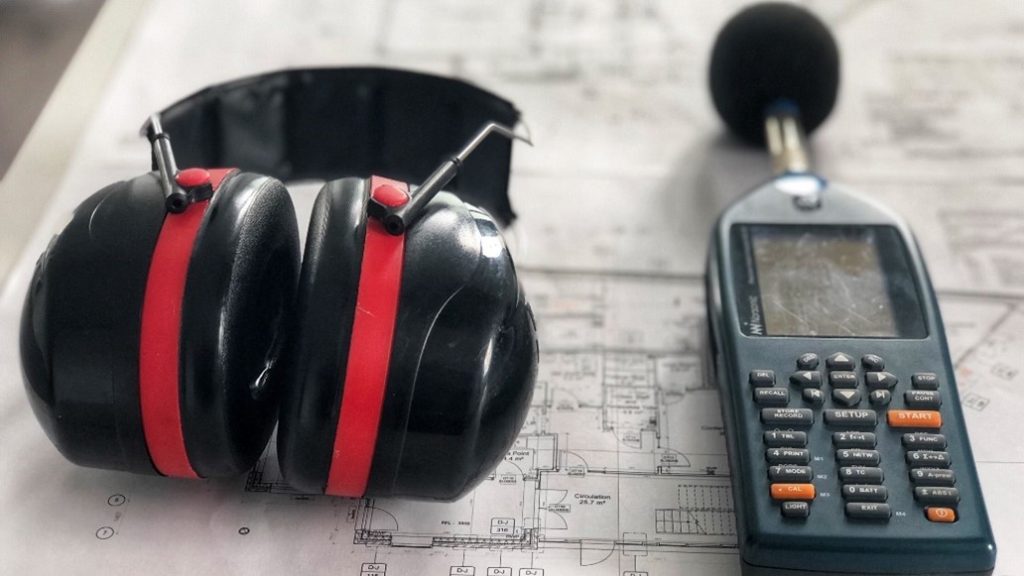
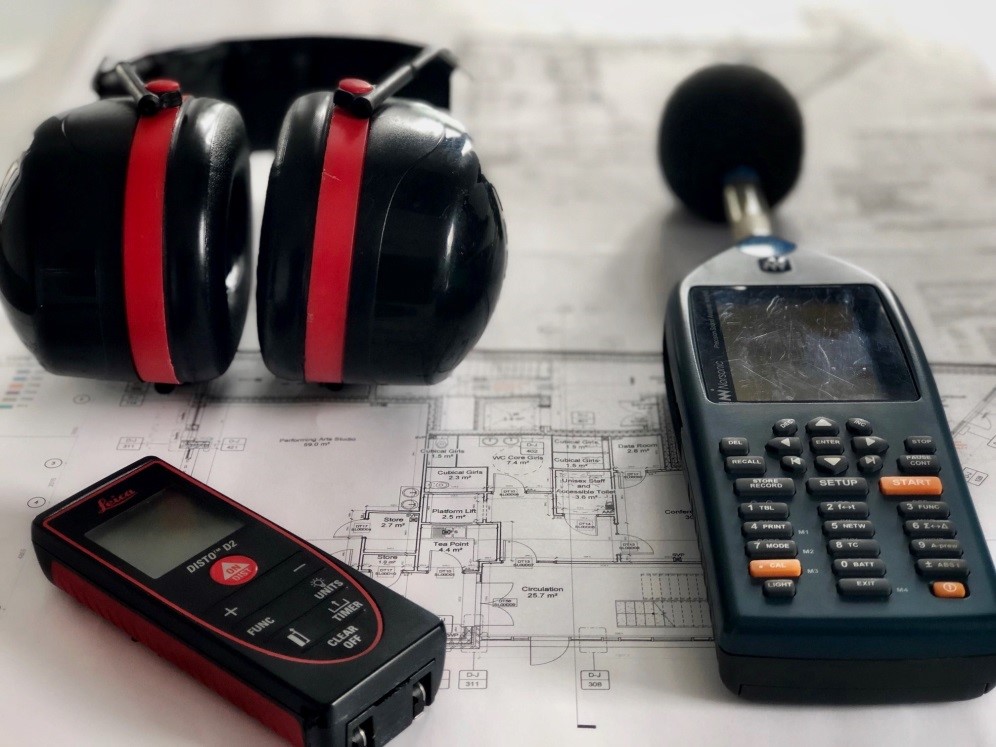
We use the latest UKAS calibrated acoustic equipment, for ease of use and reliability. unlike many other companies we able inform clients if they have passed or failed straightaway whilst on site. This allows us to offer acoustic advice and collect detailed construction information whilst on site, in the event of wall and/or floors failing the sound testing.

What if I only have 110V and not 240V on site?

Unfortunately we cannot undertake the testing off 110V or localised generator power; we will need 240V to undertake the sound testing.                   

Should I inform my neighbours of the impending sound testing?
If the building is attached in any way to occupied properties then you will need to inform the neighbours. We need to gain access to the neighbouring properties to undertake the sound test as we test the wall partition. You will also need to ensure that access is provided to the neighbouring properties throughout the sound testing.

Can you offer acoustic advice to help me to pass my sound testing?
APT offer an acoustic design service to help you design your buildings partitions to pass Part E sound testing. If you send through the relevant drawings such as sections and floor plans during the design stages of the project, we can check the design to see if there are any junctions or details where ‘noise flanking’ may occur, we can then advise if any changes are required to lower the chance of sound test failures.

Rest Assured

We believe in working with our clients on all types of projects from small end of terrace developments up to large blocks of flats. We believe that by being involved at the beginning of a project we can often save our clients expensive and difficult remedial works at the completion stage of a project.

If you need sound insulation testing for your current project, please call our team on 01525 303905 or email info@aptsoundtesting.co.uk  We can provide you with expert advice and are happy to offer a free, no obligation quote along with our informative

checklist to help you prepare for the sound testing.

How to pass your Sound Testing

How to pass your Sound Testing

How to pass your Sound Testing.
APT has been providing acoustic design and sound testing throughout the UK in places such as Bedford and Bedfordshire, providing you with precompletion sound test reports for your building control officer with a quick and reliable turnaround.    

Good acoustic design for party walls and floors is often critical to achieving building control sign off for Approved Document E of Building Regulations,  yet it is often overlooked in the design stage of the project. To try and negate the chance of precompletion sound test failure, we provide a complete acoustic pathway from the design stage of the project, to the final precompletion sound testing to achieve building control signoff.  approach to acoustic design service, onsite construction checks and sound testing. This ensures your company receives professional advice every step of the way, with an on-going continual consideration of cost.

How to pass your Sound Testing in Bedford

Our acoustic design and testing service package consists of the following ‘4 step plan’

  1. Sample Sound Insulation Testing

We can undertake sample sound testing to the existing buildings walls and floors to check the sound insulation performance of the existing dividing partitions. Thereafter, once the sound levels have been established and targeted acoustic design can be undertaken to ensure compliance with Building Regulations Part E.

  • Acoustic Review of the Project. 

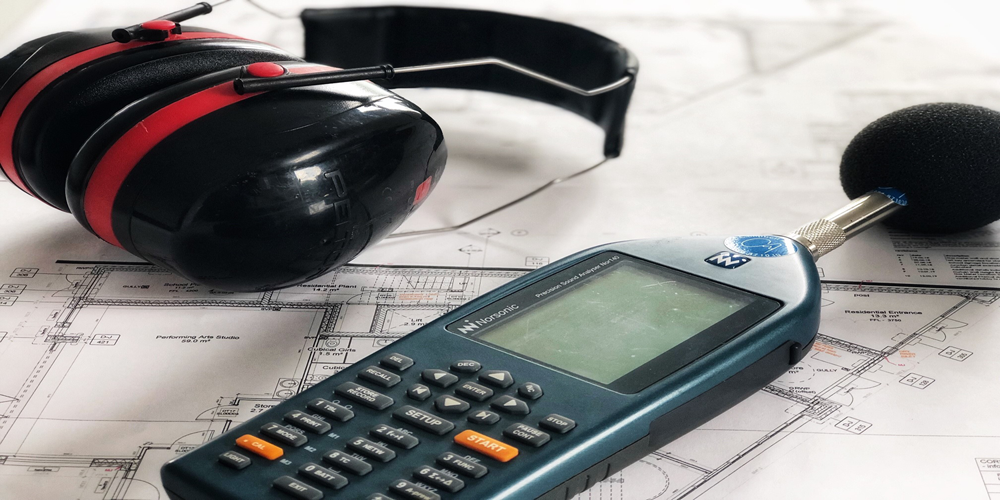
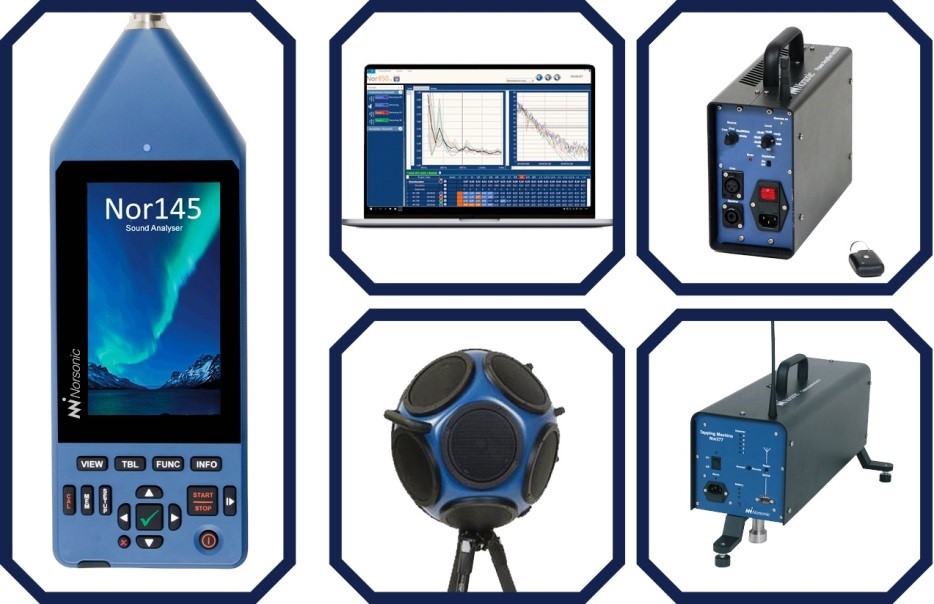
We have considerable experience in all matters related to architectural acoustic design and detailing. We can help develop the initial acoustic design of the project from the initial design scheme stage, in particular acoustic isolation, and interior acoustics. We also use the latest Norsonic equipment analysers and sound sources for conventional and binaural acoustic measurements.

  • Site Visits

We offer site visits which allow you (the client) and your contractor to feel confident about the outcomes of testing at the end of the build. The site visits let us check that the installation teams are installing the acoustic materials as per manufacturers avoiding crucial onsite mistakes. You can often have a compliant design which still fails due to poor workmanship; the site survey visits negate the risk of sound test failure.

We undertake the final precompletion testing to ensure compliance with Building Regulations Part E and achieve building control sign off for the acoustic elements of the project. 

How to pass your Sound Testing in Bedford

We have undertaken hundreds of acoustic design and sound testing packages throughout Bedfordshire and South East, with a 100% pass rate where our acoustic design reports has been implemented.

As we are a multi UKAS accredited testing laboratory, you can be sure our reportage is of the highest standard and will be accepted by the tasked Bedford building control body. As all our testing is carried out in house (we do not subcontract work) which allows us to provide highly competitive pricing whilst maintaining the highest testing standards. It is our ongoing aim to provide a friendly and proactive service from design stage to handover.

If you require acoustic design or sound testing on your Bedford project, please contact us on: 01525 303905, or email us at: info@aptsoundtesting.co.uk or visit our website at www.aptsoundtesting

We cover the following areas throughout Bedfordshire, including Kempston, Wilshamstead, Great Barford, Marston Moretaine, Ampthill, Biggleswade, Flitwick, Newport Pagnell and Woburn Sands to help you achieve the requirements of Approved Document E and attain building control signoff.

If you would like more information in regards to sound testing service and/or acoustic design services, please contact us on 01525 303905 or info@aptsoundtesting.co.uk, for more information please visit our website at www.aptsoundtesting.co.uk or download our sound test checklist.

Improving Sound Test Results on Northampton Projects

Improving Sound Test Results on Northampton Projects

Improving Sound Test Results on Northampton Projects

Our clients often ask us how they can improve the sound insulation on their developments, to pass the sound Insulation testing in compliance with Approved Document E.

One of the main problems is that many dwellings in Northampton, consist of flats converted from large Victorian houses. Unfortunately, at the time of the building conversion, designing for sound insulation was not a high priority and so many of the dwellings suffer from adverse noise transference between the floor and wall partitions. This can be extremely stressful to the occupant’s well-being is a major cause for concern.

There are some simple ways to improve the airborne and impact performance by improving the wall/floor partitions ability to reduce the amount of sound transmission, from one side of a construction element to the other. By isolating the different materials may not be enough its own and you may need to improve the mass and absorption of the partition/s as well.

Improving Sound Test Results on Northampton Projects

Improving Existing Party Walls and Floors in Northampton

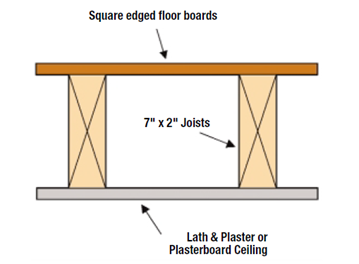
In our experience after collating the data from hundreds of sound insulation tests in Northampton, refurbishment projects – without any floor upgrades – usually achieve 30-35dB for airborne sound and 70dB for impact Sound.  These figures do not meet the required 43dB & 64dB for a conversion property as stipulated in Part E of Building Regulations. As sound double every 10dB this is classed as a massive failure and acoustic improvements must be made. Many existing constructions consist of a similar floor construction as shown in as detail 1 below.

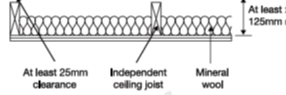
To reduce airborne and impact sound transmission this usually means adding density and isolation to the floor construction. This can be as simple as adding a drop ceiling consisting of 125mm timber frame. The top of the frame must be a minimum of 25mm below the existing ceiling finish – such as lathe and plaster. Then, to the inside of the timber frame add 100mm of Acoustic Wool and two layers of sound-board tacked to the bottom of the timber frame – all boards to be lapped. This should improve your sound test results by approx. 10-15dB depending on the existing site conditions and quality of the installation. Detail 2 shows this in more detail.

APT Sound Testing Ltd offers a ‘one stop solution’ for all your pre-completion sound testing services in Northampton.

If you have a single dwelling or a site containing hundreds of units, we can help you to achieve compliance and building control sign off. Offering our one stop solution we can minimise your workload by offering a single point of contact throughout the design and construction phase of your Northampton development. We also offer our one stop solution service which encompasses Air Tightness, Sound Insulation and Ventilation Testing in a single package. We can also offer SAP Calculations for domestic properties and SBEMs calculations for commercial properties.

If you would like advice on your acoustic design or require sound insulation testing in Northampton, please contact us now on 01525 303905 or contact us at info@aptsoundtesting.co.uk.

Alternatively for more information, please visit our website at www.aptsoundtesting.co.uk or to help you prepare for your sound insulation test, please download our Sound Test Checklist

Secrets to Successful Sound Testing

Secrets to Successful Sound Testing

Secrets to Successful Sound Testing
There are many considerations to achieving successful sound testing on your development. The main areas that need to be addressed are the dividing wall and flor construction.  When dealing with walls you normally just need to worry about airborne sound; however, with walls it’s both airborne and impact sound which can be far more difficult to deal with.

The usual noise problems associated with airborne sound transmission is TV noise, music and speech. This can be dealt with by applying ceiling treatments as well as mass and isolation to the building components. Impact sound (footfall) performance is increased by the used of resilience layers and isolation of components to prevent noise flanking through the partition.

Secrets to Successful Sound Testing

Airborne Sound Testing
For airborne sound testing Building Regulation Part E requires you achieve at least 45dB for new build properties and 43dB for conversion developments, this applies both to party walls and floors between properties. This level is the difference between the source level and the receiver level during sound testing. Therefore, if the source level in one flat is 110dB and the receiver level in the neighbouring flat is 55dB, the level difference (or sound reduction performance) is 55dB.

The measurement is corrected for several factors such as background noise, room characteristics and frequency weighting, giving the final sound insulation performance value of the tested partition. In this case the higher the number the better the sound insulation performance. The measurement is done by using a Class 1 Analyser and the associated equipment.

Impact Sound Testing
For impact sound testing Building Regulation Part E requires you achieve at least 62dB for new build properties and 64dB for conversion developments. Impact insulation performance only applies to party floors and related to the effectiveness of the floor construction in absorbing shock such as footfall noise. The measurement is done by using a Norsonic tapping machine (as shown below).

The machine has 5 weights which tapping in regular succession on the tested floor which emulates footfall noise. The noise levels are taken in the receiving room below, which are then measured and averaged for different tapper positions, which then gives the sound reduction rating of the floor. In this case the lower the figure, the better the performance.

Good Acoustic Design
To try and ensure you meet the standards stipulated within Building Regulations Part E, careful consideration should be shown to the acoustic design detailing from the stat of the project. offset. Tackling the acoustic design for both new build and conversion project requires two different construction techniques and acoustic design detailing.

With new build properties you have a blank canvas in terms of the overall design whereas with conversions you usually need to work with the existing’ onsite’ construction which can be quite difficult.

We offer an acoustic design package, which contains the following elements:

a.            Sample Sound Testing – of the existing construction. This offers an accurate overview of the acoustic performance of the existing partitions which enables us to offer a targeted acoustic design using the sound insulation performance of the existing construction.

b.            Acoustic Design Review – a full design review of the proposed developments party walls and floors.

c.             Site Survey Visits – to let us view the existing site construction. This allows us to check for potential problematic construction such as inclusion of lightweight blocks in the existing construction. It also lets us check that the installation teams are installing the acoustic materials as per manufacturer’s guidelines.

d.            Final Precompletion Sound Testing in compliance with Building Regulations Part E.

Useful Acoustic Design Considerations

a.            Avoid the use of lightweight blocks in the inner envelope construction and/or stairwell construction etc. as sound will travel both vertically and horizontally from dwelling to dwelling.

b.            The use of resilient suspended ceilings will help improve the performance of the floor partition.

c.             Ensure all support steels/timbers are carefully boxed out where they travel from flat to flat vertically and horizontally.

d.            Use a high quality resilient acoustic membrane on top of the floor to improve the impact performance of a floor.

e.            Ensure all penetrations are fully sealed where they terminate through floors and they are adequately boxed with acoustic quilt and two layers of plasterboard.

In our experience the main 5 considerations when designing for separating walls and floors between dwellings are: If used together or in various combinations they will improve sound insulation properties over a wide range of frequencies.

The main factors are:

a.            Mass

b.            Isolation

c.             Absorption

d.            Resilience

e.            Stiffness

If used together or in various combinations they will improve sound insulation properties over a wide range of frequencies and should achieve compliance with Building Regulations Part E.

Secrets to Successful Sound Testing
In our experience if the acoustic design is taken into consideration from the offset of the project, then it usually results in compliance with Building Regulations Part E.  In Some cases sound test failure can also be down to the poor workmanship rather than the acoustic design that is why we offer a full‘4 step’ acoustic package.

Do you live or operate in Watford, Northampton or Milton Keynes? If you have a project that needs acoustic design advice or sound insulation testing, then please visit the APT Sound Testing website or phone us directly on 07775 623464.

Sound Testing Services in London

Sound Testing Services in London

Sound Testing Services in London
The UK capital is a massive city containing in excess of 5 million dwellings, many sharing wall and floor partitions. In this noisy environment it is essential that good acoustic design and construction is incorporated into all new and refurbishment projects along with sound testing for London.

To try and help enforce good acoustic design principles and pre-completion sound testing was introduced in July 2003 to comply with new Approved Document E. The new building regulations required 10% of each party wall/floor construction type to be tested on all new build and conversion properties.

We have undertaken thousands of sound tests on converted properties in London and in our experience if the partitions haven’t received any acoustic upgrades the wall and floor partitions – as per the plate below) normally achieve approx. 30-35dB for airborne sound and 68-74dB for Impact Sound. Obviously these figures fall well short of the required 43dB & 64dB as stipulated in Approved Document E. Also, it’s worth taking into account that sound doubles every 10dB, so 30-35dB for airborne sound and 68-74dB for impact sound would be massive failures and careful acoustic design and construction upgrades would be required.

Detail 1: Existing Floor Partitions (rated at approx. 30-35dB)

Existing Floor Partitions Rated At Approx. 30dB

Sound Testing Services
Using our many years’ experience in building acoustics, we are able to offer a total design and testing solutions for new and conversion projects. We help many architects and top 10 construction companies with their acoustic design requirements from the largest developments containing hundreds of units through a pair of semi-detached dwellings. We always endeavour to find the most cost effective solution. 

If it’s a conversion project and you are unsure of the floor/wall construction, we often recommend our ‘sample sound testing service. Firstly, we visit site and undertake sample sound testing to at least one floor and wall partition, is consists of at least one airborne and impact test to the proposed dividing floor and an airborne test to the dividing wall. Once the sound test results are established we can then offer a targeted acoustic design solution to achieve a successful sound test in London in compliance with Approve Document E.

Once the construction works are underway we can undertake a site visit to check that the installation teams are installing the acoustic materials as per manufacturer’s guidelines, thus avoiding crucial onsite mistakes during the construction phase. In our experience a sound test failure is often caused by poor workmanship rather than the actual acoustic design. The site survey helps to further reduce the chance of a London sound test failure.

Sometimes, there are more technical issues such as noise flanking which may require more detailed diagnosis and invasive investigation, such as the removal of some of the wall and floor partitions. In many cases a large amount of noise flanking is due to serious design faults, e.g. the use of lightweight blocks in the construction of the walls in an apartment development. This allows the sound to travel along the walls and floors from dwelling to dwelling. In many cases a wall and/or floor partition may have a very good acoustic construction; however the partition will still fail as the sound is travelling along a noise flanking path.

We often get asked what ate the main reasons for sound test failures on new and existing dwellings, in our experience they are:

  1. Where lightweight blocks used in the inner envelope construction. This allows sound to travel along the lightweight blocks both vertically and horizontally from dwelling to dwelling.
  2. Through dividing floors if there is lack of mass or acoustic insulation has not been installed and/or or direct fixing of plasterboard and/or floorboards to joists without using a resilient ceiling construction and/or floating floor.
  3. Through Windows if they are no double glazed or have secondary glazing as a minimum
  4. Through Fixtures & fittings such as light switches, telephone outlets and TV cable ducts where they sit back to back against the adjoining property.
  5. Along structural joints along the perimeter wall and floor joint. These areas should be  filled with acoustic mastic)
  6. Structural steels that run through one property to the other without material isolation, i.e. plasterboard is screwed directly to the steel offering little or no noise isolation.

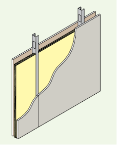
There are many quick and simple solutions to improve the acoustic performance of dividing wall partitions. One of the easiest wall solutions is to install a 70mm met-sec partition in front of the existing wall abutting dwellings. Firstly leave approx. 25mm gap between the back of the met-sec and the existing wall. Then install 50mm acoustic wool to the inside of the met-sec and add two layers of soundboard to the outside of the met-sec frame, ensuring all boards are properly lapped and the perimeter joints are filled with acoustic mastic. Also make sure that the sockets etc. are placed in a different position to the sockets on the other side of the wall.

To reduce airborne and impact sound transmission through the floor, one simple solution is to add a timber baton to the bottom of the joists. Then add an acoustic resilient hanger.

To the inside of the newly formed void add an AW 25 Isowool acoustic insulation. To the underside of the hangers install 2 x 12.5mm layers of soundboard. Allow for the correct laps in the plasterboard. Add AW100 Isowool to the centre joist void and to the top of the joists install 18mm flooring. To the top of the flooring add a 4mm resilient matt. 

The above Air and Wall solutions should comply with Approved Document Air for you Sound Testing in London. Whatever the problem we can usually find an acoustic solution that will help you achieve Building Regulation compliance.

If you have a project that needs acoustic design advice or needs sound insulation testing then please contact us at info@aptsoundtesting.co.uk or phone us directly on 0203 669 2650 and we should be able to offer you an expedient acoustic solution to help you achieve practical completion.

Improving Sound Insulation on Conversion Projects

Improving Sound Insulation on Conversion Projects

Improving Sound Insulation on Conversion Projects
Many of the dwellings in London and other UK Cities consist of flats which have been converted from large Victorian or Georgian houses, or more recently office blocks. Unfortunately designing for sound insulation is not always shown the highest priority so many converted dwellings suffer from adverse noise transference between the floor and wall partitions. This can be extremely stressful to the occupant’s well-being is a major cause for concern.

We have helped many of our clients achieve compliance with Part E, by undertaking some simple steps. We can undertake an initial sample sound test of the existing wall and floor construction to ascertain the existing sound insulation levels. Once we have established the sound levels for the existing construction, we can then look at extent of the acoustic upgrades to attain Part E Compliance. This is much more effective than just forwarding an acoustic design that may be to excessive and expensive, especially if the existing floor and/or wall only needs to improve by a minimal amount such as 1-3dB. By having the existing sound levels of the partitions we can recommend targeted, acoustic upgrades to comply with Building Regulations Part E. 

The sound insulation levels required to pass Part E for refurbishment projects are less stringent than new build projects. Instead of 45dB for airborne its 43dB (2 dB less), and for instead of 62dB for Impact Sound Testing its 64dB on new build (2 dB more).

In our experience, refurbishment projects usually achieve 30-35dB for airborne sound and 70dB for Impact Sound during the sample sound test – if the existing construction has not been acoustically upgraded. These figures do not meet the required 43dB & 64dB as stipulated in Part E of Building Regulations. As sound double every 10dB this is a massive failure and major acoustic improvements must be made. Many existing construction consist of a similar construction as shown in as detail 1 below.

Detail 1: Existing Floor Partitions Rated At Approx. 30dB

Existing Floor Partitions Rated At Approx. 30dB

Improving Wall and Floor Partitions

There are ways you can improve the airborne and impact performance by improving the wall/floor partitions ability to reduce the amount of sound transmission from one side of a construction element to the other. However; by isolating the different materials may not be enough its own and you may need to improve the mass of the partition as well.

Existing Floor Partitions

In our experience, refurbishment projects usually achieve 30-35dB for airborne sound and 70dB for Impact Sound, if the existing construction has not been acoustically upgraded. These figures do not meet the required 43dB & 64dB as stipulated in Part E of Building Regulations. As sound double every 10dB this is a massive failure and acoustic improvements must be made. Many existing construction consist of a similar construction as shown in as detail 1 below.

Improving Existing Floor Partitions

To reduce airborne and impact sound transmission this usually means adding density and isolation to the floor construction. This can be as simple as adding a drop ceiling consisting of 125mm timber frame. The top of the frame must be a minimum of 25mm below the existing ceiling finish – such as lathe and plaster. Then, to the inside of the timber frame add 100mm of Acoustic Wool and two layers of sound-board tacked to the bottom of the timber frame – all boards to be lapped. This should improve your sound test results by approx. 10-15dB depending on the existing site conditions and quality of the installation – as per Detail 2 below:

Detail 2: Acoustic Flooring Partition Upgrade

Acoustic Flooring Partition Upgrade

Existing Wall Partitions

The standard onsite construction for existing internal walls may be a mixture of 100mm masonry with render applied to either side; or, 100mm timber partition with lathe and plaster to either side. Unfortunately neither of these existing wall constructions will usually have the acoustic properties to pass Part E in their existing state due to lack of mass and poor isolation values. 

Improving Wall Partitions

One way to quick and simple way improve the acoustic performance of a the dividing wall partition, is to install a 70mm met-sec partition in front of the existing wall – it’s usually best to install this in the largest room backing onto the dividing partition. Leave approx. 25mm gap between the back of the met-sec and the wall. Then install 50mm acoustic wool to the inside of the met-sec and add two layers of soundboard to the outside of the met-sec frame, ensuring all boards are properly lapped and the perimeter joints are filled with acoustic mastic.

Detail 3: Met-sec Wall Upgrade

Met-sec Wall Upgrade

Taking the above into account is it essential that good acoustic design is addressed right from the start of the refurbishment project, so it prevents delays in handover, i.e. to prevent the dwelling failing the sound testing at building control signoff stage.– a common problem.

If you would like advice on your acoustic design or require sound insulation testing in London, please contact us now on 07775623464 or contact us at info@aptsoundtesting.co.uk.

Acoustic Design & Sound Testing Party Walls & Floors

Acoustic Design & Sound Testing Party Walls & Floors

Acoustic Design & Sound Testing Party Walls & Floors

The main design considerations for party walls and floors in dwellings.

To improve the chance of a successful sound test and reduce the chance of noise flanking you will need to ensure that you allow for the following five acoustic design considerations, when upgrading an existing floors and walls in flats they are:

  1. Mass
  2. Isolation
  3. Absorption
  4. Resilience
  5. Stiffness

Reasons for party walls failing sound testing in Flats

The are many reasons for party walls failing the pre-completion sound testing for Part of Building Regulations, the main reasons are

  1. Shared Structural Building Components – Floorboards, Floor Joists, Continuous Drywall Partitions, Continuous Concrete Floors, and Cement Block Walls.
  2. Through Structural Steel – Structural steel beams are often a major cause of noise transmission as plasterboard is often fixed directly to the steel without sound breaks.
  3. Plumbing Chases – Junctures between the Walls & Floor Slab Above or at the Exterior Wall Juncture (this should be filed with mortar etc. to add mass to these weakened areas.
  4. Through Windows – if they have single glazing, with no double glazing or secondary glazing as a minimum.
  5. Fixtures & Outlets – Light Switches, Telephone Outlets, and Recessed Lighting Fixtures (if penetrations have been cut back to back with the opposite dwelling under test)
  6. Structural Joints – Perimeter Joints at Wall & Floor, Through Wall & Ceiling Junctures (these should be filled with acoustic mastic.
  7. Around the End of the Partition Through the Adjacent Wall (acoustic mastic should be used to seal this junction)

Acoustic wall upgrade for Existing Flats

One way to quick and simple way improve the acoustic performance of a dividing wall partition, is to install a 70mm met-sec partition in front of the existing wall – it is usually best to install this in the largest room. Leave approx. 25mm gap between the back of the met-sec and the wall. Then install 50mm acoustic wool (min 45kg/m3) to the inside of the met-sec and add two layers of 12.5mm soundboard to the outside of the met-sec frame. Ensure all boards are fully lapped and the perimeter joints are filled with acoustic mastic.

What Sound Tests do I Need on My Party Walls.

Essentially, for sound testing party walls, you only need to carry out one type of sound test,  which is airborne sound testing. For floor partitions you are required to carry out two types of sound insulation tests which are airborne and impact sound insulation tests. The airborne sound insulation test is carried out by means of a loudspeaker emitting a steady source of noise on one side of the partition (wall or floor) to be measured

How Should I Prepare my Dwelling to Pass the Party Wall Sound Testing?

It is easy to prepare your new project for the sound insulation testing to your party walls, basically you should action the for the following checklist:

  1. The whole building envelope and internal walls and floors should be fully completed prior to the undertaking sound testing.  
  2. All external and internal doors and walls should be installed.
  3. All electrical fittings must be completely in-place, and fully functional. Poor electrical installation can lead to excess noise.
  4. 240 volt power should be in-place and available in every room. Our testing equipment can be damaged  by the voltage fluctuations of on-site power generators, so it’s essential to have 240V mains supply on-site on the day of the test
  5. No carpets or laminated flooring should be fitted on the 1st floor levels or above. These materials can affect the movement of noise, and as a result could impact on whether a building passes the sound check test.
  6. The skirting boards should not touch the floating floor, a flanking strip should be installed to prevent the noise flanking.
  7. All gaps in the walls and floors should be sealed. Again, noise can leak out through any gaps, affecting the movement of sound and impacting on the space’s performance.
  8. Access to all of the rooms on all levels should be granted to our technicians, with all noise sources (radios, alarms, building work) ceasing for the duration of the test.
  9. The above points are all essential if we are to achieve accurate sound test readings.  If any of them are ignored, there is a risk of you either failing your test or – at worst – not being able to complete it, at which point you may still be charged 75% of the test fee.

We can advise on all types of acoustic design to help you pass your sound testing to walls in flats, whether it’s accomplished during initial construction or during a refurbishment/renovation project. We also undertake UKAS accredited sound testing providing a ‘one stop’ solution for all your acoustic requirements.

If you would like more information in regards to sound testing please follow our blog at: http://soundtestinguk.blogspot.co.uk or contact us at: info@aptsoundtesting.co.uk or call Darren Direct on 07775623464. Alternately, if you would like more information on how to prepare for your sound testing please download our sound test checklist.

UKAS Accredited Sound Testing

UKAS Accredited Sound Testing

UKAS Accredited Sound Testing

The need to carry out sound insulation testing to assess and report the acoustic performance of dividing partitions between dwellings has become increasingly important in order to demonstrate that a building’s intended performance is achieved when constructed.

Poor design detailing and/or onsite construction can have a significant impact on the overall performance of building elements and the building as a whole. Post completion sound testing provides greater certainty that designed performances are actually being achieved in compliance with Approved Document E.

Why we are a UKAS Accredited Air and Sound Testing Laboratory

Precompletion Sound Testing is now an integral part of supporting the completion certificate process throughout the UK and Ireland. In order to ensure that testing is undertaken within a robust regime which controls the reliability of test results, government guidance is in place which describes restrictions on those who should carry out sound testing and reportage.

Approved Document E states a set of sound tests should be carried out for every ten dwellings (houses, flats or rooms for residential purposes). However, if the development has several different construction types, you may need to carry out further tests for each type of construction.

For houses this usually means you are required to undertake 2 airborne wall sound tests (up to 10 houses) to the dividing walls. For flats you will be usually be required to undertake 2 airborne wall, 2 airborne floor and 2 impact floor tests (up to 10 Flats). When we undertake a fee proposal for clients, we always include a full testing schedule so it can be submitted to building control for their approval prior to the test date.  

One of the stipulations of Approved Document E is that the testing company needs to be UKAS accredited, this is covered under the Resistance to the passage of sound: Approved Document E [ADE] it goes on to state that “The person carrying out the building work should arrange for sound insulation testing to be carried out by a test body with appropriate third party accreditation” and is downloadable at: https://www.gov.uk/government/publications/resistance-to-sound-approved-document-e.

APT Sound Testing is UKAS accredited to carry out sound insulation testing and is laboratory and as a result our reports will be accepted by building control – here is a link to our UKAS Sound Testing Accreditation: https://www.ukas.com/wp-content/uploads/schedule_uploads/00002/4340Testing%20Multiple.pdf

For future note we are also UKAS accredited to carry out Air Tightness Testing – here is a link to our UKAS Air Tightness Accreditation: https://www.ukas.com/wp-content/uploads/schedule_uploads/00002/4340Testing%20Multiple.pdf

If you would like more information on our sound testing service and/or other services please contact us now at: info@aptsoundtesting.co.uk or visit our website at www.aptsoundtesting.co.uk.

Alternately, if you would like more information on how to prepare for your sound insulation testing please download our sound test checklist.

Sound Insulation Testing Terminology

Sound Insulation Testing Terminology

Sound Insulation Testing Terminology
Developers and landlords may need to improve sound insulation over a wide range of houses and flats. This may be due to the fact they have just built a new development that requires sound insulation testing under Part E or as part of a general refurbishment programme, i.e. changing houses into flats.

Often confusion can arise from the large amount of ‘terms’ used in conjunction with acoustic design and sound insulation testing. To help with this we have made a list of the following terms for clarity:

Absorption
This is the conversion of sound energy into heat, often by the use of a porous material.

Absorbent Material
This is a material that absorbs sound energy, such as acoustic mineral wool.

Airborne sound
This is sound which is propagated from a noise source through the medium of air. Examples of these are speech and sound from a television

Airborne Sound Transmission
This is direct transmission of airborne sound through walls or floors. When sound energy is created in a room, for instance by conversation, some of the energy is reflected or absorbed by room surfaces but some may set up vibrations in the walls and floor. Depending on both the amount of energy and the type of construction, this can result in sound being transmitted to adjacent parts of the building.

Air Path
This is a void in construction elements, which adversely affects the performance of sound resisting construction. Examples of air paths include incomplete mortar joints, porous building materials, gaps around pipes and shrinkage cracks – this can also effect the air tightness results.

Bonded resilient cover
This is a thin resilient floor covering normally of minimum 3-5mm thickness, which is bonded to the isolated screed surface to reduce impact sound transmission such as footfall noise, however it has a lesser effect when it comes to airborne noise.

Cavity stop
This is a proprietary product or material such as mineral wool (fibre) used to close the gap in a cavity wall.

Composite Resilient Batten
This is composed of a timber batten with a pre-bonded resilient material to provide isolation between the flooring surface layers and floor base.

Cradle/Saddle
This is an intermediate support system (with a resilient layer base, either pre-bonded or already integral) using levelling packer pieces to support a timber batten, isolating it from the floor base.

Decibel (dB)
This is the unit used for different acoustic quantities to indicate the level with respect to a reference level.

Density (kg/m3)
This is the mass per unit volume, expressed in kilograms per cubic metre (kg/m3). Blockwork is commonly referred to by industry in terms of strength (in Newtons). However, it is the density that has the important role in terms of sound insulation.

Direct transmission refers to the path of either airborne or impact sound through elements of construction.

DnT,w
This is the weighted standardized level difference. A single-number quantity (weighted) which characterises the airborne sound insulation between two rooms, in accordance with BS EN ISO 717-1:1997

Façade Testing
This Standard – ISO 140-5:1998) specifies the testing methods to evaluate the sound insulation in buildings and building elements for facades. Three rounds of a proficiency testing scheme for airborne sound insulation measurements have been performed according to the methods specified in the standard for a whole facade by using an external loudspeaker as the noise source.

Flanking element (flanking wall)
This is any building element that contributes to the airborne sound or impact transmission between rooms in a building which is not the direct separating element (i.e. not the separating wall or separating floor).

Flanking strip or edge strip
This is a resilient strip using foamed polyethylene normally 5 mm thick, which is located at the perimeter of a floor to isolate the floor boards from the walls and skirtings.

Flanking transmission
This is airborne or impact transmission between rooms that is transmitted via flanking elements and/or flanking elements in conjunction with the main separating elements. An example of a flanking element is the inner leaf of an external wall that connects to the separating ‘core’ of a wall or floor.

Flexible closer
This is a flexible cavity stop or cavity barrier which seals the air path in cavities linking adjoining dwellings.

Floating floor treatment (FFT)
This is a timber floating floor system which may use battens, cradles or platform base, all of which use a resilient layer to provide isolation from the base floor and adjacent wall elements.

Gypsum based plasterboard
This is a dry lining board applied to walls, ceilings and within floating floor treatments which has gypsum content. It may also have fibre reinforcement within the board.

Impact sound
This is sound which is propagated from a noise source through a direct medium. An example of this is footfall on a floor.

Impact sound transmission
This is sound which is spread from an impact noise source in direct contact with a building element.

Isolation
This is a strategy to limit the number and type of rigid connections between elements of construction.

L’nT,w
This is the weighted standardized impact sound pressure level. A single-number quantity (weighted) to characterise the impact sound insulation of floors, in accordance with BS EN ISO 717-2: 1997.

Mass
This is a physical quantity that expresses the amount of matter in a body. Walls and floors may be described in terms of the surface density (mass per unit area, kg/m2) of the wall face or the floor surface, which is the sum of the surface densities of each component of the construction. The density of materials is expressed as mass per unit volume, kg/m3, which can be provided via the core structure and linings such as in-situ concrete or solid dense block walls.

Mass per unit area (or surface density)
This is is expressed in terms of kilograms per square metre (kg/m2). This is often used to describe boards, panels, flooring and dry linings (see gypsum based board).

Resilience
This can reduce structural vibration transmission and still maintain material performance and overall dimensions, examples include floating floor treatments such as resilient battens or cradles, or resilient ceiling bars.

Resilient ceiling bars
This acoustic solution is generally metal based and vary in thickness from 11 mm to 30 mm. They are mounted perpendicular to the joist span direction and can increase both airborne and impact sound insulation. Care should be taken to ensure that the ceiling board fixings into the resilient bar do not come into contact with the joists and reduce the potential performance.

Resilient noggin
This is a small section of resilient ceiling bar which is used to assist in bracing non load bearing partitions.

Rw
This is a single-number quantity (weighted) which characterises the airborne sound insulation of a building element from measurements undertaken in a laboratory, in accordance with BS EN ISO 717-1: 1997

Sound Insulation Testing
Sound Insulation Testing is required near the end of a development to show that the performance of the party wall and floor partitions meet the standards as stipulated in Building Regulations Approved Document E. The testing methods for airborne and impact sound insulation is in full accordance with the suggested methods presented in BS EN ISO 140-parts 4 & 7: 1998.

Stiffness
This is can improve low frequency sound insulation, for example in floors, by reducing the potential for deflection or movement of the primary structure, therefore the correct spacing and depth of joists is important. If you have a project that requires acoustic design and/or sound insulation testing please let us know. APT Sound Testing will ensure you will have direct contact with the allocated acoustician from the start of the process, through to the successful completion of the sound insulation testing. 

If you would like more information in regards to acoustic services, please contact us at info@aptsoundtesting.co.uk or visit our website at: www.aptsoundtesting.co.uk    

Two Types of Sound Insulation Testing

Two Types of Sound Insulation Testing

Why are There two Types of Sound Insulation Testing

There are two types of sound insulation testing, Airborne and Impact. As the two types of testing are quite different here is a quick article explaining both types.

Airborne Sound Testing

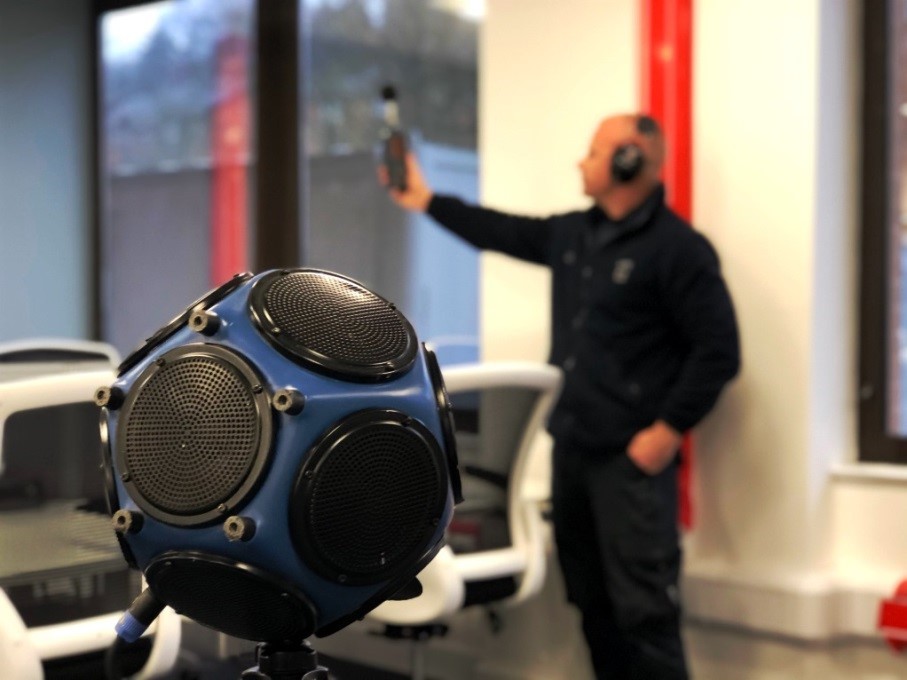
Airborne sound testing is undertaken to walls & floors. Firstly a controlled noise is generated by an amplifier and loudspeaker across a broad range of frequencies. The generated noise is very loud and is often in excess of 100dB. Initial measurements are taken using a class 1 sound level meter within the ‘source room’ followed by further measurements in the ‘receiver room’ on the other side of the wall or floor under investigation. The source room speaker position is then changed and the measurements repeated either side of the partition under test.

Two Types of Sound Insulation Testing

Thereafter background noise measurements are made using a class 1 sound level meter in the receiving room and are used to apply appropriate corrections for external sound such as traffic noise. Similarly the reverberation time (the time taken for sound to decay by 60dB) is measured within the receiving room using the sound source and a sound level meter to determine the corrections that must be applied to account for the characteristics and absorptiveness of the room.

 The difference in the two airborne noise levels (for walls and floors), corrected for background and reverberation characteristics determines the airborne sound insulation performance of the wall, or floor. A greater airborne noise difference between the source room and the receiver room determines a higher airborne sound insulation performance.

The time taken to undertake sound testing varies from project to project as no site is exactly the same. Taking into account standard site conditions a set of tests on houses -two airborne walls will take one to two hours. A six pack of tests on flats – 2 airborne wall tests will usually take between one and two hours, although this is dependent on our engineers having full free uninterrupted access between all the units/rooms under investigation.

Impact Sound Insulation Testing

Impact sound transmission testing is undertaken to floors only. This test is different; a calibrated Norsonic ‘tapping machine’ which comprises of five ‘hammers’ driven up and down by a cam and electric motor is used to “tap” the floor surface by applying a known force on the floor structure. The machine is placed in several pre-determined positions. The resulting noise is measured in the dwelling below, using a sound level meter.

Four Steps to Successful Sound Testing

Thereafter, background noise measurements are made using a class 1 sound level meter in the receiving room and are used to apply appropriate corrections for external sound such as traffic noise. Similarly the reverberation time (the time taken for sound to decay by 60dB) is measured within the receiving room using the sound source and a sound level meter to determine the corrections that must be applied to allow for the characteristics and absorptiveness of the room.

The measured noise levels in the receiving room are corrected for background and reverberation characteristics determine the impact sound insulation performance of the floor. For the impact noise the lower the measured level, the better the performance as less sound is being transmitted into the dwelling below.

The time taken to undertake sound testing varies from project to project as no site is exactly the same. Impact testing is usually undertaken as part for a 6 pack test, consisting of 2 airborne walls, 2 airborne floor and 2 impact sound tests. A standard 6 pack test will usually take between two and three hours, although this is dependent on our engineers having full free uninterrupted access between all the units/rooms under investigation.

If you require sound insulation testing, and/or acoustic design advice then please contact us now at info@aptsoundtesting.co.uk  or phone me (Darren) directly on 07775623464.