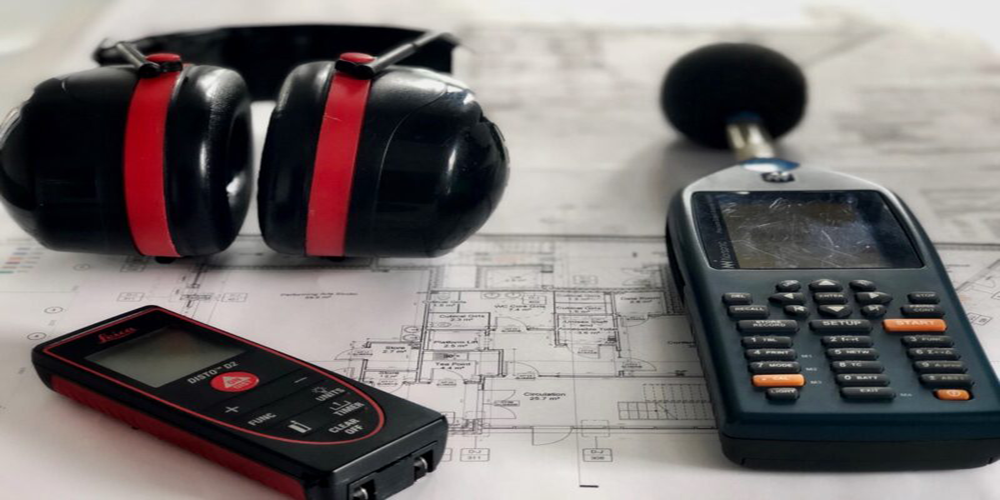
What Causes Sound Test Failures in Flats?
Common Reasons Flats Fail Sound Insulation Testing in London
Sound test failures in flats are one of the most common issues we encounter across London and the South East — particularly on conversion projects, where existing buildings were never designed to comply with modern acoustic standards.
Older timber floors, lightweight partitions, poor detailing, and installation errors frequently lead to failed sound insulation tests under Approved Document E (Part E) of the Building Regulations.
The good news? Most failures are preventable.
Below, we explore the most common causes of sound test failures, why they happen, and how to avoid costly delays on your next project.
1. Poorly Installed Acoustic Insulation
Incorrectly fitted insulation is one of the leading causes of airborne sound test failures in flats.
Even when the correct specification has been selected, poor installation can significantly reduce acoustic performance.
Common installation problems include:
- Acoustic insulation slumping to the bottom of joists
- Missing sections or voids within floors or walls
- Gaps between insulation and structural elements
- Using low-density insulation instead of acoustic-grade mineral wool
Acoustic mineral wool should be installed tightly between joists and partitions, with no gaps or compression. Low-performance insulation or poor workmanship can leave separating structures unable to meet Part E requirements.
For further guidance on suitable constructions, see our article on Designing for Sound Insulation.
2. Gaps Around Perimeters and Service Penetrations
Sound always finds the path of least resistance.
In flats, we regularly identify hidden gaps that allow sound to bypass the main separating structure entirely — commonly known as flanking paths.
Typical problem areas include:
- Unsealed floor perimeters
- Gaps around pipes, sockets, and cable penetrations
- Voids behind skirting boards
- Open gaps around steel beams or joist ends
- Poorly sealed chimney or fireplace openings
Even small defects can have a major impact. In some cases, a continuous 5mm perimeter gap can reduce airborne sound performance by up to 10dB, enough to cause a failed test.
Careful sealing with acoustic mastic and robust pre-completion inspections are essential.
For more information, read What Types of Sound Insulation Testing Are Needed for Flats?
3. Lightweight Floor Finishes Without Acoustic Underlay
Impact sound failures are especially common in London flats where hard floor finishes have been installed without suitable acoustic treatment.
This commonly affects:
- Laminate flooring
- Engineered timber flooring
- Luxury Vinyl Tile (LVT)
- Ceramic or stone tiles
Hard floor finishes transfer footfall noise directly into the structure, increasing impact noise levels in the flat below.
Typical causes of failure include:
- No resilient acoustic layer beneath the floor
- Thermal underlay used instead of acoustic underlay
- Incorrect installation of underlay systems
- Floating floors not isolated from perimeter walls
Without proper acoustic separation, even well-constructed floors can fail impact testing.
Read more in our guide to Sound Testing Floors in Flats.
4. Acoustic Bridging Between Structural Elements
Acoustic bridging occurs when parts of a structure that should remain isolated become accidentally connected, creating a rigid pathway for sound transmission.
This is one of the most overlooked causes of sound test failures.
Common examples include:
- Resilient bars screwed directly into joists
- Floating floors touching perimeter walls
- Acoustic hangers fitted incorrectly
- Ceiling joists making contact with partition walls
- Plasterboard fixed through resilient layers
Even small bridging points can dramatically reduce the effectiveness of an acoustic build-up, resulting in failures for both airborne and impact sound insulation.
Attention to detail during installation is critical.
5. Incorrect Acoustic Build-Ups in Flat Conversions
Conversion projects are particularly vulnerable to failure because many older buildings were never designed for modern sound insulation standards.
In London conversions, we often see separating floors achieving only 30–35dB airborne performance, far below the 43dB minimum requirement under Part E.
Common issues include:
- Thin timber joists
- No insulation between joists
- Single plasterboard ceilings
- Missing resilient layers
- Historic construction defects, gaps, and hidden voids
Without proper upgrades, these constructions are unlikely to pass testing.
At APT Sound Testing, we strongly recommend sample sound testing before works begin to establish the correct upgrade strategy and reduce the risk of expensive remedial work later.
See our guide to Pre & Post Construction Sound Testing Methodology for more detail.
6. Lightweight Masonry (Thermalite & Aircrete Blockwork)
Lightweight masonry — particularly Thermalite and other aircrete block systems — is a frequent cause of sound insulation test failures in both residential and commercial developments.
While these materials offer excellent thermal performance and are easy to work with on site, their low mass makes them acoustically weak.
Under Approved Document E, separating walls must achieve minimum airborne sound insulation standards, and lightweight blockwork often struggles to meet these requirements without additional acoustic treatment.
Why lightweight masonry can fail:
- Low density (typically 400–600kg/m³) provides poor sound resistance
- Mortar joints are inconsistent or poorly filled
- Service chases are cut too deeply
- Blockwork junctions are not fully bonded
- Flanking transmission occurs via adjoining floors, ceilings, or walls
Lightweight blockwork can pass sound testing — but only when supported by the correct detailing, acoustic upgrades, and installation methods.
An early acoustic design review can identify weaknesses before construction is complete, reducing the risk of costly failures at the final testing stage.
For more information, read our article on the reasons party floors fail sound insulation testing.
How to Achieve a First-Time Sound Test Pass
Most sound test failures can be avoided through proper planning, specification, and site workmanship.
To maximise your chances of a first-time pass:
✅ Use acoustic-grade mineral wool insulation (45–60kg/m³)
✅ Seal all gaps using acoustic mastic
✅ Avoid lightweight masonry where possible
✅ Install resilient bars correctly
✅ Use high-quality acoustic underlays beneath hard floors
✅ Prevent acoustic bridging at all costs
✅ Follow a proven acoustic build-up design
✅ Carry out pre-completion inspections before testing
At APT Sound Testing, we can review drawings, inspect installations on site, and provide practical acoustic advice to help ensure compliance before testing takes place.
For more detailed guidance, see our article on How to Achieve a Sound Insulation Test Pass First Time.
Recommended Reading
If you are working on flats in London or the South East, the following guides may help:
- What Types of Sound Insulation Testing Are Needed on Flats?
- Designing for Sound Insulation
- Sound Testing Floors in Flats
- Sound Testing & Acoustic Design for Lease Conditions
Why Choose APT Sound Testing?
APT Sound Testing is one of the UK’s leading acoustic consultancies, offering:
- UKAS-accredited testing laboratory status
- ATTMA Level 2 certification
- Over 22 years of acoustic testing experience
- Specialist expertise in London and South East developments
- Fast site attendance, often within 24–48 hours
- Same-day certification
- Combined compliance services, including air testing, thermal imaging, and smoke surveys
- In-house sound test engineers — never subcontractors
Our experience allows us to quickly identify likely causes of failure, provide practical solutions, and help projects achieve a first-time pass wherever possible.
Contact APT Sound Testing
For sound insulation testing of flats in London and the South East — or advice on acoustic design and compliance — contact APT Sound Testing today.
APT Sound Testing
Email: Info@aptsoundtesting.co.uk
Phone: 07775 623464
Website: www.aptsoundtesting.co.uk
We can usually attend site within 24–48 hours, with certificates often issued the same day.