Author: admin

Thermal Imaging & BREEAM Projects

Thermal Imaging & BREEAM Projects

Why Thermal Imaging Surveys Matter for BREEAM Projects

Thermal imaging surveys play a vital role in achieving compliance and maximising performance under BREEAM (Building Research Establishment Environmental Assessment Method). As one of the world’s leading sustainability assessment methods for buildings, BREEAM sets high standards for energy efficiency and environmental performance — and thermographic testing is a key part of meeting them.

Here’s why thermal imaging surveys are so important.

1. Verifying Thermal Performance

BREEAM requires that the building fabric performs as designed. A thermal imaging survey helps verify insulation continuity, detect construction defects, and confirm that the building meets its specified thermal targets.

This provides confidence that the energy model reflects real-world performance — not just theoretical calculations.

2. Identifying Energy Loss

Thermal imaging cameras detect temperature variations across walls, roofs, floors, and junctions. These variations can reveal:

  • Missing or poorly installed insulation
  • Air leakage pathways
  • Thermal bridging
  • Moisture ingress

By identifying these issues early, project teams can significantly reduce operational energy use and long-term environmental impact.

3. Securing BREEAM Credits

A compliant thermographic survey can contribute a valuable BREEAM credit, helping improve your overall rating. Whether you’re targeting Very Good, Excellent, or Outstanding, every credit matters.

4. Resolving Heat Loss Issues Quickly

Thermal imaging provides a fast, non-invasive method for diagnosing heat loss problems. Rather than relying on guesswork, contractors and consultants can pinpoint defects precisely and implement corrective measures efficiently.

5. Supporting Building Regulations Compliance

Thermography is widely regarded as the most effective method of assessing insulation continuity and detecting air leakage in completed buildings.

It plays an important role in demonstrating compliance with Part L of the Building Regulations and helps secure Building Control sign-off.


Minimum Requirements for BREEAM Thermal Surveys

Not all thermographers are qualified to conduct BREEAM-compliant surveys.

For BREEAM projects, thermographic inspections must be carried out by a certified professional holding at least:

  • Level 2 / Category 2 certification in accordance with ISO 18436-7:2014

This certification requires:

  • Approved training
  • A rigorous examination process
  • A minimum of 1,200 hours of supervised practical experience

A Level 1 thermographer is not permitted to conduct surveys independently under ISO 18436-7 unless working under the supervision of a Level 2 professional.

Additionally, qualifications such as:

  • PCN (Civil) Level 2
  • ABBE Level 4 Building Thermographer

are recognised by the United Kingdom Thermography Association (UKTA) as suitable for BREEAM thermographic surveys.

It’s always advisable to confirm acceptance of qualifications with your appointed BREEAM assessor before commissioning a survey.


Why ISO 18436-7:2014 Matters

The ISO 18436-7:2014 standard defines the competency requirements for professionals carrying out infrared thermography for condition monitoring and diagnostics.

Although originally developed for machinery monitoring, its structured certification pathway ensures thermographers have the technical knowledge and analytical ability required to perform accurate thermal assessments in building applications.

The standard provides:

  • Formal recognition of competency
  • A three-category qualification structure
  • Clear guidance on measurement, analysis, and reporting

For BREEAM surveys, certification to this standard ensures professionalism, reliability, and compliance.


Thermal Camera Specifications for BREEAM

The minimum camera resolution required for a BREEAM thermal survey is:

  • 320 × 240 pixels

However, most professional thermographers use:

  • 640 × 480 resolution cameras — providing four times the image detail and significantly improved diagnostic capability.

High-end services often use large-format thermal imaging cameras (commonly from manufacturers such as FLIR Systems) with wide-angle lenses to capture detailed building fabric assessments.

Camera specifications may vary depending on project scope, so always confirm requirements in advance.


How to Find a Qualified BREEAM Thermographer

If you’re sourcing a suitably qualified professional, consider checking recognised industry bodies such as:

International Association of Certified Thermographers (IACT)

The International Association of Certified Thermographers maintains a register of certified thermographers whose qualifications have been independently verified.

United Kingdom Thermography Association (UKTA)

The United Kingdom Thermography Association represents professional thermographers across the UK and provides access to qualified practitioners experienced in BREEAM surveys.

Other recognised organisations may be available depending on your region.


Why Choose Us for Your BREEAM Thermal Imaging Inspection?

We deliver professional thermal imaging inspections that exceed BREEAM’s minimum requirements.

Our credentials include:

  • Level 3 thermographic certification (the highest accreditation available)
  • UKAS-accredited and ATTMA Level 2/3 certified services
  • UKAS-calibrated equipment
  • Large-format 640 × 480 FLIR thermal cameras
  • Comprehensive reporting, including thermal indexing formulas for fault diagnosis, qualification, and severity grading

Our integrated air tightness and thermographic services ensure a complete performance assessment — helping you secure compliance, optimise energy efficiency, and protect your BREEAM rating.

To discuss your project requirements or arrange a site visit, contact APT Sound Testing on 01525 303905, email info@aptsoundtesting.co.uk, or visit www.aptsoundtesting.co.uk.

Your Smoke Shaft & a Successful Air Test

Your Smoke Shaft & a Successful Air Test

Preparing Your Smoke Shaft for a Successful Air Test

Achieving a compliant air test for your smoke shaft is a critical step toward project sign-off, especially for systems designed for Automatic Opening Ventilation (AOV). With strict airtightness targets and challenging access conditions, careful planning and preparation are essential.

Here’s our practical roadmap to help you pass your smoke shaft air test first time.


Know Your Airtightness Target

Smoke shafts serving AOV systems are typically required to achieve an airtightness level of less than 3.8 m³/h/m² @ 50 Pa.

This is a stringent standard, particularly when you consider the relatively small envelope area of smoke shafts compared to their internal volume. Even minor gaps or incomplete sealing can result in a failed test.

Understanding your target early allows you to plan construction and sealing strategies accordingly.


Seal All Potential Leakage Paths

Smoke shafts are often constructed from a mix of materials. Each element must be carefully sealed to ensure compliance.

Concrete Casting

Concrete walls generally provide the most robust and airtight barrier.

Blockwork

High-density blocks perform well, provided mortar joints are continuous and free from gaps.

Stud Wall and Plasterboard

Particular attention is required here. Ensure:

  • Full sealing between plasterboard panels
  • Proper sealing at junctions with concrete elements
  • No service penetrations left untreated

Penetrations and Openings

Any opening within the shaft wall must be sealed internally, including:

  • Service penetrations
  • AOV fans
  • Louvres
  • Shutters
  • Floor grilles

Use appropriate sealing methods such as:

  • Taping and jointing
  • Fire stopping materials
  • Mastic or expanding foam

All sealing should be completed from inside the smoke shaft to prevent hidden leakage paths.


Timing of the Air Test

The timing of your air test is just as important as preparation.

The test should take place when:

  • The smoke shaft is fully constructed and sealed
  • AOV fans and louvres/shutters are not yet installed
  • All AOV doors are shut
  • The top of the shaft is temporarily sealed

Testing at the correct stage avoids unnecessary retesting and programme delays.


The Smoke Shaft Air Test Method

Smoke shaft testing should be carried out by a UKAS-accredited, ATTMA-registered company using pressurisation in accordance with CIBSE TM23 methodology.

The process typically involves:

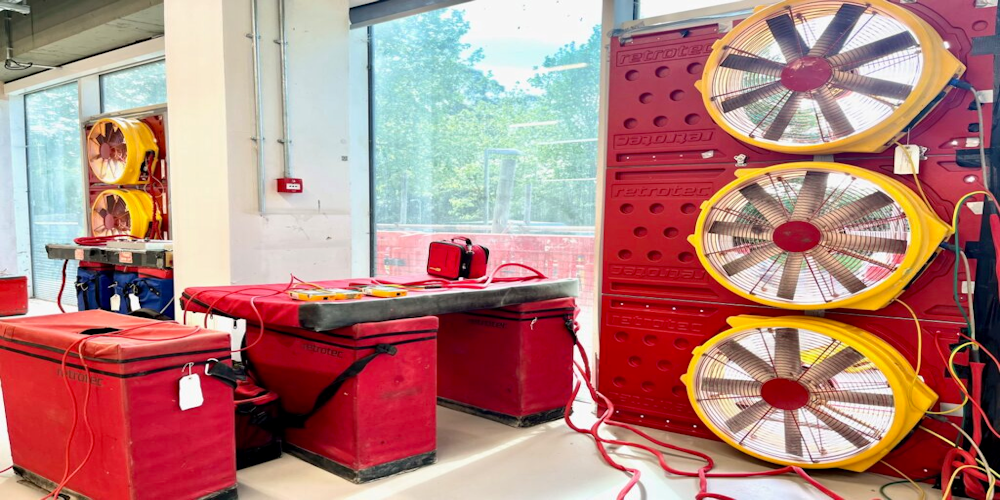
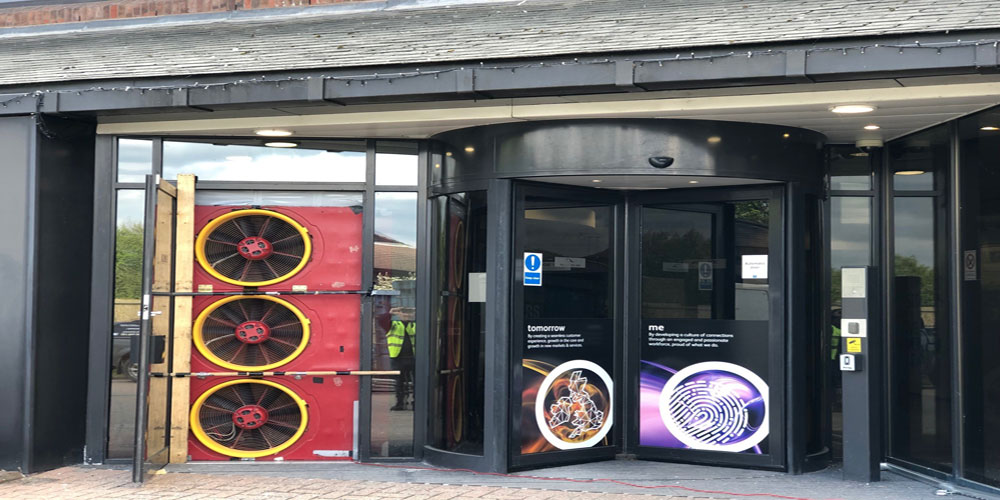
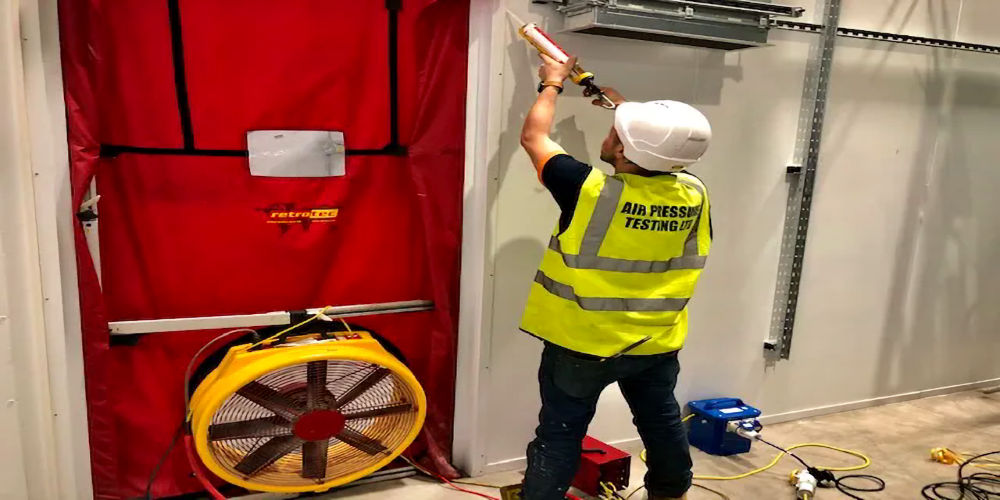
  • Selecting the correctly sized blower door fan to fit within a shaft opening (ideally midway up the shaft)
  • Installing the fan into a temporary board sealing one of the louvre or shutter openings
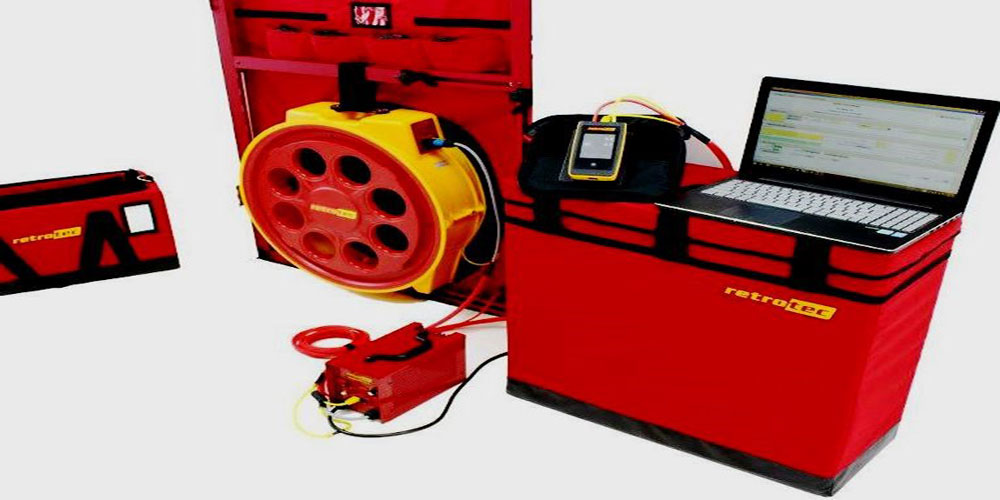
  • Pressurising the shaft using a UKAS-calibrated blower door system

The test itself takes only a few minutes, although the total site time is usually around 3–4 hours.

The shaft is tested to confirm it achieves the required 3.8 m³/h/m² target.


What If the Smoke Shaft Fails?

Due to restricted access, identifying leakage paths inside a smoke shaft requires specialist techniques.

Diagnostic Methods Include:

1. Smoke Testing
The shaft is pressurised and theatrical smoke is introduced using high-powered smoke machines. Escaping smoke highlights cracks and gaps.

2. Thermal Imaging Surveys
The shaft is heated and pressurised while thermal cameras detect areas of heat loss.

3. Multi-Level Spotters
Operatives positioned on multiple floors identify leakage points while the engineer controls the test equipment.

All findings should be documented in a formal air leakage report and reviewed with the client before leaving site.

If smoke testing is required, notify relevant parties—including the local fire brigade—and consider restricting access during and shortly after testing while smoke disperses.


How APT Can Help You Pass Your Smoke Shaft Air Test

At APT Sound Testing, our engineers have over 10 years of specialist experience in smoke shaft testing. We understand the common failure points—and more importantly, how to prevent them.

Our premium smoke shaft testing service includes:

  • Pre-test smoke shaft survey visits by experienced consultants
  • Testing by a UKAS-accredited, ATTMA Level 2 air testing company
  • Official UKAS smoke shaft air test certification
  • The latest high-powered fan equipment
  • Fully UKAS-calibrated testing systems
  • Diagnostic leakage surveys using smoke machines and thermal imaging
  • Rapid response and testing turnaround

We provide expert design advice, consultancy, and compliance support across your entire project, delivering a professional and stress-free experience from start to finish.

For more information about our smoke shaft air testing services, contact APT Sound Testing on 01525 303905 or email info@airpressuretesting.net.

Noise Surveys and Acoustic Consultancy

Noise Surveys and Acoustic Consultancy

Noise Surveys and Acoustic Consultancy in London

APT Sound Testing is a professional noise and acoustic consultancy operating across Greater London and the Home Counties. Our fully qualified and highly experienced consultants provide expert advice and undertake detailed acoustic surveys covering all aspects of sound and noise. This includes the investigation of noise complaints, BS 4142 assessments, and London noise surveys for planning and development purposes.

We regularly carry out noise surveys for residential, commercial, and mixed-use developments throughout London and across the UK. Our surveys are tailored for sites exposed to noise from road, rail, and air traffic, as well as industrial and commercial sources.

Comprehensive Acoustic Services

APT Sound Testing offers a complete range of acoustic services, from initial noise assessments through to detailed noise mitigation proposals. Where new plant or equipment is proposed, we undertake noise surveys to determine acceptable noise emission limits in line with Local Authority requirements and provide practical mitigation advice to ensure compliance.

As a local consultancy, we have in-depth knowledge of Greater London planning policies and local legislation. Our noise consultants bring extensive experience in assessing the acoustic impact of residential, industrial, and commercial developments within the community.


Noise Surveys for New Developments in London

London noise surveys and reports are typically required during the pre-application stage and throughout the planning process. In many cases, planning conditions will specify that a noise survey must be undertaken prior to approval.

Noise surveys are usually carried out at the design stage, before construction begins. This allows the acoustic design of the building to reflect local noise levels. Where ambient noise levels are high, more robust acoustic measures may be required to prevent future noise issues. Local authorities may also require post-completion BS 8233 noise surveys to demonstrate that internal noise standards have been achieved in living rooms and bedrooms.

A typical noise survey report will include:

  • The reason for and scope of the assessment
  • A location plan showing the proposed development and nearby noise-sensitive receptors
  • Survey methodology, including monitoring locations, equipment used, and weather conditions
  • Any deviations from standard guidance and the reasons for them
  • Full tabulated survey results
  • Comparison of results against relevant noise standards
  • Recommendations for noise mitigation measures, such as acoustic barriers
  • Detailed calculations to support predicted noise reductions

Noise Exposure Categories (NECs)

There are four Noise Exposure Categories (NECs), determined by the level of environmental noise affecting a site. The NEC assigned to a development helps inform planning decisions and the extent to which noise mitigation is required.

NECs are usually established through on-site noise monitoring. Mitigation options can then be assessed using calculations and noise modelling, allowing appropriate measures to be incorporated into the development at the design stage.

Many noise-related planning issues can be avoided or resolved through a thorough and accurate acoustic assessment, supported by robust mitigation measures where required.


Building Regulations and Sound Insulation Testing

APT Sound Testing provides expert advice on soundproofing design for walls and floors to meet the requirements of Approved Document Part E of the Building Regulations. As acoustic specialists, we offer a complete end-to-end solution, including:

  • BS 8233 noise surveys to support planning applications
  • Acoustic design services to ensure compliance with Building Regulations Part E
  • Sample sound testing to assess existing construction and target acoustic upgrades
  • Visual site inspections to ensure correct installation of acoustic details
  • Pre-completion sound testing in London

Pre-Completion Sound Testing in London

Pre-Completion Sound Testing (PCT) demonstrates compliance with Approved Document Part E by testing completed walls and floors prior to handover. Testing is carried out once all relevant separating elements are fully constructed, ensuring the building meets required airborne and impact sound insulation standards.


Site Visits and Sample Sound Testing

Our acoustic site surveys allow us to review existing construction in detail and identify potential issues, such as unsuitable materials or incorrect installation methods. We also verify that acoustic products are installed in accordance with manufacturer guidance, helping to avoid costly on-site mistakes.

Sample sound testing of existing partitions provides a clear understanding of current acoustic performance. This enables us to develop a targeted acoustic design that aligns with the real-world performance of the structure.


BS 8233 Noise Surveys in London

Noise assessments are often required at the planning stage for developments that generate noise or are sensitive to existing noise sources. Mixed-use developments frequently fall into both categories.

For noise-generating developments, a Noise Impact Assessment is typically required. This involves measuring existing ambient noise levels and assessing the potential impact of the proposed development. Larger schemes may also require consideration of secondary impacts, such as increased road traffic noise.

Internal noise levels can be predicted using advanced acoustic modelling software. In many cases, achieving acceptable internal noise criteria depends on the glazing and ventilation strategy, and specific systems may need to be specified as part of the design.


Speak to Our Noise Consultants

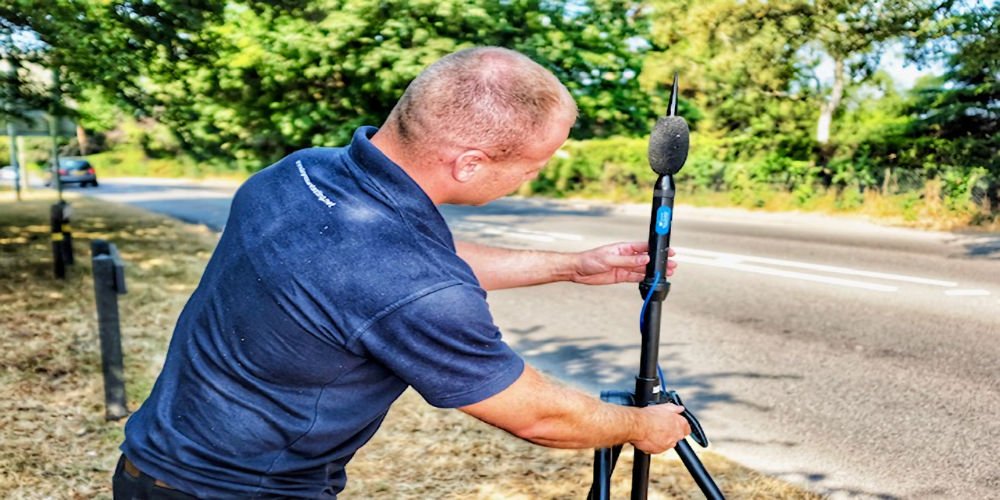
If you are a homeowner, developer, or business experiencing noise issues, our professional noise consultants are here to help. The noise assessment process is straightforward and non-intrusive. In most cases, we install monitoring equipment for a 24-hour period to capture accurate data, accounting for external variables and site conditions. A detailed report is then produced, along with clear advice on the next steps.


Contact APT Sound Testing

APT Sound Testing is one of the leading acoustic consultancy firms in Greater London. For London noise surveys, noise assessments, acoustic studies, and sound insulation testing, contact our knowledgeable team for professional advice that could save you time and costs later.

📞 01525 303905
✉️ info@aptsoundtesting.co.uk

The Power of Thermal Imaging Surveys

The Power of Thermal Imaging Surveys

Discover the Power of Thermal Imaging Surveys

APT Sound Testing provide UKAS accredited sound testing & Thermal Imaging Surveys for London and the whole of the UK as required by Approved Document E of the Building Regulations. We undertake projects on all types of residential buildings and commercial buildings. We also undertake sound testing on schools and buildings containing rooms for residential purposes.

Thermal Imaging Surveys in London

A thermal Imaging survey is a completely non-invasive method of investigating many aspects of a building that are virtually impossible by any other method.

Thermal Imaging Process

A thermal Imaging survey is an extraordinary method of investigating many aspects of a building that is completely non-invasive.

Thermal Imaging Inspections use IR Thermography to identify a wide range of issues such as:

• Incorrectly applied or inadequate insulation within the building envelope

• Locating air leakage paths into/out of your building

• Moisture infiltration

• Poor moisture barriers

There is no other low impact and accurate way to assess the unseen performance of insulation or the building fabric.

A thermal Imaging Survey can is also ideal for identifying water penetration through roofs or other parts of a building structure, alleviating the need for time consuming water dye tests which are not always accurate.

Flir Thermal Imaging Cameras

APT Sound Testing uses the latest Flir Thermal Imaging Cameras for our thermography report generation and as well as utilising the latest software for accurate reportage and trend analysis.

This means or thermal imaging reports can be issued within hours of the survey being completed with recommendations to help our clients deal with every eventuality.

How we Prepare for a Thermographic Survey

What is also important is that there must be no direct or residual solar loading from the sun in the building.

Many companies have their thermal imaging surveys undertaken an hour or so after sunset and this is usually flawed and may lead to inaccurate results. Whilst there may be rate exceptions to this, as a rule, there will be solar load in the building for many hours after sunset.

Therefore, we have learnt to undertake more accurate reportage the thermal imaging surveys should generally be conducted in the early hours of a cold morning, approx.

Two hours before the sun can fall on the building. It is more difficult to undertake conduct these types of heat loss survey during summer months when the ground temperatures and surrounding buildings are at high temperatures for months on end; however, this can be overcome by ramping up internal temperatures within the building and using the latest and more advanced thermal imaging cameras.

In all cases APT Sound Testing will check each project in isolation to ensure the correct site conditions are in place prior to undertaking the thermal imaging survey in compliance with the requirements with BS EN 13187. Building Regulations Part L and this link both offer lots of useful information in regards to Thermography Surveys.

We have years of experience working with a wide range of clients that span both the public and private sectors. We have clients ranging from self-builders through to the largest housing developers. We also work with the health authority and the banking sector on their cleanroom testing. Our clients have benefited from our wealth of knowledge and friendly, proactive service that we provide.

If you need more information on how to prepare your building for a Thermal Imaging Survey please download our air tightness testing checklist. If you would like more information in regards to our, please visit our website or call us direct on 01525 303905.

Commercial Property & Thermal Imaging Surveys

Commercial Property & Thermal Imaging Surveys

Thermal Imaging Surveys

Thermal imaging, also known as thermography, is a non-invasive inspection technique that detects infrared radiation emitted by objects. While infrared energy is invisible to the human eye, thermal imaging cameras can capture it and convert it into colour-coded images that clearly display temperature variations across a surface.

These temperature differences allow thermal imaging surveys to identify hidden issues within a building, including:

  • Heat loss caused by damaged or missing insulation
  • Moisture intrusion resulting from water leaks or damp penetration
  • Electrical faults linked to overheating components or faulty wiring
  • Structural defects where compromised elements affect thermal performance

By highlighting thermal anomalies early, potential problems can be addressed before they develop into costly repairs.


Commercial Thermal Imaging Surveys

Our thermal imaging surveys for commercial buildings provide invaluable insight into the thermal performance of the building envelope, often at minimal cost. As a trusted provider, we are frequently the first point of contact for surveyors requiring reliable thermal imaging defect surveys.

An infrared survey can be used for much more than identifying heat loss, including:

  • Building energy efficiency – pinpointing where the greatest energy cost savings can be achieved
  • Damp walls, ceilings, and floors – detecting water ingress, sources of damp, flat roof leaks, and issues around roof lights
  • Water leaks – identifying leaks within building water systems
  • Thermal bridging – locating missing or ineffective insulation at door and window reveals, heads, and junctions
  • Missing or damaged insulation – highlighting cold spots caused by poor workmanship in walls, floors, and roofs
  • Air infiltration – identifying cold draughts entering through the building envelope
  • Excess air leakage paths – revealing warm air escaping, leading to wasted energy or difficulty keeping buildings cool in summer

Thermal Imaging House Surveys to Reduce Heat Loss

Our residential thermal imaging surveys offer homeowners a clear understanding of their property’s thermal performance. A thermal camera survey goes beyond simple heat loss detection and can also identify:

  • Energy efficiency issues – highlighting where improvements will deliver the greatest savings
  • Damp walls, ceilings, and floors – locating water ingress, chimney leaks, and flat roof defects
  • Water leaks – detecting leaks in underfloor heating systems or concealed pipework
  • Thermal bridging – identifying insulation gaps around doors and windows
  • Missing or damaged insulation – revealing cold spots caused by poor installation
  • Air infiltration – identifying uncomfortable draughts entering the property
  • Air leakage paths – locating warm air escaping through the building envelope

BREEAM Thermal Imaging Surveys

Thermal imaging surveys are a core requirement within BREEAM, the world’s leading environmental assessment and rating system for buildings. Both BREEAM New Construction and BREEAM Domestic Refurbishment schemes award credits for thermal imaging assessments carried out by certified thermographers.

For over a decade, APT Sound Testing has delivered professional BREEAM thermal imaging surveys to verify insulation continuity and compliance. Our surveys are undertaken by Level 3 certified thermographers, exceeding BREEAM requirements, and utilising high-resolution FLIR thermal imaging cameras to ensure precise, dependable results on every project.


How Thermal Imaging Improves Health & Safety

Thermal imaging significantly enhances health and safety by reducing the need for working at height, one of the leading causes of serious accidents in the construction and maintenance industries.

Key safety benefits include:

  • Remote inspections from ground level
    Inspections can be carried out safely without the need for ladders, scaffolding, or aerial platforms.
  • Early issue detection
    Identifying insulation failures, leaks, or electrical faults remotely allows maintenance to be planned efficiently and safely.
  • Improved safety planning
    Detailed thermal images help teams plan safer access methods when working at height is unavoidable.
  • Frequent monitoring without access equipment
    Regular surveys can be conducted without scaffolding, enabling early detection and reducing risk.

By incorporating thermal imaging into routine inspections, organisations can significantly reduce the need for extensive working-at-height surveys and lower the risk of falls.


Contact Us for Your Thermal Imaging Survey

Ready to uncover hidden issues and improve your building’s efficiency? Contact APT Sound Testing today to arrange your thermal imaging survey.

Phone: 01525 303905
Email: info@aptsoundtesting.co.uk
Website: www.aptsoundtesting.co.uk

Protect your assets, improve indoor comfort, and enhance building performance with our professional thermal imaging surveys. Detect issues early and take informed action with confidence.

Smoke Shaft Testing & APT

Smoke Shaft Testing & APT

Preparing Your Smoke Shaft for an Air Tightness Test

Elevate fire safety standards with comprehensive air tightness testing and remediation.
Accredited Air Pressure Testing (APT) solutions help you meet regulatory requirements, improve smoke control performance, and protect building occupants.

Ensuring the safety and compliance of smoke shafts is a critical component of any building’s fire safety strategy. Smoke shafts are designed to restrict the spread of smoke and heat during a fire, protecting escape routes and supporting effective evacuation.

To confirm they perform as intended, air tightness testing is essential. Proper preparation can significantly increase the likelihood of passing the test first time and avoiding costly remedial works.

Top 10 Ways to Prepare a Smoke Shaft for Air Tightness Testing

  1. Consult Smoke Shaft Testing Experts Early
    Engage air tightness consultants who specialise in smoke shaft testing at an early stage. Their expertise can guide effective design decisions, detailing, and sealing strategies.
  2. Set Clear Airtightness Targets
    Establish the required airtightness performance—typically less than 3.8 m³/h/m² @ 50 Pa. Be aware that some smoke shafts may require different targets, so always confirm the specification in advance.
  3. Use Robust Construction Materials
    Construct the shaft using materials capable of forming an effective air barrier, such as in-situ concrete or high-density blockwork.
  4. Seal Internal Finishes Thoroughly
    Treat the internal surface of the smoke shaft as the primary air seal line. Finishes should be smooth and fully sealed at all joints and junctions, particularly where steelwork or other elements penetrate the shaft.
  5. Seal All Service Penetrations
    Ensure all service, structural, and cable penetrations through the shaft envelope are carefully sealed using appropriate fire- and air-rated products.
  6. Seal Door Openings Effectively
    All access doors within the smoke shaft should be fully sealed using robust, heavy-duty sealing systems to prevent air leakage.
  7. Seal AOV Door Frames
    The perimeter of Automatic Opening Vent (AOV) door frames must be fully mastic sealed to maintain continuity of the air barrier.
  8. Seal the Base and Head of the Shaft
    Pay close attention to the base and head of the shaft, ensuring both are fully sealed prior to testing.
  9. Use Calibrated Testing Equipment
    Testing should be carried out using a UKAS-calibrated blower door fan, capable of pressurising the smoke shaft and accurately measuring air leakage.
  10. Address Any Test Failures Promptly
    If the smoke shaft does not achieve the required performance, diagnostic methods such as smoke testing and thermal imaging should be used to locate leakage paths and guide targeted remedial works.

By following these steps, you can ensure your smoke shaft is properly prepared for air tightness testing, improving compliance with current building regulations and enhancing overall fire safety.


Why Choose APT for Smoke Shaft Air Tightness Testing?

APT has extensive experience supporting clients with smoke shaft testing across projects of all sizes. We also provide a dedicated diagnostic service for failed smoke shafts, using smoke testing and thermal imaging to accurately identify air leakage paths within the shaft envelope.

On many projects where smoke shafts initially failed, our engineers have rapidly located leakage points, enabling targeted remedial works and successful re-testing with minimal disruption.

Our UKAS-qualified and fully trained engineers are highly knowledgeable in current industry standards and testing methodologies. This expertise allows us to provide clear, actionable recommendations to improve the performance of your smoke shafts.

Air Pressure Testing is one of the few companies in the UK that is both UKAS-accredited and ATTMA Level 2 accredited for air tightness testing of buildings, smoke shafts, and floor plenums. This ensures all testing is carried out in line with regulatory requirements and recognised best practice, giving you complete confidence in the results.

Acoustic Consultancy Testing Explained

Acoustic Consultancy Testing Explained

The Role of Acoustic Consultants in Construction

Have you ever wondered how buildings are designed to be quiet and peaceful? The secret often lies in professional acoustic consultancy. This service plays a key role in making sure your construction or renovation project meets noise regulations. Understanding the importance of site surveys is the first step toward a compliant and comfortable building. By working with experts from the start, you can ensure successful project outcomes without the headache of noise-related problems down the line.

When undertaking a construction project, managing sound is more important than you might think. Acoustic consultancy helps you navigate the complex world of noise control, ensuring your building is comfortable and compliant.

Professionals in this field provide expert advice to make sure your project adheres to all necessary building codes and environmental regulations. Let’s explore what these consultants do and why their early involvement is so beneficial.

What Does an Acoustic Consultant Do?

So, what exactly is the job of an acoustic consultant? Their primary role is to assess, manage, and design for sound. This begins with a professional site survey to gather accurate site data. During these visits, they inspect the existing construction to identify any potential acoustic challenges, such as the use of lightweight blocks that don’t block sound well.

The consultant also checks that acoustic materials are being installed correctly by your team. This hands-on approach ensures that the design will perform as expected in the real world. For noise and vibration assessments, they use specialized equipment to measure sound levels, providing a clear picture of the current acoustic environment.

Ultimately, their work is about ensuring regulatory compliance and even improving energy efficiency through smart material choices. By analyzing the site and construction, they provide targeted recommendations that help your project meet all necessary standards, like Part E of the Building Regulations.

Benefits of Engaging Acoustic Consultancy Services Early

Bringing in an acoustic consultant at the beginning of your project offers significant advantages. Early engagement is key to identifying potential issues before they become expensive problems. A site survey visit before construction starts provides valuable insights into the property’s unique acoustic characteristics.

This proactive approach helps prevent costly delays that can arise from failed sound tests later on. By addressing challenges from the outset, you can ensure a smoother project execution and keep everything on schedule and within budget.

Engaging experts early leads to better results and greater customer satisfaction. Key benefits include:

  • Avoiding Costly Rework: Identifying and fixing acoustic problems during the design phase is much cheaper than correcting them after construction is complete.
  • Ensuring Compliance: Consultants help you meet all legal sound insulation requirements from day one.
  • Achieving Peace of Mind: Knowing that your project is on the right track acoustically lets you and your team feel confident about the final outcome.

Understanding Site Survey Visits in Acoustic Consultancy

The site survey process is a fundamental part of any successful acoustic consultancy service. It’s how experts gather the essential information needed to provide effective advice. Without accurate measurements and a firsthand look at the property, it’s impossible to create a targeted acoustic design.

A detailed site survey allows consultants to understand the specific challenges of your project. Depending on your needs, there are different types of surveys that can be performed, each providing unique data. Let’s look at what happens during these visits and who needs to be involved.

What Happens During a Site Survey Visit?

A site survey is a necessary and structured process designed for thorough data collection. When the survey team arrives, they will review the survey layout and assess the property’s current state. This visit is critical because a compliant design can still fail a sound test due to poor workmanship.

During the visit, the consultant performs a risk assessment to identify any elements that could compromise acoustic performance. They also observe environmental conditions that might affect noise levels. The main goal is to check the construction and installation of materials.

You can expect the survey to involve several key activities, including:

  • Checking the existing construction for acoustically weak materials.
  • Verifying that installation teams are following the manufacturer’s guidelines for acoustic products.
  • Measuring existing sound levels to establish a baseline for the acoustic design.

Who Attends a Site Survey Visit and What Should You Prepare?

Typically, the site survey team includes an experienced acoustic consultant. Their role is to lead the assessment, take measurements, and identify any issues. It’s also helpful for you, the client, or your project manager to be present to answer questions and provide access to all necessary areas.

Proper preparation is essential for effective project planning and ensures the team can collect accurate data. Before the visit, you can help the process run smoothly by having key information ready. This allows the surveyors to make the most of their time on-site and gather the best possible survey data.

To help the team, you should prepare the following:

  • Access: Ensure all relevant areas of the site are accessible.
  • Drawings: Provide architectural plans or drawings of the proposed development.
  • Project Details: Share information about the construction materials and methods you plan to use.

Acoustic Testing: from Sample Sound Testing to Noise Surveys

Acoustic consultancy involves various types of surveys, each designed for a specific purpose. The right type of survey for your project depends on your goals, the existing noise levels, and the requirements of local building codes. Some tests check the performance of walls and floors, while others assess noise from the surrounding environment.

From sample sound testing to comprehensive noise surveys for planning applications, each method provides critical information. Understanding these different tests will help you see how consultants develop a complete picture of your project’s acoustic needs.

Sample Sound Testing: When and Why Is It Used?

Sample sound testing is often used for renovation or conversion projects. It involves testing the existing walls and floors of a building to see how well they currently block sound. This provides accurate data that forms the basis for a targeted acoustic design, ensuring you only spend money on necessary improvements.

This type of testing is valuable because it gives a real-world overview of the building’s performance, accounting for any unique construction quirks or environmental factors. It helps identify potential challenges early on, such as a party wall that needs significant upgrades to meet Building Regulations Part E.

The survey data collected from sample sound testing helps consultants:

  • Establish the baseline sound insulation performance.
  • Create a cost-effective and targeted acoustic design.
  • Avoid over-engineering solutions, saving you time and money.

Overview of the BS4142 Plant Noise Survey Requirements

If your project includes new industrial or commercial equipment like air conditioners or extraction systems, you may need a BS4142 plant noise survey. This standard is used to assess the environmental impact of noise from industrial sources on nearby residential areas. It is one of the key types of site surveys for ensuring regulatory compliance.

Following the BS4142 method helps prevent complaints and potential legal issues with the local authority. The survey involves measuring the existing background noise and then predicting or measuring the noise from the new equipment. A typical survey can take 24 hours to capture noise variations throughout the day and night.

The assessment compares the new noise level to the existing background noise to determine the level of impact.

Assessment StepDescription
Measure Background NoiseThe existing noise level (LA90) is measured at different times of day without the new source.
Determine Specific NoiseThe noise level of the new plant or machinery is predicted or measured.
Calculate ImpactThe difference between the new noise and the background noise indicates the likely impact on residents.

Acoustic Design Services for New Builds and Retrofits

Beyond testing, acoustic design services are essential for creating quiet, comfortable, and compliant buildings from the ground up. Whether you are working on a new build or retrofitting an old property, a professional acoustic design ensures that sound insulation is an integral part of the construction, not an afterthought. APT Sound Testing has years of experience providing these services for projects of all sizes.

This proactive approach supports sustainable practices by selecting the right materials for both acoustic performance and energy efficiency. For land development projects, a solid acoustic design is crucial for protecting future residents from external noise and ensuring the development is a desirable place to live.

How Acoustic Design Services Optimize Building Performance

Acoustic design services optimize building performance by integrating sound control into the earliest stages of project planning. During an architectural site survey or design review, consultants analyze your floor plans and construction proposals. They consider the unique characteristics of your building to recommend the most effective solutions.

This detailed review looks at the mass, isolation, and absorption elements of your proposed party walls and floors. By leveraging data from thousands of previous sound tests, consultants know what works and what doesn’t for different types of construction. This expertise helps prevent common mistakes and leads to better final results.

An optimized acoustic design directly contributes to customer satisfaction by ensuring:

  • The building meets or exceeds the requirements of Approved Document E.
  • Future residents enjoy a peaceful living environment.
  • The risk of a failed pre-completion sound test is significantly reduced.

Acoustic Consultancy & Construction

Acoustic consultancy testing is essential for ensuring that your construction or renovation project meets the necessary sound standards and provides a comfortable environment. By engaging acoustic consultants early in the process, you can identify potential issues and implement effective solutions that enhance both functionality and aesthetics.

Understanding the various types of acoustic testing available, from sample sound testing to comprehensive noise surveys, empowers you to make informed decisions for your project. Remember, a well-executed acoustic plan not only contributes to better building performance but also elevates the overall experience for occupants. If you’re ready to take the next step, reach out for a free consultation to discuss how our acoustic consultancy services can benefit your project!

Here at APT Sound Testing we can offer a detailed survey report and outline possible mitigation measures with noise mapping to show the ‘real life’ effectiveness of the measures. Such assessments can cover extraction systems, air conditioners, industrial plant, refrigeration units, and general use of industrial buildings.

If the local authority has requested you undertake a BS4142 Noise Assessment please call us now on 01525 303905 or email us at info@aptsoundtesting.co.uk

For more information about our Acoustic Consultancy Services, Acoustic Design and other services please visit our Planning Noise Survey page.

APT Noise and Acoustic Consultancy

APT Noise and Acoustic Consultancy

Professional Noise and Acoustic Consultancy

APT Sound Testing is a professional noise and acoustic consultancy firm operating in Greater London and the Home Counties. Our fully qualified and highly experienced consultants can provide expert advice and conduct survey analysis into all aspects of sound, such as investigating complaints into excessive noise and/or a BS 4142 London Noise Surveys.

We undertake London noise surveys on numerous potential housing and other noise-sensitive sites throughout the Capital and the UK. Our acoustic surveys cater for sites that may be exposed to noise from road, rail or air traffic and/or from industrial activity.

We undertake wide range of services from noise assessments through to noise mitigation proposals. Where it is proposed to install new plant or equipment, we undertake noise surveys to determine noise emission limits, in line with Local Authority requirements, and provide advice on mitigation.

As a local company we have an in depth knowledge on Greater London planning permissions and local legislation. Our noise consultants are expertly suited to carry out noise assessments, with a wealth of experience in assessing the sound impact of residential, industrial and commercial businesses in the community.

Noise Surveys for New Developments in London
London noise surveys and report should be submitted during the pre-application process and discussions on planning applications. In many circumstances a planning condition will stipulate that a noise survey will need to be undertaken.

Noise surveys are normally carried out at the design stage of the project prior to the commencement of construction., this is to allow the acoustic design of the building to take into account the local noise levels, i.e. if the local noise levels are quite high then the acoustic design will ned to be more robust to mitigate any potential noise problems. Thereafter the local authority may also require post a BS 8182 London noise survey to prove that the noise standards have been achieved within the living rooms and bedrooms. The following information will usually need to be included within the noise survey report.

  1. The reason and scope of the report.
  2. Location plan of the proposed development and likely receptor points such as the nearest residential window/s.
  3. The noise survey Methodology including the noise monitoring location, the equipment used and the weather conditions during the noise survey.
  4. Reasons for deviations from standard methods.
  5. Full table of results.
  6. A comparison of survey results against the noise standards.
  7. Recommendations for noise control measures – acoustic barriers etc.
  8. Full calculations against noise reductions expected to support any suggested noise control measures.

The Different NEC Noise Exposure Categories (NECs)
There are four Noise Exposure Categories based on the level of noise at the development. The NEC in which the site falls determines to what extent noise should be considered in the granting of planning permission. The NEC(s) are usually determined by monitoring noise levels. Potential mitigation options can then be assessed by calculation, and/or the use of noise modelling. Appropriate noise mitigation can then be incorporated into the development at the design stage.

Problems relating to noise during the planning stages can usually be avoided or resolved with a good, detailed and accurate acoustic assessment report and by accounting for robust mitigation measures where and when required.

APT Sound Testing can be consulted on all aspects of acoustic related issues. In addition to sound measurements we also provide invaluable advice on the soundproofing design of walls and floors to meet the standards of Part E of Building Regulations. As a true specialist, we can offer a complete solution. Here are a few of our services:

  • 8233 Noise Surveys to help you achieve planning for your development.
  • Acoustic Design Service to ensure you project complies with Building Regulations Part E.
  • Sample sound testing to check the acoustic performance of your existing construction to allow for targeted acoustic upgrades.
  • Visual site surveys to insure your subcontractors are constructing the acoustic details correctly
  • Pre-completion London Sound Testing in compliance with Building Regulations Part E.

Pre-Completion Sound Testing In London
Pre-Completion Sound Testing is method of showing compliance with Approved Document Part E of the Building Regulations by testing the completed construction prior to handover. Sound Testing Services in the UK required for Pre-Completion Testing (PCT) with respect to Building Regulations Approved Document Part E is carried out when the construction of party walls and floors are complete.

Site Visits & Sample Sound Testing

APT Sound Testing offer Acoustic Site Survey visits to let us view the existing site construction. This allows us to check for potential problematic areas such as lightweight blocks haven’t been used in the existing construction. It also lets us check that the installation teams are installing the acoustic materials as per manufacturer’s guidelines, thus avoiding crucial onsite mistakes. We can also undertake sample sound testing of existing site construction; this offers an accurate overview of the acoustic performance of the existing partitions which enables us to offer a targeted acoustic design which correlates with the sound performance of the existing construction.

BS8233 Noise Surveys in London
London noise assessments are often required at the planning stage of developments that may generate noise, and noise-sensitive developments which may be affected by noise. Some developments, such as mixed use, fall into both categories. Potentially noise generating developments often require a Noise Impact Assessment to be undertaken. This normally requires existing ambient noise levels to be established, typically by undertaking measurements, and the impact of noise from the development to be established. For large developments, it is often necessary to consider secondary effects, such as the impact of increased traffic on existing roads.

Internal noise levels within the proposed buildings can be calculated using our latest noise prediction software. For most buildings, the overall sound insulation performance of the building envelope will depend on the glazing system employed. It may be necessary to stipulate specific glazing and ventilation systems that must be employed to ensure that internal noise criteria are achieved.

If you are an individual or a business with sound problems, and would like to speak with one of our professional noise consultants, please speak to one of our advisors today. The noise assessment process isn’t intrusive, lengthy or costly. Normally we would leave a meter over a 24 hour period which would gather the necessary data automatically, taking into account other factors such as construction, setting and external variables. We could then provide a detailed report and advise how best to proceed.

Contact APT Sound Testing
APT Sound Testing is one of the leading acoustic consultancy firms operating in the Greater London area. For London noise surveys, assessments, studies as well as our full range of London sound insulation testing, please contact our knowledgeable team of noise experts to provide professional and invaluable advice which could save you time and potential costs further down the line – call today on 01525 303905 or email info@aptsoundtesting.co.uk 

Sound Testing Services in London

Sound Testing Services in London

Sound Testing Services on London Developments
London is a huge city containing over 8 million people. In this crowded environment it is essential that noise transference between properties in kept to a minimum between new and existing buildings for the occupant’s wellbeing.

To help control noise issues APT Sound Testing undertakes UKAS accredited Part E sound throughout London and the South East. When there are problems with noise transference between dwellings, and the building’s design is called into question we can offer advice on how to upgrade the wall and/or wall partition.

We has extensive knowledge regarding the way different materials and construction methods can influence the results of a sound test, this helps to ensure to ensure your company achieves compliance with the Sound Testing for Part E of Building Regulations.

Sound Testing Services in London
Pre completion sound testing in London has been a mandatory requirement since July 2003. All new build properties and conversions which were built after this date require 10% of each party wall/floor construction type to be tested. Sound insulation testing is to be carried out between pairs of rooms separated by party walls and/or floors. In is usual to test between living rooms and bedrooms, which are classed as the two main habitable rooms; however, other rooms can be used if this is not possible.

We are also experiencing a rise in the amount of sound testing that’s required to existing London buildings. We have carried out a large amount of sound tests in council/housing association blocks, where the residents are experiencing excess noise between the dividing wall and floor partitions. We also undertake sound testing to existing flats where the lease stipulates that wooden floors should not be used instead of carpets and as a result the noise levels have increased through the floors. In all these instances we can undertake sound testing to highlight the existing noise levels so acoustic upgrades – if required) can be targeted and implemented.

Our test procedure involves setting up a noise source in a room on one side of the party wall or floor and measuring the noise on both sides of the partition. Airborne sound testing may also be required between horizontally and vertically separated pairs of rooms.

The sound insulation testing is undertaken by using a sound source, amplifier and loudspeaker to generate a high noise level in one room (the source room). Noise measurements are then taken in both the source and receiver rooms using a prescribed number of source and microphone positions. The background levels in the receiver room are measured and the reverberation time in the receiver room is also measured. From the results, the airborne sound insulation (DnT,w + Ctr) is calculated and compared to the requirements of Approved Document E of Building Regulations.

For vertically separated rooms, Impact sound testing may also be required. This sound test is undertaken using a tapping machine which drops a series of weights onto the floor of the upper room. The noise level in the lower (receiver) room is measured for a prescribed number of source and microphone locations. The background levels in the receiver room are measured and the reverberation time in the receiver room is also measured. From the results, the impact sound insulation results (LnT,w) is calculated and compared to the requirements of Approved Document E of Building Regulations.

APT Sound Testing Services
Our sound test engineers carry all the latest Norsonic equipment, which are class one rating and all of our sound insulation testing, is completed to a strict quality controlled standard. We provide full UKAS Accredited sound insulation testing and air testing.

If you would like advice on your acoustic design or sound testing in London, please contact APT Sound Testing now on 01525 303905 or visit our Acoustic & Sound Testing Services website.

Steps for a Planning Noise Assessment

Steps for a Planning Noise Assessment

The 5 Steps for a Planning Noise Assessment

Impact assessment

Prior to the noise survey the acoustic consultant will need to know the noise parameters set by the local environmental protection team for the required noise impact assessment.

1st Step – Baseline situation

It will usually be necessary to have a full understanding of the existing noise levels in the vicinity of the receptor. This can be achieved by carrying out a planning noise survey of background or ambient noise levels over the period when the noise source will be operational.

The baseline noise levels will usually be determined by measuring the LA90 or the LAeq, however in practice both will usually be measured simultaneously.

The term ‘LA90’ is the ‘A’ weighted noise level exceeded for 90% of the measurement period. Typically this is called the background noise level if it relates to a period when the noise source is not operational.

The ‘A’ weighting is a correction applied within a sound level meter to adjust the response of the Class A noise meter to match the response of human hearing at different frequencies. This is used to exclude short-term noises, such as a vehicle passing from the measurement value, leaving only the underlying or background noise.

The terms ‘LAeq’ is as an average noise level over the measurement period, although it relates to the average noise energy. It is a popular and universally used measure which correlates well with human annoyance.

Step 2 – Noise sources and times of operation

A detailed knowledge of the noise source (or in the case of a proposed development, the likely noise source) is also essential. This is because noise levels are of less importance than the amount by which they exceed the baseline noise and the times or days of operation.

Step 3 – Manufacturer Data for Proposed Equipment

If the proposed development will create a source of noise, the noise consultant may need the manufacturer’s data for proposed equipment, times of operation and working practices.

Step 4 – Determining the impact

Noise impact is determined using a variety of methods, all of which will rely on comparing noise levels at a receptor against absolute noise level criteria or against existing baseline noise levels. Generally one of three approaches is used:

  1. Where the proposal is for a development which will introduce an industrial type noise source, or where a receptor in a new development may be affected by this type of source, it is usual to assess impact by comparing the noise level, after making corrections for certain attributes of the noise, against background noise levels at the receptor (existing or proposed). The council expects that, at the receptor, noise from the source is a certain amount below existing background levels. Typical cases include new equipment in a business, an air conditioning unit or an extract and fan serving a restaurant. This is known as the BS4142 methodology.
  2. In some cases the impact does not depend on a comparison between source levels and baseline levels. For example, a proposed housing development is close to an existing road, where generally the impact is determined by establishing whether the absolute levels due to the source are acceptable.
  3. Applications for certain developments may require a more specialist approach. For example, the method for assessing a new nightclub combines both elements. Existing levels of noise in low frequency bands are measured and compared against levels in those same frequencies with music playing. The council may then require that the music does not cause any increase above existing levels.

Step 5 – Noise mitigation measures

Development proposals which are inherently noisy may include mitigation measures in the original scheme. However, the need for further mitigation may be necessary when the impact assessment indicates that the acceptability criteria are exceeded. Either way noise mitigation, or reduction measures, should be considered in the assessment in demonstrating how the acceptability criteria will be achieved.

The most effective measures will be those which reduce levels at source, rather than in transmission or at the receptor. However, in situations such as where the proposal is for new housing near existing sources of noise, it will not be possible to reduce source noise levels. Where the proposal will introduce a new noise source it is good practice to reduce levels at source as far as possible, before considering other mitigation measures, some of these may be:

  1. Reduction of noise at source – Using equipment or systems with lower sound power levels is highly effective and can avoid the need for other more costly and intrusive mitigation options. Noise impact can be lessened by reducing total running times or by shifting operations to less sensitive times of the day. The use of acoustic silencers and enclosures around the source may also be effective at reducing the need for other mitigation methods.
  • Reduction of noise in transmission – The simplest way to reduce noise once emitted is by increasing the distance to receptors. For example, siting of plant and equipment within an industrial site as far away from sensitive receptors as possible and/or the new housing development may be designed so that properties are set back from a noise source. In many cases, a properly calculated buffer zone between source and receptor will represent the most cost effective solution.
  • Reduction of noise at a receptor –  if the development is located in a busy urban area, this may be the only option to reduce the noise impact, also where the applicant has no access to land for the construction of a barrier. The way a development is designed can be an effective mitigation tool if the building faces away from the main noise source. Also, if noise sensitive rooms are located on the sheltered side of the building, the impact will be reduced at the most sensitive areas.
  • Acoustic Improvements to the building façade – Where no other options are available, improving the sound insulation of a building facade can be effective in reducing internal noise levels. However, often it will be necessary to provide acoustic treated mechanical ventilation to avoid the need to open windows in warm or humid weather, this is often the solution next to busy elevated railway lines.

Here at APT Sound Testing, we can offer a detailed survey report and outline possible mitigation measures with noise mapping to show the ‘real life’ effectiveness of the measures. Such assessments can cover extraction systems, air conditioners, industrial plant, refrigeration units, and general use of industrial buildings.

If you would like more information in regards to our planning noise surveys for planning and acoustic design for your development, please visit the APT Sound Testing website or call us today on 01525 303905.