Author: admin

Air Tightness Testing Service

Air Tightness Testing Service

APT Sound Testing – Our Air Tightness Testing Service

Air tightness testing, also known as blower door testing, is the process of measuring the amount of air leakage from a building through the building envelope. To try and help our clients better understand and prepare for their air tightness testing, we have tried to explain and answer our customer’s most common questions. For more information on our air tightness testing services you can also visit our Services Page.

What is Air Tightness Testing for Building Regulations?Air Tightness Testing What is Air Tightness Testing for Building Regulations?

Air testing is mandatory in the United Kingdom and is governed by Part L of the Building Regulations, this split into two parts; for domestic properties Part L1A should be used and for commercial properties Part L2A should be referenced.

Building Regulations Part L states air tightness testing should be carried to check the air leakage that occurs through a buildings envelope. The air leakage test checks the amount of air that escapes through gaps or air leakage paths through the building fabric. If the building is more air tight, less energy will be being needlessly lost, thus lowering the carbon emissions of the building. Air testing also shows how efficient a building is at retaining conditioned air which will also put less straight on your mechanical and ventilation system. Failing to maintain adequate air tightness can lead to up to 50% of heat loss from within a building to the outside atmosphere.

Air Tightness Testing

What air leakage target do I need to achieve?

Most new dwellings and commercial buildings need to achieve an air leakage of 3m3/hr/m2 to 5m3/hm2, this rate would usually be acceptable by building control and your SAP assessor as an acceptable result, although you need to check each your designed SAP assessment as there may be items within your buildings design that that may affect this figure.

How long does the air test take?

Most air tightness tests can be completed in 1-2 hours if they pass straight away; however, tests can take much longer if they initially fail. It usually speeds up the process if customs prepare their buildings in-line with our air tightness checklist as its means we can start the testing as soon as we arrive on site instead of waiting for the client to tape up areas, or make upgrades to the building envelope.  We also offer a smoke testing service to locate the air leakage paths within a building envelope which can also take extra time; however this often allows our clients to seal and pass their building at the first attempt even if their building initially fails the air test.

Air Tightness Testing

How do you undertake an air tightness test?

The air tightness test is undertaken in-line with Building Regulations Part L1 & L2 and ATTMA TS1 & TS2. Basically we measure the pressure differential across the envelope of the building by means of the temporarily installation of a large fan inside a door panel. Thereafter, a range of static pressures and environmental readings are taken. The fan is switched on and the air pressure in the property is gradually increased or decreased and the differential pressure is recorded at each step, usually from 25 Pa to 70 Pa. The total air flow required to achieve a pressure differential of 50 Pa is calculated and divided by the total building envelope area to provide the leakage rate in m3/h.m2@50Pa.

How do I prepare my building for the air test?

The more complete you’re building the more chance you have of passing the air tightness test at the first attempt. We send our and air test checklist with every quotation to help our client prepare for the testing. It is our aim to help clients pass their air test at the first attempt.

Basically you prepare the building in-line with our checklists and the items below, you will generally have a much better chance of passing the testing at the first attempt.

  1. The building envelope should be fully complete; this includes walls, floors and ceilings.
  2. All doors and windows must be fully fitted and able to shut tightly against their seals.
  3. All electric fittings must be installed and functional.
  4. All mechanical fittings must be installed and functional.
  5. Gaps within walls and floors must be sealed.
  6. All service penetrations must be fully sealed through the building envelope. 
  7. Bathrooms and kitchens must be fully fitted and all service penetrations sealed.
  8. All mechanical ventilation turned off with grilles sealed.
  9. All trickle vents to windows and doors must be sealed.
  10. All fireplaces must be sealed.
  11. Ensure water is present in soil pipes.
  12. 240v power must be available on site.

Whether you need air tightness test please contact us on info@aptsoundtesting.co.uk  to obtain a no obligation quote. If you need more information on how to prepare your building for the air test please download our air tightness testing checklist. 

Alternately, please visit our website at www.aptsoundtesting.co.uk, for more information on our precompletion testing services

Air Tightness Testing in Reading

Air Tightness Testing in Reading

Air Tightness Testing in Reading

There is no air tightness testing job too big or small APT Sound Testing in Reading.

From our local office, we provide our air tightness testing service throughout Reading

Below is a quick description of Reading and the surrounding areas where APT Sound Testing supplies our air tightness testing service:

A Description of Reading and the Surrounding Areas

Reading is is a large, historic university and minster town in Berkshire, South East England. As Reading has grown, its suburbs have spread: to the west between the two rivers into the foothills of the Berkshire Downs.

Here is a more detailed list of all the locations in Reading and the surrounding areas that we carry out our air tightness testing services. We carry out our testing in Caversham, Caversham Heights, Caversham Park, Coley, Coley Park, Emmer Green, Katesgrove, Southcote, Whitley, Whitley Wood and Tilehurst

The local authorities in and around Reading are Reading North, and Reading South. Since the 2010 general election, Reading has been divided between the parliamentary constituencies of Reading EastReading WestWokingham,  Shinfield, Earley and Lower Earley) and Maidenhead and Woodley).

Our air tightness testing equipment in Reading

Air Tightness Testing in Reading

Preparing your Reading site for the Air Tightness Test

One of our team will take measurements of the building from the architectural plans as well as undertaking physical site check of the measurements, prior to the air tightness test which allows us to determine the building envelope area. This is an essential stage of the air testing process as the building envelope area is one of the main parameters that the result is based upon.  The measurements will be verified onsite by APT Air Tightness Engineer on the day of the air test to ensure that the measurements and calculations are correct.

We then set up the blower door equipment as follows.

  1. We’ll temporarily install a blower door fan system (depending on building size) in a suitably placed doorway.
  2. We then take a series of environmental measurements such as internal and external temperatures as well as barometric pressures.
  3. We then turn on the fan equipment and take measurements between 25-70Pa in 5Pa increments, recording the pressure differential at each step.
  4. Finally, our technicians will calculate the total air flow required to achieve a pressure differential of 50 Pa, divided by the total building envelope area –  this calculation will show leakage rate in m³/h.m² @ 50 Pa.

APT Sound Testing usually allow 2-3 hours to complete each commercial air tightness test, meaning there should have plenty of time to address any unexpected problems that may arise. We will guide you through the entire air testing process. In addition, we provide an air tightness review consultancy service to help you pass your air tightness test at the first attempt.

For more information about our Air Tightness Testing in Reading, please visit us at www.aptsoundtesting.co.uk or contact us on 01525 303905 or info@aptsoundtesting.co.uk for a FREE Quote.

The Secret to Successful Sound Testing

The Secret to Successful Sound Testing

The Secret to Successful Sound Testing
There are many considerations to achieving successful sound testing on your development. The main areas that need to be addressed are the dividing wall and flor construction.  When dealing with walls you normally just need to worry about airborne sound; however with walls it’s both airborne and impact sound which can be far more difficult to deal with.

The usual noise problems associated with airborne sound transmission is TV noise, music and speech. This can be dealt with by applying ceiling treatments as well as mass and isolation to the building components. Impact sound (footfall) performance is increased by the used of resilience layers and isolation of components to prevent noise flanking through the partition.

Airborne Sound Testing
For airborne sound testing Building Regulation Part E requires you achieve at least 45dB for new build properties and 43dB for conversion developments, this applies both to party walls and floors between properties. This level is the difference between the source level and the receiver level during sound testing. Therefore, if the source level in one flat is 110dB and the receiver level in the neighbouring flat is 55dB, the level difference (or sound reduction performance) is 55dB.

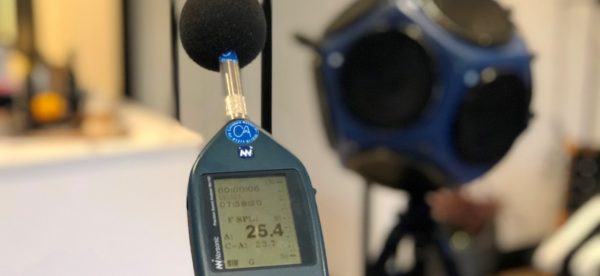
The measurement is corrected for several factors such as background noise, room characteristics and frequency weighting, giving the final sound insulation performance value of the tested partition. In this case the higher the number the better the sound insulation performance. The measurement is done by using a Class 1 Analyser and the associated equipment.

Impact Sound Testing
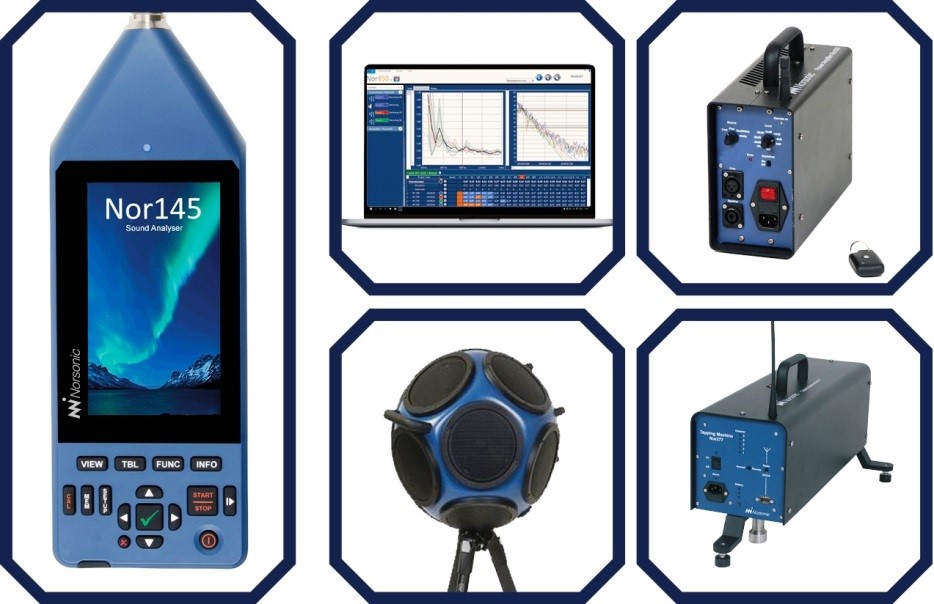
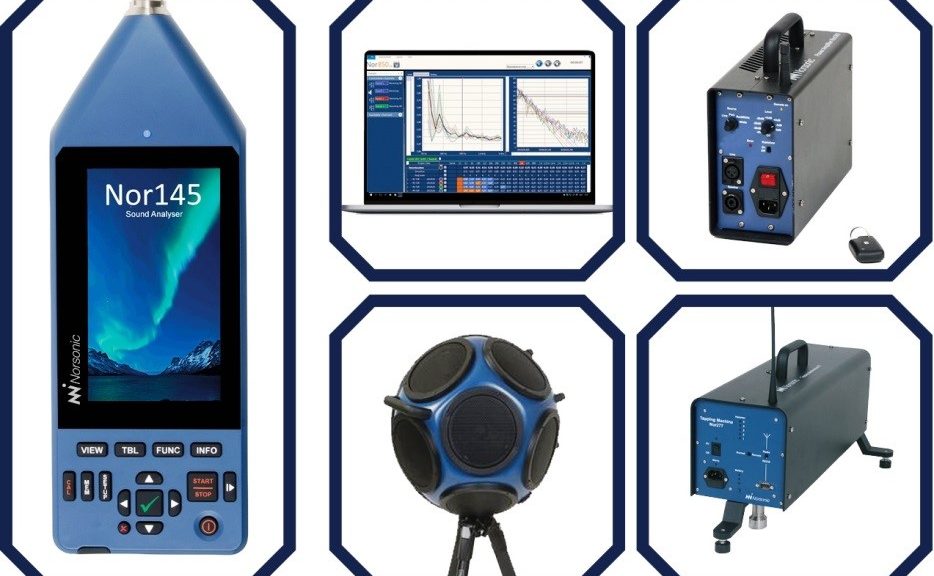
For impact sound testing Building Regulation Part E requires you achieve at least 62dB for new build properties and 64dB for conversion developments. Impact insulation performance only applies to party floors and related to the effectiveness of the floor construction in absorbing shock such as footfall noise. The measurement is done by using a Norsonic tapping machine (as shown below). The machine has 5 weights which tapping in regular succession on the tested floor which emulates footfall noise. The noise levels are taken in the receiving room below, which are then measured and averaged for different tapper positions, which then gives the sound reduction rating of the floor. In this case the lower the figure, the better the performance.

Good Acoustic Design
To try and ensure you meet the standards stipulated within Building Regulations Part E, careful consideration should be shown to the acoustic design detailing from the stat of the project. offset. Tackling the acoustic design for both new build and conversion project requires two different construction techniques and acoustic design detailing. With new build properties you have a blank canvas in terms of the overall design whereas with conversions you usually need to work with the existing’ onsite’ construction which can be quite difficult.

We offer an acoustic design package, which contains the following elements:

a.            Sample Sound Testing – of the existing construction. This offers an accurate overview of the acoustic performance of the existing partitions which enables us to offer a targeted acoustic design using the sound insulation performance of the existing construction.

b.            Acoustic Design Review – a full design review of the proposed developments party walls and floors.

c.             Site Survey Visits – to let us view the existing site construction. This allows us to check for potential problematic construction such as inclusion of lightweight blocks in the existing construction. It also lets us check that the installation teams are installing the acoustic materials as per manufacturer’s guidelines.

d.            Final Precompletion Sound Testing in compliance with Building Regulations Part E.

Useful Acoustic Design Considerations

a.            Avoid the use of lightweight blocks in the inner envelope construction and/or stairwell construction etc. as sound will travel both vertically and horizontally from dwelling to dwelling.

b.            The use of resilient suspended ceilings will help improve the performance of the floor partition.

c.             Ensure all support steels/timbers are carefully boxed out where they travel from flat to flat vertically and horizontally.

d.            Use a high quality resilient acoustic membrane on top of the floor to improve the impact performance of a floor.

e.            Ensure all penetrations are fully sealed where they terminate through floors and they are adequately boxed with acoustic quilt and two layers of plasterboard.

In our experience the main 5 considerations when designing for separating walls and floors between dwellings are: If used together or in various combinations they will improve sound insulation properties over a wide range of frequencies. The main factors are:

a.            Mass

b.            Isolation

c.             Absorption

d.            Resilience

e.            Stiffness

If used together or in various combinations they will improve sound insulation properties over a wide range of frequencies and should achieve compliance with Building Regulations Part E.

In our experience if the acoustic design is taken into consideration from the offset of the project, then it usually results in compliance with Building Regulations Part E.  In Some cases sound test failure can also be down to the poor workmanship rather than the acoustic design that is why we offer a full‘4 step’ acoustic package. If you have a project that’s needs acoustic design advice or sound insulation testing, then please visit the APT Sound Testing website  or phone us directly on 07775623464.

Improving Air Tightness in Buildings

Improving Air Tightness in Buildings

Improving Air Tightness in Buildings
Darren Helliwell of APT Sound Testing looks at how construction companies can improve the air tightness of their buildings to ensure they pass their airtightness test first time.

With the Building Regulations and planning requirements and energy assessments pushing buildings towards ever-lower energy use it has become more important than ever to ensure your building is constructed as air tight as possible.

One of the most important steps to improve energy efficiency and occupiers wellbeing in both dwellings and the workplace is by reducing air leakage.

Detail showing a blower fan test equipment

Improving Air Tightness in Buildings

Although the worst allowable air permeability stated in Building Regulations guidance has remained unchanged for some years at 10m3/hr/m2, the actual designed air leakage figure is much lower usually between 3 – 5m3/hr/m2; however, many construction companies are struggling to attain this lower air leakage figure.

If sufficient attention isn’t paid during the design and construction stages of a project, then the lower air leakage rate may be difficult to achieve and there is a much higher risk that the building will fail its airtightness test. Carrying out remediation sealing work and retesting when when a building fails can be a major headache, often leading to delays and cost over-runs.

In our experience, designing and constructing for Airtightness is not rocket science. While many things contribute to a building achieving its airtightness target, one of the biggest factors is usually down to the quality of on-site workmanship.

The key principles of achieving airtightness are as followings:

  1. Having a simple air tightness design and construction strategy defined at design stage.
  2. Drawings/details clearly identifying the location of the air-line from an early stage (the air-line is basically the elements that serve to provide an airtight envelope around the building).
  3. Using building envelope components that are specified as airtight, such as windows, doors, curtain walling, roof lights etc.
  4. Using common, easily repeatable details so reduce the chance of buildability issues.
  5. Ensuring the building is correctly prepared in line with the air tightness checklists
  6. Assigning a single individual to be the air tightness champion with overall responsibility for airtightness during the build and site preparation prior to the test.
  7. Communicating the importance or airtightness throughout the entire project team and involving also trades that interface with one another.
  8. Making it clear who is responsible for sealing in each instance and produce a sealing closing off sheet, so this process can be accurately monitored

In our experience air leakage commonly occurs at interfaces between construction elements, such as service penetrations and wall-to-roof junctions. Also, air leakage paths may be circuitous, meaning air may travel some distance through the building fabric between the points of entry and exit such as wall cavities etc.

The main areas of Air Leakage:

  1. Seal all ducts and penetrations where the main services enter the building – we have encountered many tests where a water pipe duct has been left unsealed underneath kitchen units. After services have been installed in the duct, seal the rest of the duct.
  2. Seal behind kitchen and utility room units at the wall/floor junction.
  3. Seal all SVP and waste pipe penetrations passing through external walls and ceilings.
  4. Make sure that the tops, sides & ends of all pipe/SVP boxing’s are sealed to prevent air leaking into the boxing, and escaping through SVP/waste pipe penetrations. This is particularly important for SVP boxing’s behind kitchen unit. Often the bottom of the SVP boxing is not sealed to the bottom of the floor so the air can escape straight out.
  5. Bath and shower tray panels should be fitted and fully sealed.
  6. All penetrations through floors & ceilings should be sealed.
  7. The boiler flue must be sealed where it penetrates walls or ceilings.
  8. Make sure all external door/window seals (if applicable) are installed.
  9. In some houses, storage cupboards have been built into the roof space. The doors when closed should seal the room from the roof space. Fit draught excluder if necessary to top, bottom & sides of door/frame.
  10. In houses constructed from Timber Frame or where DOT & DAB plasterboard has been fixed to the inside face of block work perimeter walls, the gap.
  11. In between the bottom of the plasterboard and floors needs to be sealed at every floor level. Alternatively the gap between the bottom of the skirting board and floor can be sealed with mastic. This prevents air leaking behind the wall board and passing above the ceiling board, into the roof space.

Detail Showing the Main Air Leakage Paths

Passing Your Air Tightness Test

If you carefully check and prepare your building in-line with our air leakage checklist, it should help you pass your air tightness test at the first attempt. We have helped thousands of individuals and companies achieve their airtightness targets. Using our airtightness know how over many years of air testing and smoke surveys.

Whether you need air tightness test please contact us on info@aptsoundtesting.co.uk  to obtain a no obligation quote. If you need more information on how to prepare your building for the air test please download our air tightness testing checklist. 

Alternately, please visit our website at www.aptsoundtesting.co.uk  for more information on our precompletion testing services.

What is a Floor Plenum Test?

What is a Floor Plenum Test?

What is a Floor Plenum Test?
A floor plenum is a void between a building’s floor structure and a raised access floor. The floor plenum is used for distributing conditioned air to the spaces above.

It is important that conditioned air in a floor plenum flows into the occupied zone and does not leak into cavities, risers, stairwells, heating trenches or other adjacent zones. A properly sealed floor plenum will allow the floor grills and diffusers to fulfil their primary role of delivering air at the correct flow rate. As a result, the airtightness of floor plenums (or lack of) can be a serious energy efficiency issue and is essential for the whole air conditioning system to work.

What is a Floor Plenum Test?

Testing procedure BG65 / 2016, addresses these issues and places upper limits on the air leakage of floor plenums. Distinctions are made between air leakage to adjacent spaces – normally referred to as plenum leakage, and uncontrolled air leakage into conditioned zones – normally referred to as raised access floor leakage.

How is a floor plenum test carried out?

In brief, we remove a box a temporary a tile is removed from the plenum and our fan housing is installed directly above the opening. A fan is then installed into the box and this is all sealed against the floor. Any air handling ducts serving the test zone need to be turned off, isolated and temporarily sealed, stopping the passage of air to outside of the test zone via duct-work. Thereafter another tile is removed and a mock floor tile with a drill hole for the high pressure tube is installed in its place. After the equipment is set up a series of tests is undertake and the readings recorded and then checked against the floor plenum air tightness specification.

What is a Floor Plenum Test?

If the plenum test fails, you’re APT plenum test engineer will carry out a smoke test to look for air leakage paths. If you have floor or ceiling plenums in your building you need to be aware that a staggering 70-80% fail their first air tightness test. APT Sound Testing has years of experience of raised access floor plenum testing and can work with you to ensure you pass your floor plenum air test at the first attempt.

We can ensure that an onsite air test site audit is arranged as soon as the floor is in place; we can then undertake an initial floor plenum air test and smoke survey to check the air leakage result and check for air leakage paths within the plenum envelope. Once we have assessed the air leakage paths we can then supply a smoke survey report for your sealing contractors to use as reference to ensure your plenums are adequately sealed.

The most common air leakage paths within floor plenum construction

In order to create an effective airtight floor plenum and achieve a successful floor plenum air test, all mechanical and electrical penetrations and perimeter joints must be properly sealed. An evaluation of the following areas/components that can typically create Inefficiencies should be undertaken during the early design phases:

  1. All service penetrations through the access floor, walls and subfloor including:
  2. Cable bundles and cable trays
  3. Pipes
  4. Fire/plenum barriers
  5. Cable trunking – must be internally sealed within the void
  6. Masonry work – incomplete or poorly jointed masonry walls will result in greater air leakage. All masonry joints must be filled and masonry paint applied as a finish.
  7. Risers need to be properly sealed throughout all plenums/ducting need to be sealed.
  8. Plasterboard on studs at board edges and the ends below the raised floor level need to be sealed.
  9. Gaps between compartment barriers, top of raised access floor and sub floor respectively need to be sealed.
  10. Gaps between any curtain walling/glazing need to be sealed.

What happens if I fail my Floor Plenum Test?

A large number of floor plenums (70-80%) fail the initial air tightness test so don’t panic!

If we undertake the floor plenum test and it fails UKAS accredited test engineers will undertake a targeted smoke survey to highlight the main air leakage paths. We will then issue a detailed smoke survey report for your contactors to reference during the remedial sealing works. This will help us the remedial sealing works at they can quickly target the main air leakage paths within the floor plenum construction. We can also undertake thermal imaging surveys to pinpoint the main air leakage paths on the day of the plenum testing.

We also allow for the option of visiting site during the sealing works to ensure your contractors are adequately sealing the plenum prior to the second air tightness test. If you would like more information in regards to the most common air leakage paths visit our Plenum Testing page or call us on 01525 303905. Supporting document BG65 / 2016 also contains lots of information on how to design, constructing and test floor plenums.

Alternatively, for more information on all our services please visit our website at: www.aptsoundtesting.co.uk  

Sound Insulation Testing in London

Sound Insulation Testing in London

Sound Insulation Testing in London

London is a massive city containing over 9 million people density and high rise apartments. With many living in this overcrowded environment it is essential that noise transference between adjoining properties in kept to a minimum for the occupant’s wellbeing. One way of ascertaining that a building is in compliance with Building Regulations Part E for the prevention of noise transference, is to undertake Sound Insulation Testing in London.

We have undertaken thousands of sound insulation tests throughout London and the South East on all types of projects from simple flat conversions to large developments containing hundreds of flats. We also undertake Sound Insulation Testing where a lease holder dispute has arisen, i.e. where the buildings lease stipulates that wooden floors should not be used instead of carpets and as a result of the change of floor finish the noise levels have increased – especially the impact noise. We can also undertake sample sound testing to highlight the existing noise levels so a targeted acoustic design can be undertaken.

Sound Insulation Testing in London

Plate A – Tapping Machine for Impact Sound Testing

Currently we are also experiencing a rise in the amount of sound testing required to existing blocks of flats, such as existing council stock. This is hardly surprising as the amounts of noise complaints have more than doubled within the last 10 years due to residents experiencing excess noise between the dividing wall and floor partitions.  By utilising our extensive knowledge of different materials and construction we can forward a simple, explanative cost effective solution for wall and/or floor upgrade. Where our clients have followed our advice they have achieved a 100% success sound test pass rate, ensuring compliance with Part E of Building Regulations.

The Sound Testing procedure is fairly simple and our engineer will be happy to explain this on site. Essentially, for party walls there is one type of sound insulation test which is airborne sound test and for compartment floors there are two types of sound insulation tests which are airborne and impact sound insulation tests. The airborne sound insulation test is carried out by means of a loudspeaker emitting a steady source of noise on one side of the partition (wall or floor) to be measured. The corresponding sound level is measured on the other side of the partition. Impact sound insulation tests are carried out by means of a tapping machine placed on the floor sample to be measured and the noise measured in the room or space below

All our engineers carry out the sound test measurements in full accordance with the measurement procedures of BS EN ISO 140-4:1998[3] for field measurements with a single figure DnTw and LnTw in accordance with BS EN ISO 717.

Ongoing problems with airborne and structure borne sound are often associated with direct noise flanking transmission through floors and supporting walls and other associated structures. One common cause of noise flanking is often associated with the inclusion of lightweight blocks within the construction of the building envelope and/or blocked cavities. It all cases it is essential to establish if your problem is due to direct transmission, flanking transmission or a combination of both so that the most cost effective remedial treatment can be chosen.

Unwanted noise travelling along flanking paths will make the building structure vibrate which causes the sound to radiate into your room. One simple cost effective solution is to build another wall or ceiling in front of the original, but not connected to it (often called an independent wall or ceiling) so it provides isolation between materials.

One way to reduce the chance of flanking transmission is through careful consideration to the design at the start of the project.  Unfortunately, by simply specifying high performance wall and floor partitions it is no guarantee to adequate sound isolation and successful sound testing.

Sound Insulation Testing in London
APT Sound Insulation Testing offer both preconstruction and post construction design solutions if a project has failed the sound testing. We also offer onsite inspection services to ensure that the sound insulation elements are being installed as per manufactures guild-lines.

If you require pre-completion sound testing and/or you would like acoustic design advice on your project, please contact us now at info@aptsoundtesting.co.uk.

Four Steps to Successful Sound Testing

Four Steps to Successful Sound Testing

Four Steps to Successful Sound Testing

New homes are built to high standards; however, acoustics and noise control are important factors requiring careful consideration during design and specification, as well as pre-completion commissioning testing. Why choose APT Sound Testing? We provide full turnkey solution to help our clients achieve Building Regulations Part E compliance. We provide a professional acoustic consultancy service to help developers tackle the key issues. We have carried out thousands of sound insulation tests since 2006 so we have a large amount of experience in regards to Building Regulations Part E compliance.

Our Four Stages Areas of expertise of tackling sound are:

  1. Acoustic Design

During early design and construction process, we visit site to conduct a comprehensive acoustic design survey and review, we also take this opportunity to meet; where possible, the site/project manager, architects etc. The first stage of the acoustic design is to send through the design drawings – to include sections etc. so APT Sound Testing can review the design to check that the construction details proposed are capable of passing the sound tests. This usually takes place straight after planning has been approved as increased cost savings can be realised at the earliest stage.

APT Sound Testing will evaluate the construction methods and materials specified to ensure that they are capable of meeting the acoustic requirements of Approved document E. The typical areas we check are:

  • There are no flanking points, where isolated partitions are wrongly mechanically fixed together to caused noise bridging.
  • The walls and floors design are acoustically robust, to comply with Building Regulations Part E.
  • The acoustic treatments for Soil Pipes, Stair Cases Steel Beams etc. to ensure they are acoustically fit for purpose, as these are some of the areas that get usually missed.
  • Acoustic floor treatments are compatible with the proposed floor finishes i.e. Carpets, Laminates, Floor Tiles and under floor heating systems.
  • Ongoing Site Construction

We provide the site team with on-going design support service, so you will have direct contact with the allocated acoustician from the start of the process through to the successful completion of the project. One of the most important services is the going site survey visits which allow our clients to feel confident about the outcome of testing at the end of the build. The site visits let us check that the installation teams are installing the acoustic materials as per manufacturers avoiding crucial onsite mistakes. You can often have a compliant design which still fails due to poor workmanship; the site survey visits negate the risk of sound test failure.

Sound Testing for Part E of Building Regulations has been a mandatory requirement since July 2003. All new build dwellings and conversions which were built after this date require 10% of each party wall/floor construction type to be tested. Sound testing needs to be carried out between pairs of rooms separated by party walls and/or floors. In most cases the rooms to be sound tested will be the two main habitable rooms, i.e.  living rooms and bedrooms. The sound test procedure involves setting up a noise source in a room on one side of the party wall or floor and measuring the noise on both sides of the partition.

Different Types of Sound Testing

There are two types of sound insulation testing – airborne and impact. Airborne tests may be required between horizontally and vertically separated pairs of rooms. The sound tests are undertaken by using a sound source, amplifier and loudspeaker to generate a high noise level in one room (the source room). Noise measurements are then taken in both the source and receiver rooms using a prescribed number of source and microphone positions. The background levels in the receiver room are measured and the reverberation time in the receiver room is also measured.

For vertically separated rooms, an Impact sound test may also be required. Impact testing is undertaken using a “tapping machine”, (as above) which drops a series of weights onto the floor of the upper room. The noise level in the lower (receiver) room is measured for a prescribed number of source and microphone locations. The background levels in the receiver room are measured and the reverberation time in the receiver room is also measured.

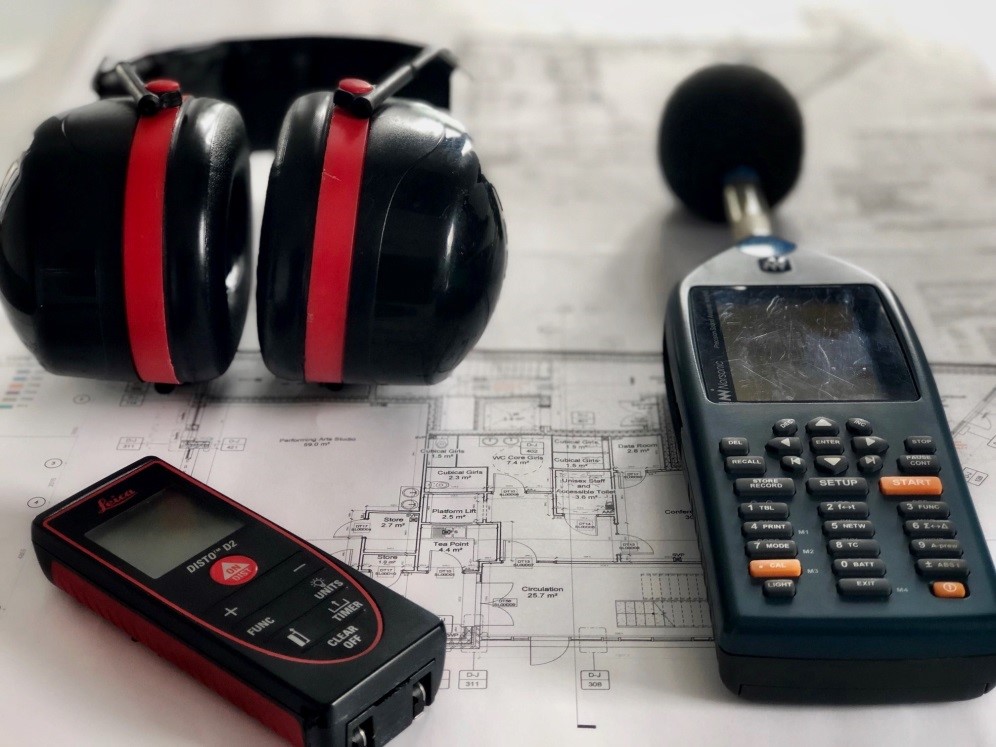
All APT’s test engineers carry the latest Norsonic equipment, which are class one rating all of our acoustic testing/sound testing is completed to a strict quality controlled standard. We provide full ISO & UKAS complaint sound testing.

  • Post Occupancy Sound Testing and Advice

We have carried out sound insulation testing and investigative/diagnostic work can help identify problems, especially if the specific properties of concern were not tested as part of a programme of precompletion testing. We also carry out sound testing and offer acoustic design advice where clients may have not followed the rules of their buildings lease agreements and installed timber floor etc. instead of the usually specified carpet finishes.

If you would like more information in regards to our acoustic design and/or sound insulation testing, please contact us at: info@aptsoundtesting.co.uk  or visit our website at: www.aptsoundtesting.co.uk. Alternatively you can call Darren on 07775623464. 

Sound Testing Explained

Sound Testing Explained

Sound Testing Explained

Airborne and Impact Sound is transmitted through most walls and floors by setting the entire structure into vibration. This vibration generates new sound waves of reduced intensity on the other side. The passage of sound into one room of a building from a source located in another room or outside the building is termed ”sound transmission”. 

Sound transmission loss or Sound Reduction Index, R dB, is a measure of the effectiveness of a wall, floor, door or other barrier in restricting the passage of sound. The sound transmission loss varies with frequency and the loss is usually greater at higher frequencies. The unit of measure of sound transmission loss is the decibel (dB). The higher the transmission loss of a wall, the better it functions as a barrier to the passage of unwanted noise across the dividing (acoustic) partitions.

Approved Document E stipulates that there are two types of sound insulation in buildings: airborne and impact. Airborne sound insulation is used when sound produced directly into the air is insulated and it is determined by using the sound reduction index. Impact sound insulation is used for floating floors and it is determined by the sound pressure level in the adjacent room below.

A sound insulation test of a separating partition will be considered as a pass if the airborne sound insulation is equal to or greater than the DnT,w + Ctr value shown for the appropriate dwelling in the table, for airborne testing in new builds properties a figure of 45dB or greater is required and for Impact testing 62dB and below. For conversion properties a figure of 43dB or greater is required and for Impact testing 64dB and below.

What is DnT,w

DnT,w is an in-situ measured performance parameter which demonstrates the level of resistance to sound transmission between two adjacent spaces, such as flats or houses. The measurement will include both direct sound transmission and flanking sound transmission of the construction. Flanking transmission is the effect of sound travelling through the building and may be particularly evident where beams and joists bridge a common partition or along poorly isolated lightweight wall constructions.

The DnT,w of a separating wall or floor will typically be of the order 5 to 7 dB lower than the manufacturers specified Rw (single figure quantity of sound insulation) for the single element, due principally to the contribution from flanking sound transmission around the element when it is built on site – this should always be accounted for in the initial acoustic design.

What is Ctr

Ctr is the spectrum adaption term. It is a correction attributed to the sound insulation quantity to account for urban traffic noise.

What is L’nT,w

L’nT,w is an in-situ measured performance parameter which demonstrates the level of resistance to impact sound transmission between floors. The impact measurement includes both direct sound transmission and flanking sound transmission.

Weighted Sound Reduction Index Rw

When specifying the acoustic performance of an acoustic partition in a more general manner, it can be useful to describe the sound insulation by a single number. The weighted sound reduction index, Rw , is a rating method given in EN ISO 717-1. This standard fits a standard reference curve to the measured sound reduction index curve.

Within the EN ISO 717-1 standard, a rating method is also given where the Rw value is completed by two C-terms which are applied to two models of the noise spectra for various types of noise. These two terms, Rw + C and Rw + Ctr, also include the frequency range 100 – 3150 Hz but can be extended to 50 – 5000 Hz. As industrial and traffic noise often have high sound levels which are also below 100 Hz, it is recommended that the extended frequency area is used.

The summary value, Rw + C, gives the reduction value in dBA for a spectrum with a level which is equally high in all third-octave bands. This can be used for:

•             Highway road traffic travelling at speeds in excess of 80 km/h

•             Factories emitting mainly medium and high frequency noise

•             Living activities (talking, music, radio, TV)

•             Railway traffic at medium and high speed

•             Jet aircraft at a short distance

The summary value Rw + Ctr also gives the reduction value in dBA, spectrum with low-frequency dominance such as:

•             Disco music

•             Urban road traffic

•             Railway traffic at low speeds

•             Factories emitting mainly low and medium frequency noise

Both the impact and airborne insulation performance of floors and walls should be carefully considered from the start of the project to ensure that the minimum performance requirements for new and converted developments are met inline with Approved Document E

If you would like more information in regards to our sound testing and/or noise survey services, please contact us now by calling 01525 303905 or by visiting the APT Sound Testing Website today.

What is a BREEAM Thermal Imaging Survey?

What is a BREEAM Thermal Imaging Survey?

What is a BREEAM Thermal Imaging Survey?

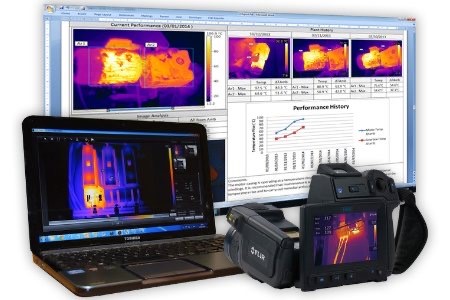
We often get asked this question; basically when Thermal imaging surveys are used properly, they can discover a multitude of issues including:

  • Areas of Thermal bridging
  • Missing or damaged insulation
  • Areas and pathways of heat loss
  • Areas of damp and mould growth

Thermal Imaging Surveys on buildings are one of the most effective ways to monitor sustainability performance. By Undertaking infrared surveys on new build commercial or dwellings, clients can be assured that their buildings are efficient with resources, ensuring effective thermal performance from every angle

BREEAM Thermal Imaging Survey

Thermal surveys can also identify potential improvements to reduce energy costs and CO2 emissions on existing buildings, thermography surveys can be used to assess the overall performance of the individual building fabric elements such that informed decisions can be made on improving energy efficiency. If required we can also undertake an in depth analysis, to estimate the potential cost and CO2 reductions if particular improvements are undertaken.

BREEAM Thermal Imaging Requirements

APT Sound Testing thermal imaging surveys are in accordance with the requirements set out in BS EN 13187. These requirements satisfy the BRE SD5076 standard for BREEAM credit, and a part of the survey you will need to allow for:

  1. Adequate Temperature Difference

To help to ‘see’ heat loss using a thermal imaging camera, a 10ºC temperature difference between the inside and outside of a building must be achieved. If a building has no operational heating system, temporary heaters can be used as long as the temperature difference is achieved.

  • Building Surfaces Must Be Dry at the time of the Thermal Survey

Before the thermal survey can commence all building surfaces should be dry to ensure that moisture evaporation does not alter the results. For building materials such as brick and/or block, its recommended that surfaces have been dry for at least 24 hours.

  • Full Access to the Internal and External Envelope.

In order to effectively measure surface temperatures within a building, full access must be given to our thermal engineers in order to inspect outside walls and surfaces from the inside. In addition to this, obstructions such as furniture should be removed at least an hour before the start of a survey. This is to allow local temperature conditions to stabilise before the test commences.

  • Avoiding Solar Radiation

To avoid the effects of solar radiation, thermal imaging building surveys should be conducted at least 2 hours after sunset or 2 hours before sunrise. This is important, as it means that thermal imaging surveys can be undertaken between 12pm – 3am during the summer months and 20:00pm – 6am during the winter months.

  • Avoid High Winds

Thermal imaging surveys should be undertaken when winds do not exceed 5 metres a second (18kph). This is to stop the cooling effect from wind which may affect the accuracy of the camera readings.

A BREEAM thermal imaging survey will also demonstrate compliance with the construction specification on newly constructed buildings in-line with Building Regulations Part L and sustainability assessments such as BREEAM. A large number of Building Specifications are including a thermographic survey into the schedule of works as a means of quality assurance and to achieve the required sustainability rating.

Where anomalies are identified during the BREEAM Thermal Inspection, we can highlight the issues within our report and provide as much help as possible in identifying remedial work required to gain a credit for a BREEAM compliance thermographic survey.

BREEAM Thermal surveys are completely non-invasive and non-destructive meaning that the building suffers no mechanical or physical damage at all.

If you require a BREEAM Thermal survey our professional and certified Level 2 Thermographer’s will carry out your thermographic Inspections for BREEAM compliance in accordance with all necessary standards and current regulations, all we need are a few details such as floor plans and elevation drawings and the building location to provide a quotation. We will also send across our informative Thermal Survey Checklist to help you prepare for the thermal survey.

If you would like more information in regards to BREEAM Thermography Surveys, please contact us now at: info@aptsoundtesting.co.uk or call Darren direct on: 07775 623464.

Building Regulations Part L  and this link both offer lots of useful information in regards to Thermography Surveys. If you would like more information in regards to our Thermal Imaging Surveys, please contact us at: info@aptsoundtesting.co.uk or call Darren Direct on 07775623464.

Alternately, if you would like more information on how to prepare for your BREEAM Thermal Imaging Survey, please visit our website at www.aptsoundtesting.co.uk or Thermal Imaging Inspection Checklist and you can also reference our blog at: airpressuretesting.blogspot.com or our Thermal Imaging Knowledge Base Page which offers handy tips on how to prepare for your Thermal Imaging Survey.

What is an Air Tightness Test?

What is an Air Tightness Test?

What is an Air Tightness Test?
Air leakage (also known as air permeability or air infiltration) is the air tightness of a dwelling through uncontrolled means such as cracks and gaps in the building envelope – walls, floors and ceilings.

Any ventilation system installed within a building is classified as a source of controlled air flow and is therefore not considered as air leakage and so these areas can be temporarily sealed during the air tightness test.

Air leakage is often felt as unwanted draughts, which will lower internal temperatures and may cause discomfort to building occupants especially in cold and windy weather.

Air tightness testing is a method of measuring and quantifying the air leakage of a building. Building Regulations Part L1A relates to dwellings and Building Regulations Part L2 refers to commercial buildings.

What is an Air Tightness Test?

Within the documents Air Tightness Testing is referred to as Pressure Testing and is the method by which developers measure the air tightness of their residential and commercial developments. Air testing shows how well properties will retain heat and in turn reduce carbon emissions, making them more efficient and cheaper to maintain.

An Energy Performance Certificate (EPC) is another compulsory requirement under Part L1A of the Building Regulations for all newly built residential and commercial units and these can only be issued when the air pressure testing results are available, to include within the SAP Assessment and thereafter the EPC.

How does Air Tightness Testing work?

Air Tightness tests are carried out by increasing the air pressure within the dwelling/building and then measuring the rate by which the pressure returns to normal. This is carried out using large fan/s inserted in the entrance doorway. The number of units you will have to test will depend on the number of unit types on your development. For most dwellings a single fan will be sufficient to pressurise the building; however, for larger commercial units a multi fan system will be required which is usually set up in blocks of 3 fans to each doorway.

What Air Permeability Figure do I need to achieve?

The Design Air Permeability for the dwelling/building will be determined initially by the lead consultant or SAP/SBEM assessor. The maximum design air permeability allowable is 10 m3/(m2.hr) @50Pa; however, this the more common figure of 5 m3/(m2.hr) @50Pa is often used. By aiming for a reduced Design Air Permeability and improving levels of air tightness it will serve to further reduce carbon emissions and make the Target Emission Rate (TER) easier to achieve. It may also mitigate the cost of more expensive carbon emission reduction strategies.

There are many common areas of air leakage; or air leakage paths within dwellings and commercial buildings, they are: Behind Bath Panels, Kitchen and Utility Units, Intermediate Floors, Behind Skirting Boards, Boxed in Pipes & Soil Stacks, Fireplaces, Poorly Installed Trickle Vents, Windows and Doors, Recess Lights & Loft Hatches.

Special attention should be shown to the above areas throughout the construction process.

Another interesting fact is that UK studies have demonstrated that a house/flat with robust air tightness credentials can often attain a higher sale price due to reduced energy costs over the lifetime of the building.

Building Regulations Part L and ATMMA TS1 both offer lots of useful information in regards  to Air Tightness Testing, such as which plots should be selected and what parts of the building can be temporally sealed etc.   If you would like more information on how to prepare your building to pass an air tightness test then please download our air tightness checklist.

Please Contact us now

If you would like more information on our air tightness testing service, then please visit our website at www.aptsoundtesting.co.uk or contact us at: info@aptsoundtesting.co.uk. To have a chat about your project please call:  01525 303905