Category: Uncategorized

The Purpose of Sound Testing of Property

The Purpose of Sound Testing of Property

Sound testing is an essential aspect of property development that ensures the acoustic performance of a building meets the required standards. This process involves measuring the levels of sound insulation between adjoining properties to assess the impact of noise transfer from one area to another. The purpose of sound testing is to identify any issues and provide recommendations for remedial actions that will improve the acoustic performance of the building.

The importance of sound testing cannot be overstated as noise pollution has been shown to have negative effects on health, productivity, and general well-being. Living in a noisy environment can cause stress, sleep disturbance, and hearing impairment, which can ultimately affect the quality of life of the occupants. Therefore, it is important to ensure that buildings are acoustically insulated to mitigate the impact of noise pollution.

APT Sound Testing


Sound Testing Recommendations
Sound testing is typically conducted in two stages: pre-completion testing and post-completion testing. Pre-completion testing is carried out during the construction phase of the building to identify any issues and provide recommendations for remedial action. Post-completion testing is carried out after the building is occupied to ensure that it meets the required acoustic performance standards.

The results of the sound tests are presented in the form of sound insulation values (measured in decibels) and a report that highlights any issues and recommendations for improvement. The values are compared against the minimum standards set out in building regulations and other relevant guidelines. These standards vary depending on the type of property and the intended use of the space. For example, the minimum sound insulation standards for residential buildings are different from those for commercial buildings.

Sound testing is essential for a number of reasons. Firstly, it ensures that buildings are compliant with building regulations and other relevant guidelines. Compliance with these standards is a legal requirement and failure to meet them can result in legal action being taken against the developer or owner of the property.

Secondly, sound testing helps to improve the quality of life of the occupants by reducing the impact of noise pollution. This is particularly important for residential buildings, where noise from adjacent properties can be a significant source of disturbance. By ensuring that buildings are acoustically insulated, the occupants can enjoy a quieter and more comfortable living environment.

Thirdly, sound testing can help to improve the value of a property. A building that has been sound tested and certified to meet the required standards is likely to be more attractive to potential buyers or tenants. This is because they can be assured of the quality of the building’s acoustic performance, which is an important factor for many people when choosing a property.

Sound testing is also important for ensuring that the building meets the needs of its intended use. For example, a building that is intended for use as a music studio or a cinema requires a higher level of sound insulation than a residential building. By conducting sound tests, the developer can ensure that the building meets the specific requirements of its intended use.

Sound testing is also beneficial for architects, engineers, and other building professionals. By conducting sound tests, they can identify any design flaws that may impact the acoustic performance of the building. This enables them to make necessary changes before construction begins, which can save time and money in the long run.

Furthermore, sound testing can help to reduce the likelihood of disputes between neighbors. In residential buildings, noise from adjacent properties can be a source of tension between occupants. By ensuring that the building meets the required sound insulation standards, the likelihood of disputes arising can be reduced.

It is worth noting that sound testing is not a one-time process. The acoustic performance of a building can deteriorate over time due to wear and tear, changes in the building’s use, or changes in the adjacent environment. Therefore, it is important to conduct regular sound tests to ensure that the building continues to meet the required standards.

In conclusion, sound testing is an essential aspect of property development that ensures the acoustic performance of a building meets the required standards. It has numerous benefits, including improving the quality of life of the occupants, ensuring compliance with building regulations, increasing the value of the property, and reducing the likelihood of disputes between neighbors. Therefore, it is important to conduct sound tests during the construction phase and regularly after the building is occupied to ensure that it continues to meet the required standards.

If you need help with the acoustic design and sound testing to comply with the lease condition/s on your project;  or, you have a problem with raised noise levels due to neighbours changing their floor construction, we provide an acoustic design and sound testing solution to achieve compliance with your lease condition. Please visit our website now at www.aptsoundtesting.co.uk or contact us now at 01525 303 905.

Sound Testing & Acoustic Design for Lease Conditions 

Sound Testing & Acoustic Design for Lease Conditions 

If you are changing a carpet floor finish to wooden and/or tile flooring in a leased residential dwelling, then you will need to check what your lease allows you to. In existing apartment blocks it is very common for the corresponding residential lease to contain clauses that may restrict alterations to floor finishes, this is normally where carpeted flooring is in place, but this also applies to where hard or wooden floor finishes are being altered as well e.g., wood to stone finish.

Usually, the lease clause will state that  sound insulation testing of the new floors is required to provide the same resistance to sound as the existing floor construction. In our experience, most lease conditions require sound testing prior to works commencing to ascertain the existing acoustic performance, thereafter a second set of sound tests must be undertaken once the works are complete to check that the sound insulation is the same (or better) than the original flooring.

Acoustic Design for Lease Conditions 

Sometimes the lease will also stipulate that an acoustic consultant must be employed to prepare a robust acoustic design for the floor, to ensure the desired sound reduction will be achieved. It can be difficult to ensure that a wooden floor construction will offer the same acoustic performance as an existing carpeted floor, and therefore a detailed acoustic design as well as careful site installation is required to ensure compliance with the clause of the lease.

Acoustic design and sound testing for lease condition compliance

We have helped hundreds of clients to comply with the acoustics for their lease conditions, so please get in touch if you need help. We usually undertake the following process to achieve compliance:

Pre-works Sound Testing
This offers an accurate overview of the acoustic performance of the existing floor partition/s prior to the commencement of construction works. It also enables us to offer a targeted acoustic design using the sound insulation performance of the existing construction.

Acoustic Design Review
We will analyse the sound test results as well as the existing construction detail of the party floor; thereafter, we will review your proposed floor specification and forward our findings via an easy-to-follow acoustic design report. The report will contain the materials to be used as well as installation instructions to meet the requirements of the lease. The acoustic design review is very important to ensure install the correct materials to attain compliance with your lease.

Site Inspection Visit
Our engineers will visit site and check that acoustic correct materials are being installed inline with manufacturer’s guidelines.

Post-works Sound Testing
Once the new flooring is installed, we will conduct post completion sound testing to provide evidence that the lease requirements have been met, we then provide the test reports to provide to your management agent for sign off.

We have helped hundreds of clients to comply with the acoustics for their lease conditions, so please get in touch if you need help. We usually undertake the following process to achieve compliance:

If you need help with the acoustic design and sound testing to comply with the lease condition/s on your project;  or, you have a problem with raised noise levels due to neighbours changing their floor construction, we provide an acoustic design and sound testing solution to achieve compliance with your lease condition. Please visit our website now at www.aptsoundtesting.co.uk or contact us now at

Acoustic Testing in the World of Construction

Acoustic Testing in the World of Construction

In the world of construction, acoustic testing is an important process that ensures buildings meet acoustic requirements and standards. Acoustic testing involves measuring the sound transmission and insulation properties of walls, floors, and ceilings. Acoustic testing helps in identifying the areas where sound can escape or enter a building, and also helps in determining the overall sound insulation performance of a building.

In this post, we will provide an introduction to acoustic testing in the world of construction, including the types of acoustic tests, the benefits of acoustic testing, and the importance of complying with acoustic standards and regulations.

Types of Acoustic Tests

There are several types of acoustic tests that can be conducted to evaluate the sound insulation performance of a building. These tests include:

Airborne Sound Insulation Test: This test measures the sound transmission through the air, which can be heard through walls, ceilings, and floors. The test involves measuring the sound levels in a source room and a receiving room, with a partition separating them. The difference in sound levels between the two rooms is then calculated to determine the airborne sound insulation performance of the partition.

Impact Sound Insulation Test: This test measures the sound transmission caused by impact on a surface, such as footsteps or dropping an object. The test involves measuring the sound levels in a receiving room while an impact is made in a source room. The difference in sound levels between the two rooms is then calculated to determine the impact sound insulation performance of the floor.

Reverberation Time Test: This test measures the time taken for sound to decay in a room after the sound source has been switched off. The test involves measuring the sound levels in a room at various time intervals after the sound source has been switched off. The time taken for the sound levels to decay by 60 decibels is then calculated to determine the reverberation time of the room.

Benefits of Acoustic Testing

Acoustic testing provides several benefits in the world of construction, including:

Identifying areas where sound can escape or enter a building: Acoustic testing helps in identifying areas where sound can escape or enter a building, such as through walls, ceilings, and floors. This allows for the implementation of measures to improve the sound insulation performance of the building.

Ensuring compliance with acoustic standards and regulations: Acoustic testing ensures that buildings comply with acoustic standards and regulations, such as the Building Regulations Approved Document E in the UK, which sets out the minimum standards for sound insulation in buildings.

Improving the acoustic performance of buildings: Acoustic testing helps in identifying areas where the sound insulation performance of a building can be improved, such as through the use of better insulation materials or the implementation of sound-absorbing measures.

Importance of Complying with Acoustic Standards and Regulations

Complying with acoustic standards and regulations is important in the world of construction for several reasons, including:

Health and Safety: Excessive noise can be detrimental to health and safety, causing hearing damage, stress, and other health issues. Complying with acoustic standards and regulations helps in ensuring the health and safety of building occupants.

Comfort: Acoustic standards and regulations help in ensuring that buildings provide a comfortable living and working environment by reducing the impact of external noise on the indoor environment.

Legal Requirements: Failure to comply with acoustic standards and regulations can result in legal action, fines, and even the closure of buildings.

Acoustic testing an Important Process
Acoustic testing is an important process in the world of construction that helps in ensuring buildings meet acoustic requirements and standards. There are several types of acoustic tests that can be conducted to evaluate the sound insulation performance of a building, including airborne sound insulation tests, impact sound insulation tests, and reverberation time tests.

Room Integrity Testing FAQ’s

Room Integrity Testing FAQ’s

Room Integrity Testing Frequently Asked Questions
To try and explain what’s involved in a room integrity test, we have written the following question and answers article:

Q – Why do I need a room integrity test?

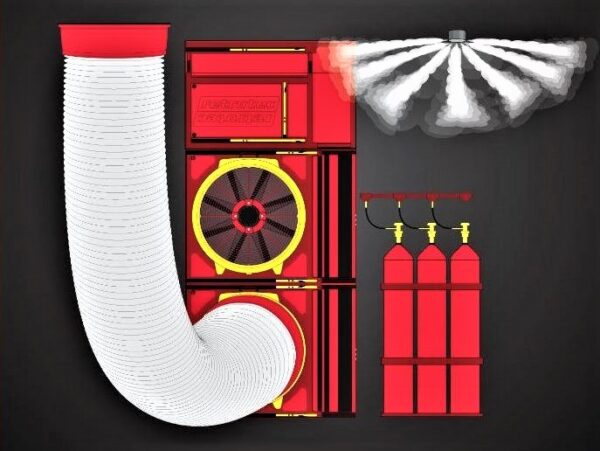
A – The test is a requirement of the British Standard for gaseous fire extinguishing systems – BS EN: ISO 14520. Most fire insurers will require evidence that the test has been conducted and the result is satisfactory.

Q – How quickly can a room integrity test be arranged?

A – We can usually undertake a room integrity test within a few days of our client’s inquiry; however, in the case of an emergency, we do offer a 24-hour service.

Q – How do I prepare my protected enclosure for the integrity test?

A – We send out an informative checklist with all our quotations, to help clients prepare for the integrity test.

Q – How long does it take to carry out a room Integrity test?

A – The room integrity test is usually between 1 and 2 hours for a single enclosure.

Q – Will the enclosure integrity test set off alarms?

No, the enclosure test is completely independent of the detection system; however, the room should be isolated and the system turned to manual in line with our room integrity checklist.

Q – Is the room integrity test disruptive?

A – No, it is only necessary to stop access to the room for 10-15 minutes. Personnel – such as IT staff can continue to work in the room. The enclosure test can be paused if immediate access becomes required.

Q – Does equipment such as servers need to be switched off during the room integrity test?

A – No, the servers can carry on running throughout the room integrity test.

Q – Does air conditioning need to be switched off during the enclosure integrity test?

A – Recirculation (chiller) units may continue to run. Air supply/extract ducts passing into the enclosure will need to have the fire dampers closed and/or be temporarily sealed throughout the duration of the test.

Q – Will I get a certificate if I pass the room integrity test?

A – Yes, the certificate will be issued within a few days. This should be retained for possible inspection by the authorities/insurers. We will verbally let you know if the enclosure test has passed or failed whilst on site.

Q – What happens if the room fails the room integrity test?

A – A low-impact smoke test can be undertaken along with a corresponding report to identify the air leakage paths for remedial sealing.  Once the remedial works have been undertaken a retest must be conducted to confirm the adequacy of the retention time along with the corresponding pass certification.

Q – Can remedial sealing be done at the time of the enclosure test if its initially failed?

A – Yes, provided the leakage can be swiftly remedially, or temporarily, sealed.

Q – Does APT undertake remedial sealing?

Yes, we can undertake the remedial sealing if so required, or the client can arrange the works themselves.

Q – How often should the room integrity test be done?

A – The relevant British Standard (BS EN: ISO 14520) specifies that the test should be conducted within a 12-month period and/or if any works have been undertaken to the enclosure envelope i.e., new service penetrations are made to the walls, floors, or ceilings.

Q – Is there any corresponding standards for room integrity testing?

A – Yes, the following standard applies to room integrity testing: ISO 14520, NFPA 2001, and ISO 15004

Room Integrity Testing Equipment

Why use us for your room integrity test?

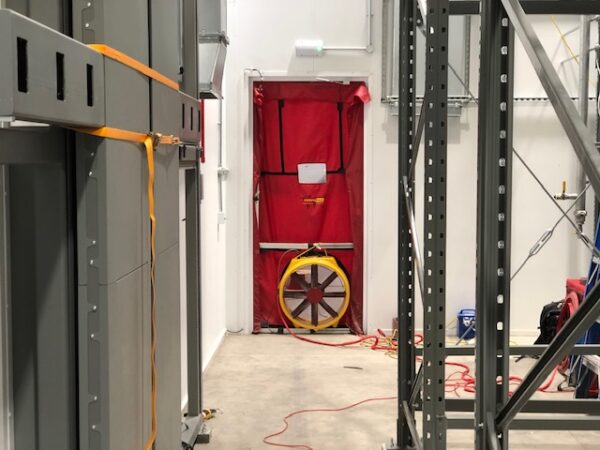
We offer a friendly and cost-effective one-stop solution for all your integrity test requirements. Using the very latest blower door technology, we provide thorough retention reports as well as informative assessments concerning highlighting areas of leakage, advice, and recommendations. We even offer a remedial sealing service should it be required.

If you would like more information on our server room integrity testing, please call us on 01525 303 905 or visit us at  info@airpressuretesting.net or visit our Room Integrity Page.

Have You Failed Your Air Tightness Test?

Have You Failed Your Air Tightness Test?

On previous projects where our clients buildings have failed the air tightness test,  we have used combined air tightness testing and smoke surveys to record the air leakage paths. On some projects, we have encountered very ‘leaky’ dwellings and commercial buildings, that achieved air leakage rates in excess of 40m3/h/m2 – or 8 times the usual air permeability requirements of Building Regulations Part L. By utilising pressurised smoke surveys we have managed to quickly identify the air leakage paths for our client’s air sealing teams, which invariably ends up with a successful air test at the second attempt.

Air tightness testing and smoke surveys provide a powerful combination, as it provides an accurate and visual approach to identifying and controlling air leakage in in buildings. Our blower door equipment can be set up quickly with minimal disruption to projects, and the test and smoke survey can be carried out in a matter of minutes, meaning that you can quickly establish buildings air leakage rate, as well as producing an accurate air leakage survey report, highlighting the air leakage paths within the building envelope, to allow targeted remedial sealing works minimising time and costs.

air-testing-equipment-undertaking-Building-Air-Test

How do you undertake an air leakage smoke survey?

Our blower door fan mounts into a door-sized housing, that can be adjusted to suit the size of the door frame.

We then set up the blower door equipment using the following procedure:

  1. Firstly, we temporarily install a blower door fan system (depending on building size) in a suitably placed doorway
  2. We then take a series of environmental measurements such as internal and external temperatures as well as barometric pressures and undertake measurements between 25-70Pa in 5Pa increments, recording the pressure differential at each step
  3. Finally, our technicians will calculate the total air flow required to achieve a pressure differential of 50 Pa, divided by the total building envelope area – this calculation will show leakage rate in m³/h.m² @ 50 Pa as well as the equivalent air leakage area.
  4. Once its been established that the building has failed the air tightness test, we then pressurise the building (blows air into) to around 60 pascals of pressure, this forces air to flow through the air leakage paths throughout the building fabric.
  5. We then turn on the smoke machine and walk around the building recording all the air leakage paths through the building envelope
  6. We send a detailed smoke survey report to the client to distribute to his remedial sealing team.

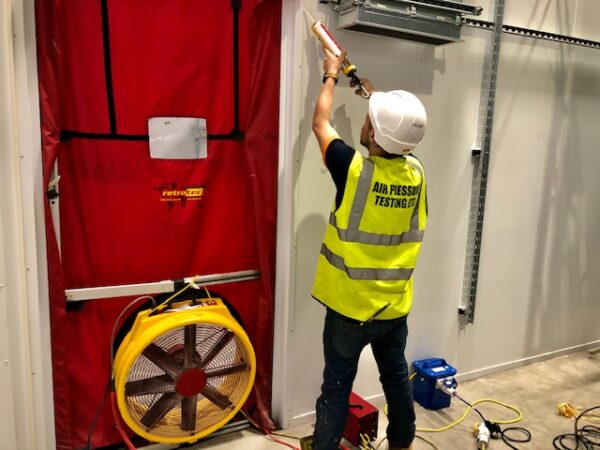
It usually takes 1-2 hours to complete an air leakage smoke test; however, we can attend site for a whole day if required. This allows time for operatives to seal all the necessary air leakage paths on the day of the test. If you are planning on undertaking remedial sealing works on the day of the test, your operatives will need to have the correct sealing materials, such as mastic, expanding foam, draught excluders, plasterboard, grip fill and suitable safe access to undertake the sealing works. Here is a video of a typical smoke survey to a dwelling.

If some of the areas are difficult to reach such as very tall commercial buildings, we can also undertake a Thermography survey. This is performed using an infra-red camera to identify hot and cold spots on the surface of the building; this requires a temperature variation and is often done at night.

Blower-Door-Test-To-Commercial-Building

Why is useful to know the Equivalent Leakage Area (ELA)

once we have undertaken  the air tightness test, our software not only works out the air leakage rate, it also works out the equivalent leakage area (ELA) which can be extremely useful. For instance, if our the building fails the test at 20m3/hr/m2 and you need to achieve a figure of 20m3/hr/m2, you know it is approx. 4 times over the air permeability target.

Our computer software then converts the pressure drop to an equivalent leakage area (ELA), which is the overall size of a single hole in the building fabric, so say the overall equivalent air leakage area (ELA) is one metre square (1m x 1m) you know that you will need to reduce the ELA to approx. 0.25m2  (500mm x 500mm) to attain a pass.

The equivalent leakage area (ELA) is very useful for our engineers and clients to understand the cumulative effect of the many small leaks – such as leakage along a skirting board – that are present within a typical building as they may add up to the equivalent of an open door or window on the building. for instance if you have one hundred linear metres of skirting board with a 5mm gap, you will end up with an approx. air leakage area of half a metre square, more than enough to fail a large house, especially if its got to get down to an air leakage rate of 3m3/h/m2.

The types of Smoke machines used on air leakage surveys

We usually use 3 different types of smoke machines for our air leakage surveys.  We have a smaller handheld smoke machine for standard size  houses. Our middle size smoke machine uses pressurised smoke canisters, which is extremely useful for large houses and smaller commercial buildings. Our large smoke machine is used on large commercial buildings.

So, to recap, we use the different size smoke machines on the following buildings:

  • Small smoke machine – houses, flats, and laboratories
  • Mid-size smoke machine – large houses and small commercial buildings
  • Large smoke machine – large commercial buildings

In all instances, we always use our smoke machines with our blower door systems to accurately identify the air leakage paths in buildings. Without the inclusion of a blower door system to pressurise the entire building, you will only see small amounts of ‘wispy’ smoke drifting around, which makes it very difficult to accurately identify the air leakage paths.

Common Air Leakage Paths 

  1. Poorly installed windows and doors which do not close tightly
  2. Defective windows and doors with missing seals
  3. The gap at the wall/skirting board junction.
  4. Perimeter and internal wall/floor junctions.
  5. Gaps around service penetrations (such as water and electrical) through floor and walls
  6. Pathways through ceiling voids into masonry cavity walls
  7. Pathways through eaves in cavities
  8. Gaps around windowsills and door reveals
  9. Gaps around bathroom and WC services
  10. Gaps around kitchen and utility services.
  11. Gaps between dry lining and ceilings
  12. Unsealed chimneys
  13. Gaps around electrical and IT fittings
  14. Gaps around ceiling loft hatches
  15. Ventilation penetrations through the walls, ceiling, and roof
  16. Poorly installed extractor fans to kitchens, utility, and bathrooms

We can help you pass you air tightness test

At APT Sound Testing we have large amount of experience in understanding the requirements of Approved Document L, along with extensive experience of carrying out thousands of successful air tightness tests on a wide range of developments across London and the UK.

In order to achieve the required air tightness target and to avoid the risk of a failed air tightness test, we strongly recommend that early consideration is given to the design of the air leakage line within your project. By working with our customers at the design and construction stages we provide advice and guidance on the most feasible ways to avoid air leakage and attain compliance for the air tightness test. Please download our air tightness checklist for more information on how to prepare your building for the air tightness test.

At APT Sound Testing, we are happy to provide you with general air leakage design advice for your building envelope and onsite guidance. Upon completion of your project, we provide Nationwide UKAS Accredited Tightness Testing for domestic and commercial buildings to help you demonstrate Building Regulation Part L Compliance.

To find out more about our air tightness testing service or if you wish to discuss your project please contact us on 01525 303905 or email us at info@aptoundtesting.co.uk

Noise Surveys for New Developments

Noise Surveys for New Developments

A noise survey and report should be submitted during the pre-application process and discussions on planning applications. In many circumstances a planning condition will stipulate that a noise survey will need to be undertaken. Noise surveys are normally carried out prior to completion, however the local authority may also require post a BS 8182 noise level survey to prove that the noise standards have been achieved within the living rooms and bedrooms.

Noise Surveys


The following information will usually need to be included within the noise survey report.

  1. The reason and scope of the report.
  2. Location plan of the proposed development and likely receptor points such as the nearest residential window/s.
  3. The noise survey Methodology including the noise monitoring location, the equipment used and the weather conditions during the noise survey.
  4. Reasons for deviations from standard methods.
  5. Full table of results.
  6. A comparison of survey results against the noise standards.
  7. Recommendations for noise control measures – acoustic barriers etc.
  8. Full calculations against noise reductions expected to support any suggested noise control measures.

When is a noise survey and PPG24 report required?
A noise survey and PPG24 report may be required at the application stage or once planning
permission has been granted. A noise survey and report are required if:

• the proposed development with commercial areas that may create noise which may affect nearby noise sensitive properties. For example, a new commercial activity near existing residential properties.
• the proposed development positioning will be sensitive to noise and is likely to be affected by existing noise sources i.e. busy roads, railway, airports or commercial activity.

What is the noise Survey report for?
The noise survey report is to demonstrate that:

• the source of noise is evaluated and quantified
• nearby noise sensitive receptors identified
• noise receptors have been determined with reference to noise standards

The noise survey report (where required) will also set out control measures where it is necessary to reduce noise to acceptable levels. For example, the installation of different glazing e.g. from double to triple glazed panels or acoustic trickle vents are installed so that internal noise standards are met.

When should a noise survey report be submitted?
A noise survey report should be submitted during pre-application discussions or
more commonly during a planning application. In some circumstances, a planning condition will be included on the planning permission requiring the submission of a noise report.

As background noise surveys are usually carried out prior to completion of a development, compliance with any noise standards are demonstrated by calculation. However, the local authority may also request a post-completion noise survey assessment to prove that noise standards have been achieved.

APT is suitably qualified to carry out noise assessments and provide a noise survey reports
A noise survey must be carried out by a suitably qualified acoustic consultant. We have vast amount of experience and skill in dealing with noise surveys for the planning applications for all types of developments throughout the United Kingdom.

NEC Noise Exposure Categories (NECs)
There are four Noise Exposure Categories based on the level of noise at the development. The NEC in which the site falls determines to what extent noise should be considered in the granting of planning permission.


The NEC(s) for a development are usually determined by monitoring noise levels. Potential mitigation options can then be assessed by calculation, and/or the use of noise modelling. Appropriate noise mitigation can then be incorporated into the development at the design stage.


Planning is awash with often contradictory guidance in regards to noise. The standards, codes of practice do not precisely cover all aspects noise and the subsequent requirements. PPG24 tries to address this by the undertaking of noise surveys at the planning stage to assess the overall suitability of the site’s noise climate for residential development. With it comes the possibility of noise control measures being necessary as part of the planning.


Problems relating to noise during the planning stages can usually be avoided or resolved with a good, detailed and accurate acoustic assessment report. various mitigation measures.


We undertake accurate on-site noise assessments to suit the needs of a client’s problem and their pocket, and deliver concise and clear reports in a timescale which is again designed to suit the client. If there are problems with the noise levels, APT can propose various mitigation measures to help you comply with PPG24 or BS4142 noise surveys.


If you would like more information on noise surveys for your new development, then please contact us on 01525 303 905 or visit our website at: www.aptsoundtesting.co.uk

Improving Acoustics in Dwellings

Improving Acoustics in Dwellings

When designing a new project containing multiple dwellings, why go further than just meeting the basic regulations. For instance, if you only manage to achieve the minimum requirements for compliance with Building Regulations Part E for sound testing, then the chance of noise complaints will usually be higher than if you better it by 5-7dB.  

Sound Insulation Testing

Improving Acoustics in Dwellings
The World Health Organisation defines noise as ‘unwanted sound’ and such noise in buildings can have significant effects on the people (residents) who occupy them. If a person is subjected to excess noise for long periods, it can result in physical discomfort or mental distress and in many cases noise complaints. The WHO estimates that around 50% of the population of the European Union live in areas are exposed to noise levels that do not ensure acoustic comfort to their inhabitants and more than 30% are exposed to noise levels at night which is at a level disturbing to sleep this is simply not good enough.

Within homes, a noisy neighbour can be one of the main problems experienced in attached housing. It’s estimated that up to 4 million people in Britain have had their lives disturbed by noisy neighbours.

The best way to combat excess noise is to ensure that proper precautions are taken at the design stage of the project and thereafter during construction of the building. Noise transmission levels should be compatible with the building’s usage with the correct acoustic climate provided in each space.

The UK has the building regulations and a number of sector specific guidance documents covering noise, these are:

  • Approved Document E
  • Building Bulletin 93
  • Health Technical Memorandum 08-01
  • BS8233
  • BS4142

There are strong arguments for considering solutions which go above and beyond just meeting the minimum requirements in the above regulations. For instance using acoustic ceiling products and partition systems it is possible to create environments that offer greater acoustic comfort for occupants go above and beyond the standard Building Regulations requirements, which should have a positive impact on health, well-being and productivity.

Firstly, get advice on acoustic design before starting construction. The most effective way to ensure you improve the acoustics on your project and pass your sound test at the first attempt is to plan your project with sound insulation in mind. This does not need to be costly, and can save considerable time and cost at the end of the project, by reducing the chance of needing to undertake remedial works and re-testing.

The two main areas to take into consideration are usually the dividing wall and floor partitions. If you are unsure of how to build the separating wall and floor partitions and associated junctions across your project don’t panic, we can offer an acoustic design service. The degree of guidance you require can vary from site to site; however, we can cater for every eventuality by offering sample sound testing to establish the sound insulation performance of your existing wall and floors. Thereafter we can undertake more targeted design review using the information at hand.

When your project is underway, we can visit site and check the construction is being constructed as designed. Even minor alterations can have a significant impact on the effectiveness of your sound insulation measures.

If you have a new project and you need help with your acoustic design and/or sound testing then please email us at: info@aptsoundtesting.co.uk  or call us on 01525 303905. If you want more information on our full range of services please visit our website at: www.aptsoundtesting.co.uk

If you would like to download more information on how to prepare for your sound testing, please click download our sound testing checklist.

Sound Testing Services for London  & the UK

Sound Testing Services for London  & the UK

London is a massive UK city containing over 5 million properties. In this overcrowded environment, it is essential that noise transference between properties in kept to an absolute minimum for the occupant’s well-being.

APT Sound Testing Services undertake UKAS accredited Part E sound testing throughout London and the UK. We have extensive knowledge regarding the way different materials and construction methods can influence the results of a sound test, to ensure your company achieves complies with Sound Testing Regulations Part E.

Sound Testing Services

APT Sound Testing Services
Pre-completion sound testing under part E has been a mandatory requirement since July 2003. All new build properties and conversions which were built after this date require 10% of each party wall/floor construction type to be tested. Sound Testing is to be carried out between pairs of rooms separated by party walls or floors. In usual circumstances, the room/s to be sound tested will be the living rooms and bedrooms, which are classed as the two main habitable rooms.

The sound test procedure involves setting up a noise source in a room on one side of the party wall or floor and measuring the noise on both sides of the partition.

Airborne sound tests may also be required between horizontally and vertically separated pairs of rooms. The sound tests are undertaken by using a sound source, amplifier and loudspeaker to generate a high noise level in one room (the source room). Noise measurements are then taken in both the source and receiver rooms using a prescribed number of source and microphone positions. The background levels in the receiver room are measured and the reverberation time in the receiver room is also measured. From the results, the airborne sound insulation (DnT,w + Ctr) is calculated and compared to the requirements of Approved Document E.

For vertically separated rooms, an Impact sound test may also be required. This sound test is undertaken using a tapping machine which drops a series of weights onto the floor of the upper room. The noise level in the lower (receiver) room is measured for a prescribed number of source and microphone locations. The background levels in the receiver room are measured and the reverberation time in the receiver room is also measured. From the results, the impact sound insulation (LnT,w) is calculated and compared to the requirements of Approved Document E.

UKAS Accredited Sound Testing
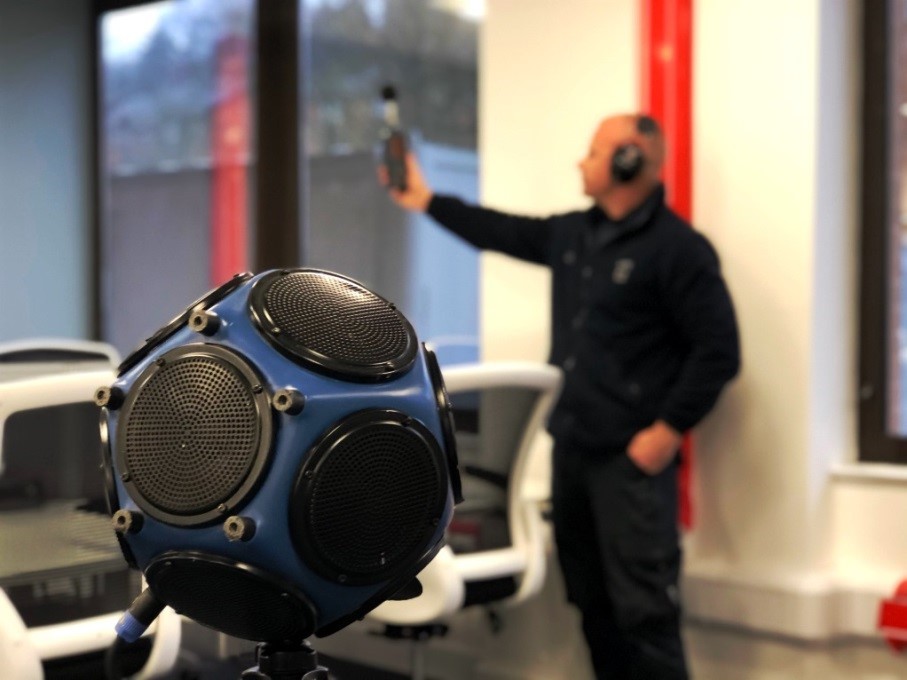
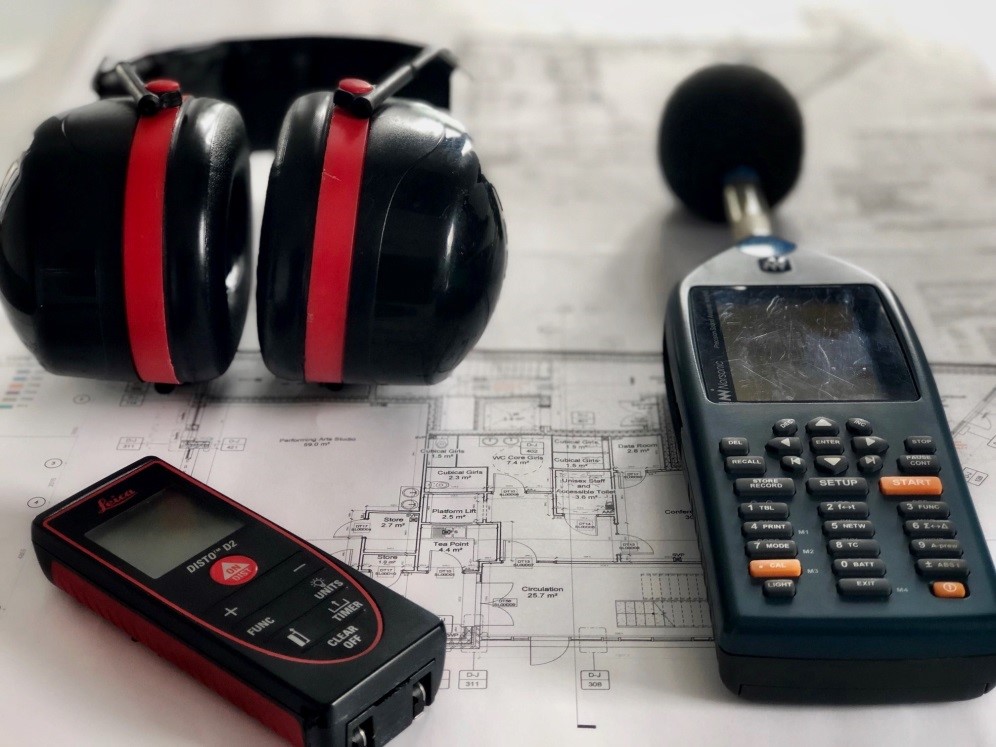
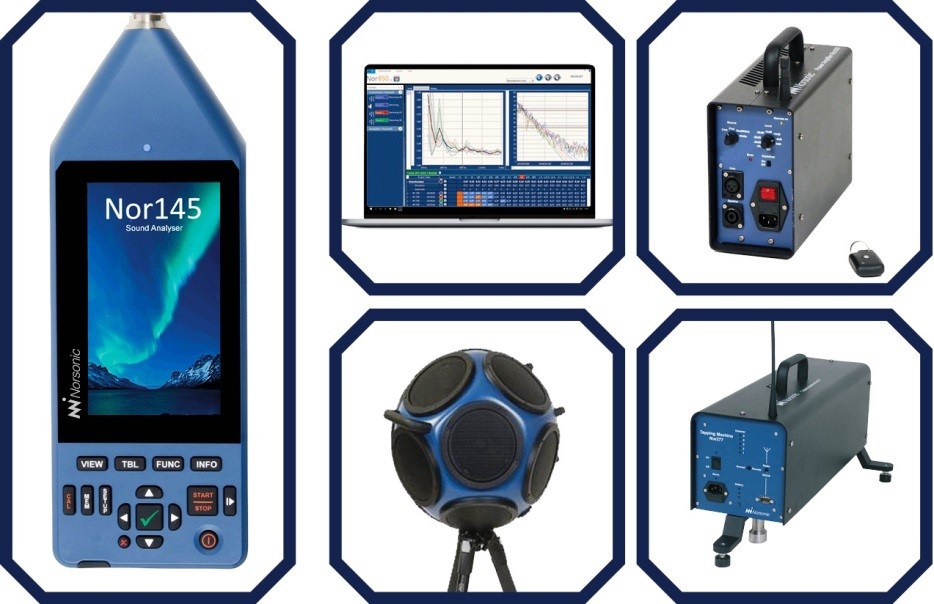
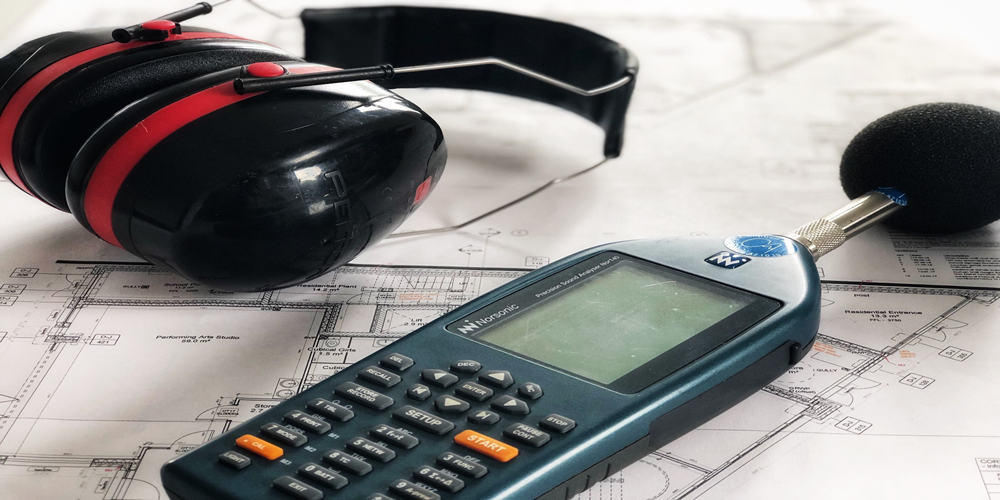
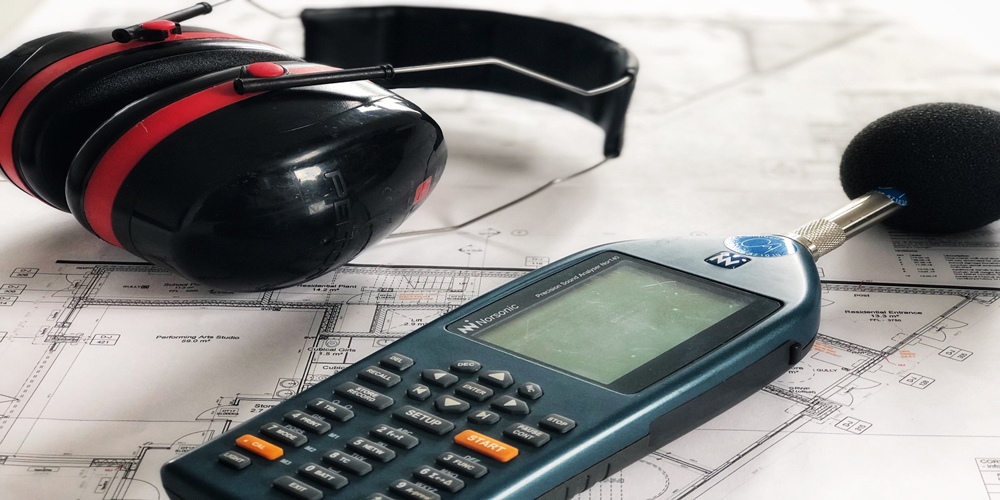
Our sound test engineers carry all the latest Norsonic equipment, which are class one rating and all of our acoustic testing/sound testing, is completed to a strict quality controlled standard. We provide full UKAS Accredited sound testing.

Pre-completion sound testing is generally carried out at the request of the Building Control Officer. The guidance contained within Approved Document E gives detailed recommendations for the partitions to be tested and for the number of sound tests that should be carried out. We recommend that the proposed sound testing is agreed in advance with the Building Control Officer prior to the London sound testing.

We can undertake both acoustic airborne sound testing to allow for speech, television etc, and impact sound testing to allow for footfall etc. This is in accordance with the requirements of Approved Document E of The Building Regulations and the relevant European and International standards.

The testing methods for airborne and impact sound insulation testing in London are in full accordance with: the suggested methods presented in BS EN ISO 140-parts 4 and 7: 1998.

If you are in the construction stage of a new project and are not sure if your design will pass the building regulations then visit our Sound Testing Services website and we will check your acoustic design and offer advice (if required) for the wall or/and floor partitions. Alternatively, if you require sound testing for your London project please contact us now on 01525 303 905.

Sound Insulation Testing on London Developments

Sound Insulation Testing on London Developments

London is a huge city containing over 8 million people. In this crowded environment it is essential that noise transference between properties in kept to a minimum between new and existing buildings for the occupant’s wellbeing.

To help control noise issues APT Sound Testing undertakes UKAS accredited Part E sound throughout London and the South East. When there are problems with noise transference between dwellings, and the building’s design is called into question we can offer advice on how to upgrade the wall and/or wall partition.

Sound Testing

We has extensive knowledge regarding the way different materials and construction methods can influence the results of a sound test, this helps to ensure to ensure your company achieves compliance with the Sound Testing for Part E of Building Regulations.

Sound Testing Services in London
Pre completion sound testing in London has been a mandatory requirement since July 2003. All new build properties and conversions which were built after this date require 10% of each party wall/floor construction type to be tested. Sound insulation testing is to be carried out between pairs of rooms separated by party walls and/or floors. In is usual to test between living rooms and bedrooms, which are classed as the two main habitable rooms; however, other rooms can be used if this is not possible.

We are also experiencing a rise in the amount of sound testing that’s required to existing London buildings. We have carried out a large amount of sound tests in council/housing association blocks, where the residents are experiencing excess noise between the dividing wall and floor partitions. We also undertake sound testing to existing flats where the lease stipulates that wooden floors should not be used instead of carpets and as a result the noise levels have increased through the floors. In all these instances we can undertake sound testing to highlight the existing noise levels so acoustic upgrades – if required) can be targeted and implemented.

Our test procedure involves setting up a noise source in a room on one side of the party wall or floor and measuring the noise on both sides of the partition. Airborne sound testing may also be required between horizontally and vertically separated pairs of rooms.

The sound insulation testing is undertaken by using a sound source, amplifier and loudspeaker to generate a high noise level in one room (the source room). Noise measurements are then taken in both the source and receiver rooms using a prescribed number of source and microphone positions. The background levels in the receiver room are measured and the reverberation time in the receiver room is also measured. From the results, the airborne sound insulation (DnT,w + Ctr) is calculated and compared to the requirements of Approved Document E of Building Regulations.

For vertically separated rooms, Impact sound testing may also be required. This sound test is undertaken using a tapping machine which drops a series of weights onto the floor of the upper room. The noise level in the lower (receiver) room is measured for a prescribed number of source and microphone locations. The background levels in the receiver room are measured and the reverberation time in the receiver room is also measured. From the results, the impact sound insulation results (LnT,w) is calculated and compared to the requirements of Approved Document E of Building Regulations.

APT Sound Testing Services
Our sound test engineers carry all the latest Norsonic equipment, which are class one rating and all of our sound insulation testing, is completed to a strict quality controlled standard. We provide full UKAS Accredited sound insulation testing and air testing.

If you would like advice on your acoustic design or sound testing in London, please contact APT Sound Testing now on 01525 303905 or visit our Acoustic & Sound Testing Services website.

Improving Sound Insulation in Floors

Improving Sound Insulation in Floors

If you have experienced excess noise from your neighbours above you, you will know the stress that accompanies of domestic noise pollution. On new properties the Building Regulations set out clear requirements for soundproofing, which can reduce – but not eradicate – excess noise through floors. Unfortunately, on old conversion properties, sound insulation wasn’t a priority, which has led to excess noise pollution for millions of households and by modern standards a sound testing floor failure.

Most original dividing floors (pre-2004) are not built with acoustics in mind. Most existing floors without recent acoustic upgrades, will usually achieve 30-35dB for airborne sound and 66-74dB for Impact Sound. Obviously, these figures fall well short of the minimum requirements of Approved Document E, which requires a 43dB & 64dB sound insulation reduction.

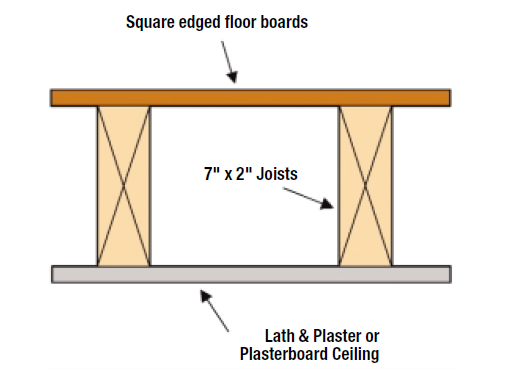
Many existing floors are constructed from 200mm x 50mm wooden joists, with a 20mm existing floorboard directly fixed to the top of the joists and a single later of plasterboard/lathe and plaster below the joists – as shown in Plate A below.

Plate A – a picture of an existing floor partition with poor sound insulation

Sound Insulation in Floors

Typical reasons for sound test failures through floors

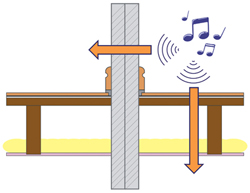
There are many reasons for floors having poor sound insulation values, and noise flanking is often one of the main culprits. Here are 10 common reasons for noise flanking through floors in new and converted properties.

  1. Where lightweight blocks have been used in the inner envelope construction. This allows sound to travel along the lightweight blocks both vertically and horizontally from dwelling to dwelling.
  2. Bridging an acoustic floor system with skirting, or via screwing down the floor system directly to the joists.
  3. Resilient bars missing or fitted incorrectly to the underside of the floor joists, i.e. screw that are too long.  
  4. Excess recessed lights have been fitted into an acoustic ceiling, without incorporating acoustic socks to the top of the light or an extra plasterboard lining above.
  1. Not using the correct acoustic insulation, in our experience the minimum mass of the acoustic insulation should be 60kg/m3.
  2. The direct fixing of plasterboard and/or floorboards to joists without using a resilient membrane to improve isolation values.
  3. Through continuous windows that are not secondary glazing that run vertically through dwellings, such as an office and/or church conversions.
  4. Along structural joints along the perimeter wall and floor joint. These areas should be filled with acoustic mastic)
  5. Structural steels that run through one property to the other without material isolation, i.e., plasterboard is screwed directly to the steel offering little or no noise isolation.
  6. Service penetrations/pipework which run continuously through separate properties without having adequate boxing, such as kitchen and bathroom services.

Plate B – Our Sound Testing Equipment

Sound Insulation in Floors

Our 3-step plan to reduce noise through floor partitions

If your floor partition is letting through too much noise don’t panic, we can offer our 3-step plan to help you reduce noise in your property.

  1. Sample Sound Insulation Testing (pre-construction works)

We visit site to undertake sample sound testing to your existing floor partition to check ascertain the sound insulation performance of the floor. Thereafter, once the sound levels have been established and targeted acoustic design can be undertaken to ensure compliance with Building Regulations Part E.

  • Acoustic Review of your Project. 

We undertake an acoustic design review and produce a report of the required acoustic upgrades required to improve the sound insulation performance of the floor partition. and detailing. Wherever possible we will try to ensure that the acoustic solution is straightforward to install for the installation teams.

  • Precompletion Sound Testing (post construction works)

We undertake the final precompletion testing to ensure the acoustic design and installation have improved the sound insulation values of the floor partition.

A simple acoustic upgrade to improve sound insulation in floors.

There are many quick and simple solutions to improve the sound insulation performance in floors. One of the easiest acoustic upgrades is to retain the existing joists, between the joists install a 100mm RW60 acoustic insulation. Above the joists install 22mm T&G boarding with a 6mm resilient membrane bonded to the top of the T&G board. The top of the floor can then be finished with engineered flooring and/or carpet. Below the joists install resilient bars, ensuring the correct length screws have been used in the installation. Below the resilient bars install 2 layers of 15mm soundboard – ensure all boards are properly lapped, and the perimeter joints (usually 5mm) are filled with acoustic mastic. Also ensure all service boxing has two layers of 15mm board and SVP pipes etc, are wrapped in acoustic wool.

Plate C – A picture of APT acoustic engineer undertaking party floor sound testing.

Sound Insulation in Floors

We can help improve your sound insulation.

We can help upgrade the sound insulation in your home. Using our many years of experience in building acoustics, we can offer a total acoustic party floor solution for new and conversion projects. We have previously helped hundreds of architects and developers with their acoustic design and testing requirements on projects ranging from a couple of units, up to apartment blocks containing hundreds of flats. Using our experience and knowledge, we always try to provide the best solution considering material costs and on-site buildability.

To improve the sound in insulation in floors, you need to conder improving/introducing the following 5 elements to the floor design and construction:

  • Adding Mass
  • Introducing Isolation
  • Adding Absorption
  • Introducing Resilience
  • Adding Stiffness

APT acoustic engineer undertaking party floor sound testing in London.

How APT Sound Testing can help 

APT provides acoustic testing, consultancy to help home owners, architects and developers achieve the minimum requirements of Part E of new build and/or conversion projects. We also carry out our specialist Lease Condition sound testing where specific sound reduction requirements are required.

We can propose various designs accounting for:

Where possible we try to propose an off the shelf solution, which is often the cheapest option. Many other companies will try to push a bespoke ‘specialist’ solution that is often much more expensive and more difficult to install. We are also a UKAS accredited company, so you can be sure of a friendly and professional service providing a ‘one stop’ solution for all your acoustic requirements.

If you would like more information in regards to sound testing service and/or acoustic design services please contact us on 01525 303905 or email us at info@aptsoundtesting.co.uk, or for more information please visit our website at www.aptsoundtesting.co.uk