Category: Uncategorized

Sound Insulation Testing for Approved Document E?

Sound Insulation Testing for Approved Document E?

How is Sound Insulation Testing Undertaken for Approved Document E?

Sound insulation testing is normally required as part of Pre-Completion Testing (PCT) when a building has been newly constructed or converted to create dwellings that abut via floor and/or walls.

In England and Wales, the Building Regulations Approved Document E, requires that separating walls and floors must achieve minimum performance standards for airborne and impact sound insulation. This is achieved by pre-completion sound insulation testing of the finished construction project. One way of demonstrating that a company is competent to undertake the Part E sound testing, is by having UKAS accreditation. APT is UKAS accredited to undertake sound insulation testing, our accreditation number is 4340. Here is a link to the UKAS website showing our multiple UKAS accreditations.
Sound Insulation Testing Undertaken for Approved Document E?

How we carry out Sound Insulation Testing

Airborne Sound Insulation Testing (Floors and Walls):

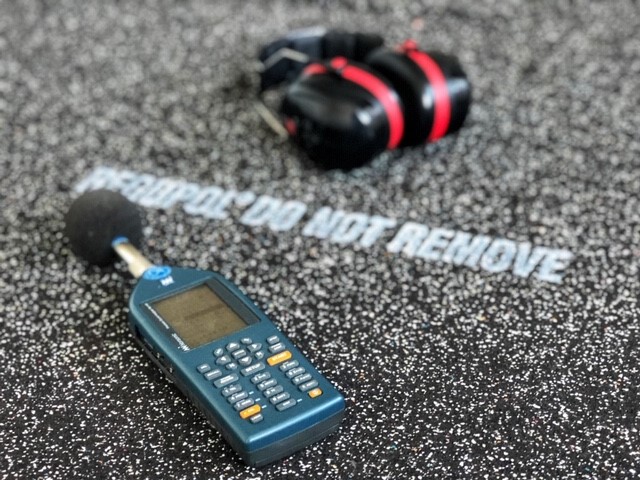
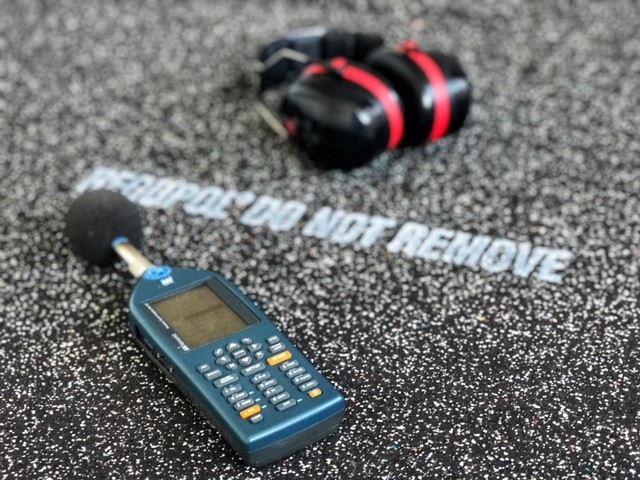
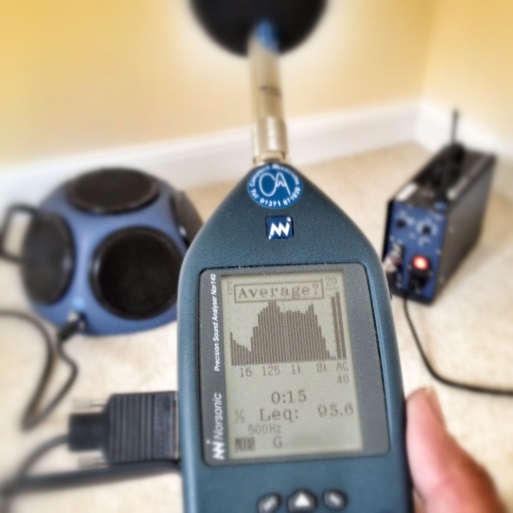
Firstly, a controlled noise is generated by an amplifier and loudspeaker across a broad range of frequencies. The generated noise is very loud and can be in excess of 105dB. Initial measurements are taken using a Class 1 Sound Level Meter within the ‘source room’ followed by further measurements in the ‘receiver room’ which is on the other side of the wall and/or or floor in the adjacent dwelling. The source room speaker position is then changed and the sound level measurements repeated either side of the partition under test in-line with Building Regulation Part E.

Background noise level measurements are made using a sound level meter in the receiving room and are used to apply appropriate corrections for external sound such as traffic or industrial background noise. Thereafter, reverberation time measurements are undertaken d within the receiving room using the sound source and a sound level meter to determine the corrections that must be applied to account for the characteristics and absorptiveness of the room. This measures the time taken for sound to decay by 60dB.

The difference in the two airborne noise levels is then corrected for background and reverberation characteristics determines the airborne sound insulation performance of the wall, or floor. A greater airborne noise difference between the source room and the receiver room determines a higher airborne sound insulation performance, e.g. Approved Document E requires you achieve a figure greater than for example building regulations require you achieve  a figure greater than 45dB (Dntw +Ctr) on new build projects and 43dB (Dntw +Ctr) for conversion projects.

Impact Sound Insulation Testing (Floors Only):

This type of sound insulation testing is different, a calibrated ‘tapping machine’ which comprises of five ‘hammers’ driven up and down by an electric motor is used to “tap” the floor surface by applying a known force on the floor structure – this is meant to simulate footfall on the floor above. The machine is placed in four pre-determined positions. The resulting noise is measured in the dwelling below, using a class 1 sound level meter.

Background noise measurements are made using a sound level meter in the receiving room and are used to apply appropriate corrections for external sound such as traffic and industrial noise.  The reverberation time is measured within the receiving room using the sound source and a sound level meter to determine the corrections (the time taken for sound to decay by 60dB) that must be applied to account for the absorptiveness of the room.

The measured noise levels in the receiving room (for impact sound insulation tests), is corrected for background and reverberation characteristics determines the impact sound insulation performance of the floor. Approved Document E requires you achieve a figure lower than 62dB (Lntw) on new build projects and 64dB (Lntw) on conversion projects.

If you would like more information on how to prepare your development for sound insulation testing, please download our checklist of visit our website at: www.aptsoundtesting.co.uk

You can contact us at: info@aptsoundtesting.co.uk or call us on 01525 303905.
How to Pass Your Sound Test

How to Pass Your Sound Test

How to Pass Your Sound Test – Some Simple Steps to Compliance.
How do we pass our sound testing? This is one of the most popular questions we get asked by clients. The answer can be quite complicated so we will try and break it down into simple steps.

Firstly, get advice on acoustic design before starting construction. The most effective way to ensure you pass your sound test at the first attempt is to plan your project with sound insulation in mind. This does not need to be costly, and can save considerable time and cost at the end of the project, by reducing the chance of needing to undertake remedial works and re-testing.

The two main areas to take into consideration will be the divining wall and flor partitions. If you are unsure of how to build the separating wall and floor partitions and associated junctions across your project we can offer an acoustic design service. The degree of guidance you require can vary from site to site; however we can cater for every eventuality by offering sample sound testing of your existing constructions – if it’s a conversion project, to establish the sound insulation performance of your existing wall and floors. Thereafter a more targeted design review can be undertaken.

The first stage of the acoustic design is to send through the design drawings – to include sections etc. We then review the design to check that the construction details proposed are capable of passing the sound tests. This usually takes place straight after planning has been approved as increased cost savings can be realised at the earliest stage, we will evaluate the construction methods and materials specified to ensure that they are capable of meeting the acoustic requirements of Approved document E. The typical areas we check are:

There are no flanking points, where isolated partitions are wrongly mechanically fixed together to caused noise bridging.

The walls and floors design are acoustically robust, to comply with Building Regulations Part E.

The acoustic treatments for Soil Pipes, Stair Cases Steel Beams etc. to ensure they are acoustically fit for purpose, as these are some of the areas that get usually missed.

Acoustic floor treatments are compatible with the proposed floor finishes i.e. Carpets, Laminates, Floor Tiles and under floor heating systems.

We also provide on-going acoustic design support service, so you will have direct contact with the allocated acoustician from the start of the process through to the successful completion of the project. One of the most important services is the going site survey visits which allow our clients to feel confident about the outcome of testing at the end of the build. The site visits let us check that the installation teams are installing the acoustic materials as per manufacturers avoiding crucial onsite mistakes. It’s worth remembering that although you may have a robust compliant design, it may still fail due to poor workmanship.

Also prior to your sound test, you will need to ensure that all items are fully prepared in-line with the following checklist:

All doors, windows, and cladding must be installed.

Windows are fully fitted with locks in place.

Window trickle vents are in place or temporarily blocked up for testing.

Individual room and front doors are in place and closable.

All wall surfaces in rooms to be tested are complete (including sockets and switches) f. Structural floor and ceiling surface are complete.

Carpets or timber laminates have NOT been laid in rooms where floors are to be tested (except for specifically manufactured permanently bonded carpet that forms part of the structural floor.

Smoke alarm detectors must be deactivate

We will require a clean & quiet working environment for our testing works.

Both properties to be tested should be clear of materials and operatives for the test.

To prevent trailing  temporary cables preventing the closing of both doors 240v mains electrical sockets must be on in each of the properties/rooms under test

Please download our full sound test checklist to help you prepare for your sound test.

When your project is underway, we recommend that you regularly check the construction against the plans for deviations from the design. Seemingly minor alterations and poor construction quality can have a significant impact on the effectiveness of your sound insulation measures.

If you have a new project and you need help with your acoustic design and/or sound testing then please email us at: info@aptsoundtesting.co.uk or call us on 01525 303905. If you want more information on our full range of services please visit our website at: www.aptsoundtesting.co.uk
UKAS Accredited Sound Testing

UKAS Accredited Sound Testing

UKAS Accredited Sound Testing

The need to carry out sound insulation testing to assess and report the acoustic performance of dividing partitions between dwellings has become increasingly important in order to demonstrate that a building’s intended performance is achieved when constructed.

Poor design detailing and/or onsite construction can have a significant impact on the overall performance of building elements and the building as a whole. Post completion sound testing provides greater certainty that designed performances are actually being achieved in compliance with Approved Document E.

UKAS Accredited Sound Testing

Pre-completion Sound Testing is now an integral part of supporting the completion certificate process throughout the UK and Ireland. In order to ensure that testing is undertaken within a robust regime which controls the reliability of test results, government guidance is in place which describes restrictions on those who should carry out sound testing and reportage.

Approved Document E states a set of sound tests should be carried out for every ten dwellings (houses, flats or rooms for residential purposes). However, if the development has several different construction types, you may need to carry out further tests for each type of construction.

For houses this usually means you are required to undertake 2 airborne wall sound tests (up to 10 houses) to the dividing walls. For flats you will be usually be required to undertake 2 airborne wall, 2 airborne floor and 2 impact floor tests (up to 10 Flats). When we undertake a fee proposal for clients, we always include a full testing schedule so it can be submitted to building control for their approval prior to the test date.  

One of the stipulations of Approved Document E is that the testing company needs to be UKAS accredited, this is covered under the Resistance to the passage of sound: Approved Document E [ADE] it goes on to state that “The person carrying out the building work should arrange for sound insulation testing to be carried out by a test body with appropriate third party accreditation” and is downloadable at: https://www.gov.uk/government/publications/resistance-to-sound-approved-document-e.

APT Sound Testing is UKAS accredited to carry out sound insulation testing and is laboratory and as a result our reports will be accepted by building control – here is a link to our UKAS Sound Testing Accreditation: https://www.ukas.com/wp-content/uploads/schedule_uploads/00002/4340Testing%20Multiple.pdf

For future note we are also UKAS accredited to carry out Air Tightness Testing – here is a link to our UKAS Air Tightness Accreditation: https://www.ukas.com/wp-content/uploads/schedule_uploads/00002/4340Testing%20Multiple.pdf

If you would like more information on our sound testing service and/or other services please contact us now at: info@aptsoundtesting.co.uk or visit our website at www.aptsoundtesting.co.uk.

Airborne & Impact Sound Testing in London

Airborne & Impact Sound Testing in London

Airborne & Impact Sound Testing in London

Sound Testing usually needs to be carried out between pairs of rooms separated by party walls and/or floors. Most sound tests are carried out between living rooms and bedrooms as these are classed as the two main habitable rooms; however, other rooms can be used if this is not possible such as studies, kitchens and dining rooms.

Our Sound insulation testing procedure is fairly simple and straightforward. Essentially, for party walls there is only one type of sound insulation test which is airborne sound test; however for party floors there is a requirement for two types of sound insulation testing – airborne & impact sound testing. Here is a brief description for each type:

Airborne Sound Testing in London

Airborne Sound Testing is carried out by means of a loudspeaker emitting a steady source of noise on one side of the partition (wall or floor) to be measured. The corresponding sound level is measured on the other side of the partition. Impact sound insulation tests are carried out by means of a tapping machine placed on the floor sample to be measured and the noise measured in the room or space below. Calculations are done based on these measurement and the above mentioned parameters are calculated and compared to the Building Regulations Part E sound insulation requirements for the given type of the building. It is important that the building to be sound tested is completely finished and sealed with no sound leakage through doors and windows.  Please see our check list for sound testing for more information.

Airborne & Impact Sound Testing in London

Airborne sound insulation testing is undertaken to walls & floors. Firstly a controlled noise is generated by an amplifier and loudspeaker across a broad range of frequencies. The generated noise is very loud and is often in excess of 100dB. Initial measurements are taken using a class 1 sound level meter within the ‘source room’ followed by further measurements in the ‘receiver room’ on the other side of the wall or floor under investigation.

The source room speaker position is then changed and the measurements repeated either side of the partition under test. Thereafter background noise measurements are made using a class 1 sound level meter in the receiving room and are used to apply appropriate corrections for external sound such as traffic noise. Similarly the reverberation time (the time taken for sound to decay by 60dB) is measured within the receiving room using the sound source and a sound level meter to determine the corrections that must be applied to account for the characteristics and absorptiveness of the room. The difference in the two airborne noise levels (for walls and floors), corrected for background and reverberation characteristics determines the airborne sound insulation performance of the wall, or floor. A greater airborne noise difference between the source room and the receiver room determines a higher airborne sound insulation performance.

The time taken to undertake sound testing varies from project to project as no site is exactly the same. Taking into account standard site conditions a set of tests on houses -two airborne walls will take one to two hours. A six pack of tests on flats – 2 airborne wall tests will usually take between one and two hours, although this is dependent on our engineers having full free uninterrupted access between all the units/rooms under investigation.

Impact Sound Testing in London

Impact sound testing is undertaken to floors only. This test is different; a calibrated Norsonic ‘tapping machine’ which comprises of five ‘hammers’ driven up and down by a cam and electric motor is used to “tap” the floor surface by applying a known force on the floor structure. The machine is placed in several pre-determined positions. The resulting noise is measured in the dwelling below, using a sound level meter. Thereafter, background noise measurements are made using a class 1 sound level meter in the receiving room and are used to apply appropriate corrections for external sound such as traffic noise. Similarly the reverberation time (the time taken for sound to decay by 60dB) is measured within the receiving room using the sound source and a sound level meter to determine the corrections that must be applied to allow for the characteristics and absorptiveness of the room.

The time undertaken to test each project varies from project to project as no building/development is exactly the same. Taking into account standard site conditions a set of tests on houses which consists of two airborne walls will take approx. 1-2 hours. A six pack of tests on flats consisting of 2 airborne wall, 2 airborne floor and 2 impact floor tests will usually take approx. 2-3 hours, although this is dependent on our engineers having full free uninterrupted access between all the units/rooms under investigation.

If you require sound testing, and/or acoustic design advice then please contact us now at info@aptsoundtesting.co.uk or phone Darren) direct on 07775623464.