Category: Uncategorized

Thermal Imaging Heat Loss Surveys

Thermal Imaging Heat Loss Surveys

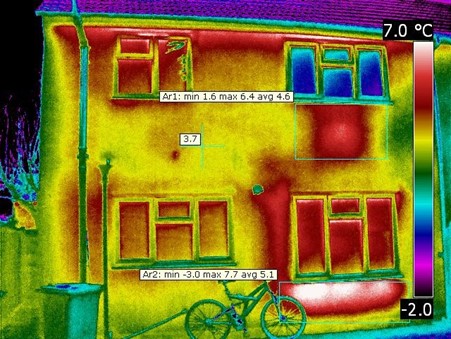
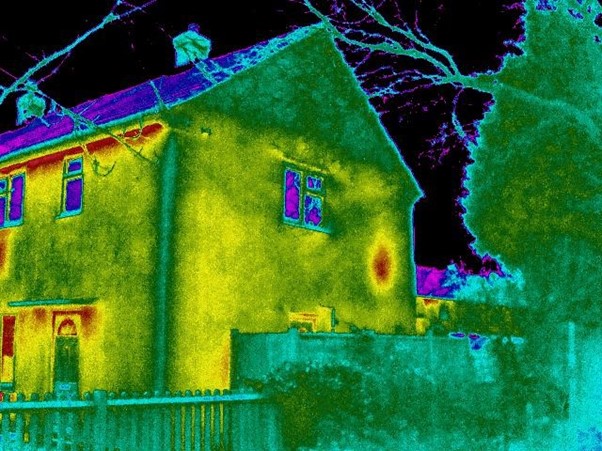
Thermal Imaging Survey helps track down the sources of heat loss in your home or commercial building, whether that be poorly installed or missing insulation, cold air infiltration into voids or direct draughts through the building envelope.  

It’s worth noting that over 60% of the UK’s residential and commercial properties suffer from some form of heat loss. Heat loss can be due to many factors; however, the main ones are:

  • Missing wall, floor, and ceiling Insulation – Possible causes include damage or inadequate installation and water ingress. 
  • Thermal Bridging – The movement of heat through the building structure tvia material bridging
  • Windows and Doors – poor draft excluders and poorly installed fixtures and fittings allowing heat escape through gaps.
  • Structural Integrity – roofs and walls and floors
Thermal Imaging Heat Loss Surveys

Excess heat loss can result in increased energy usage which means higher bills to the end user/occupiers as well unhappy occupants experiencing drafts and cold areas within the building. If there are unexplained cold areas in your building and/or you think your energy bills are too high, then you should consider a Thermal Imaging Heat Loss Survey.

The main issues are:

Insulation problems

Poor Insulation is one main reasons for heat loss, the other being poor airtightness. Unfortunately, poor insulation is not usually visible to the naked eye, being hidden within the fabric of the building.

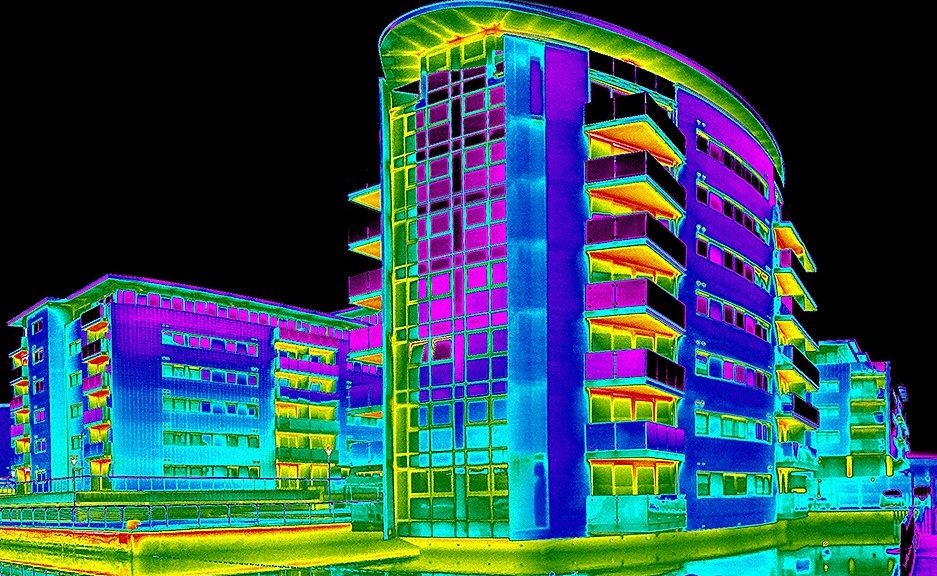
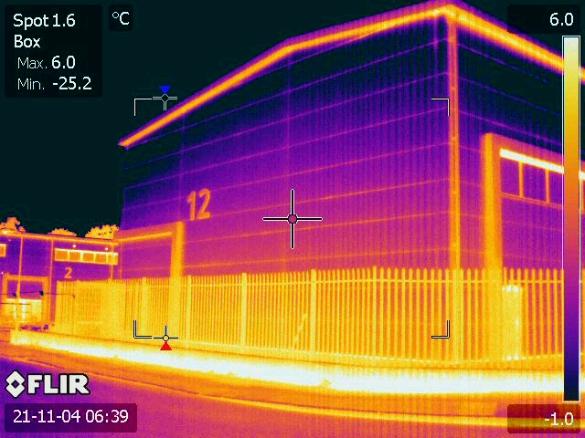
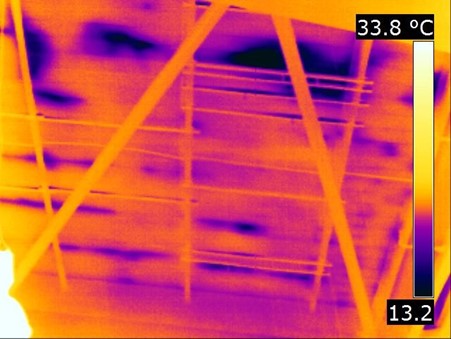
Thermal imaging inspections can quickly reveal where issues have arisen during the construction process, such as poorly installed, missing, or damaged insulation

Draughts

Draughts are very uncomfortable for occupiers and are usually an indication of heat loss through the building envelope.  Like insulation problems identifying the source of draughts is not always obvious. In many cases air can be coming into the building via multiple gaps and cracks in walls, floorboards and doors, windows.

A thermal imaging survey can quickly identify cold traces that give away the air leakage paths, where the cold air is entering the property.

Heating and damp problems

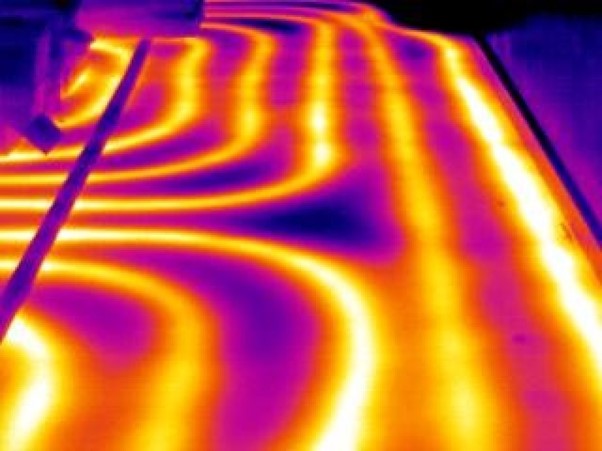
A thermal imaging inspection can pick up on air trapped in the heating system and unbalanced heating systems – radiators etc. it can Also identify leaking underfloor heating and uninsulated pipework hidden in service voids.  

Thermal imaging can also pick up problems with damp, although it is recommended that this is supplemented with an inspection using specialist testing equipment, such as combined thermal imaging and moisture meters.
Thermal Imaging Heat Loss Surveys

Common air leakage paths found during thermal surveys

There can literally be hundreds of air leakage paths through building envelopes, here are some of the most common areas we have previously identified during heat loss surveys: 

  1. Via ductwork and service penetrations where services enter the building.
  2. Around the bottom of the external cladding.
  3. Faulty or unpowered roof lights not shutting properly.
  4. Wall/floor junctions under kitchen and utility room cupboards.
  5. Around SVP and waste pipe penetrations passing through external walls and ceilings.
  6. Around services that pass behind all IPS panels in toilet/shower areas.
  7. Service riser cupboards that are not re compartmentalised from the rest of the building.
  8. Unsealed bath and shower tray panels.
  9. Damaged or poorly installed Background trickle ventilators, passive ventilation systems and any permanently open uncontrolled natural ventilation openings.
  10. Poorly installed ductwork to mechanical ventilation and/or air conditioning systems.  
  11. External door/windows that are not shutting tightly against their own seals and the frames are not sealed against the surrounding walls.  
  12. Internal doors that are not sealed at the floor junction.
  13. Internal sliding doors with unsealed pocket boxing into walls.
  14. Dot & dab plasterboard that has a unsealed gap In between the bottom of the plasterboard and the structural floor.
  15. Unsealed perpendicular mortar joints
  16. Unsealed cavities and roof voids as well as holes that bridge the cavity or roof void.
  17. Unsealed block work that has not been painted
  18. Poorly finished cladding at perimeter joints of individual sheets, areas where it meets at different angles.
  19. Around areas within ceilings voids, to include steel penetrations, service penetrations and the perimeter/eaves junction.
  20. Around uninstalled and/or unsealed sockets, and light fittings housed in plasterboard.

Use a thermal imaging company with experience of heat loss surveys.

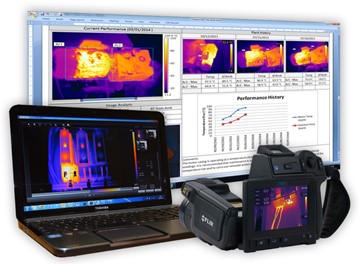
At APT Sound testing, we have 20 years’ experience identify heat loss using thermal imaging surveys. Our engineers hold a Level 3 certification which is some of the highest in the industry. We use the latest high resolutions cameras costing over twenty thousand pounds.

Our thermal specification includes:

  1. Level 3 thermographic certification
  2. Level 3 qualified thermographers
  3. Large format FLIR cameras with 45-degree lenses
Thermal Imaging Heat Loss Surveys

All of our thermal surveys are followed up with an extensive report, identifying problems and suggesting resolutions. We can also supply drones that are equipped with thermal cameras, perfect for identifying heat loss in roofs and elevated areas of a building were safe access is difficult and expensive. We can undertake Thermal Imaging to identify heat loss in all types of buildings from large commercial buildings to office spaces, schools, and historic houses.

Do I need an internal or external thermal survey?

Clients often ask do they need an internal or external thermal survey to best identify heat loss in their building? There is an easy answer to this question – Both!

Wherever possible its always best to gather the most gather information possible at the time of the survey, so to allow for this a thermal scan of both the inside and outside of the building needs to take place, to ascertain what’s happening both the internal and external building envelope. by undertaking an external and internal survey, we can gather different and complimentary data for both sides of a wall or roof. In many cases an internal survey will pick up different issues to an external survey and visa-versa.

Sometimes, it may not be possible to undertake both types of surveys, such as surveying a flat on the 20th floor of a high-rise block; however, wherever possible we will always strive to inspect both sides of every wall and roof we survey.

Is combined thermography and air leakage testing worthwhile?

Is combined air tightness and thermography worthwhile? A resounding YES! It’s a very powerful combination.

As air leakage testing becomes more important for compliance with Part L requirements and reduce energy loss there is a natural partnership between thermal imaging and air tightness testing; so, why is this?

Thermal imaging and air tightness testing are not interchangeable – they are important in their own right – but they provide a similar goal, to locate sources of heat loss in buildings.  In many cases, thermal inspections can help locate the air leakage paths that the blower door test has highlighted by pressuring the building. Combining the best parts of air tightness testing and thermography allows for clearer and more defined results to be generated to better highlight and target air leakage points around dwellings and commercial buildings.  

APT Sound Testing is UKAS accredited to undertake air tightness testing and we hold Level 3 thermal imaging certification. This allows us to provide a combined service to clients for combined thermal imaging and air tightness testing for compliance with BREEAM or other requirements.
Thermal Imaging Heat Loss Surveys

Thermal Surveys to Save Money & Energy

Using our well trained and equipped thermography engineers can quickly and accurately locate faults and provide the information you need to target the correct repair first time, saving you huge sums of money over traditional destructive investigations! Our Thermal Imaging Surveys highlight where your home or office building is losing massive amounts of heat and recommend where you can make improvements to conserve energy and keep occupiers happy!

Thermal Surveys can be extremely useful when acquiring a new or existing building such as:

  • Identifying defects in a new or existing building, prior to purchase allowing you to negotiate a better price with the seller, considering the costs for the remedial works.
  • Check for upgrades to the building and structure.
  • To check if the cost of maintenance outweighs the use and value of the building.

It doesn’t matter if you are halfway through a build or taking over a hundred-year-old block of flats, we can start to save you money by identifying heat loss quickly and with no fuss. A quick survey with our thermal cameras will identify areas of heat loss and you can then put actions into place to ensure your energy consumption goes down. The short-term costs of extra insulation will save you money in the long run.

Our thermal imaging heat loss surveys roadmap.

  1. APT will book in a convenient time to visit your project, allowing for optimal weather conditions – if it’s cold enough. In the event that the weather forecast is unsuitable then we will contact you to rearrange the thermal survey visit.
  2. When we arrive at site, we will undertake a site walk and discuss the problems you (or your building occupiers) are encountering with heat loss and draughts.
  3. Using the collected information, we will carry out a thorough thermal imaging survey of your building both inside and out – you should allow 1-3 hours for the survey depending on the size of your building.
  4. The detailed thermal imaging reports are typically supplied in 24 to 48 hours. You will receive your thermal imaging report in PDF format – this includes the images we have captured, along with our interpretation of the problems indicated.

What information do we need to undertake the thermal survey?

The usual information we require prior to being able to undertake a thermal imaging survey is:

  1. The type and size of building.
  2. Floor plans and elevation drawings for the building.
  3. Any site-specific items to actions, i.e. attending site inductions and/or bringing specific ID such as passports, driving licence etc.
  4. The amount of time required to safely undertake the survey.
  5. The type of equipment required to undertake the inspection.
  6. The project location and subsequent travel time.
  7. The project deliverables – what needs to be included within the thermal survey report.

Please contact us for more information

Our team of thermographers are highly experienced in carrying out thermal imaging surveys and have many years’ experience in all aspects of engineering, construction, maintenance, management, and professional survey work.

Our thermal imaging equipment is the best and most accurate on the market, ensuring we pick up faults that other equipment may miss. Our reports are professionally presented and are clear, concise, and easy to follow. We endeavour to give our clients a first-class service every time.

If you would like to contact us for more information on our thermal imaging services, please contact us on 01525 303905 or email us at info@aptsoundtesting.co.uk. Alternatively if you would like more information on how to prepare for your thermal imaging survey, please visit our website here or download our thermal imaging checklist
Improving Ceiling Soundproofing to Reduce Noise

Improving Ceiling Soundproofing to Reduce Noise

Improving Ceiling Soundproofing to Reduce Noise from Above
In most cases, the traditional upper floor structure, consisting of timber joists covered by chipboard boarding/or floorboard and a thin layer of plasterboard ceiling, offers little sound insulation and resistance. By itself, it won’t achieve the minimum standard requirement of the Building Regulations Part E of 45dB for new build or 43dB for conversion dwellings.

To improve the soundproofing in your ceiling partition, there are many things to consider such as: Improving the mass, isolation, absorption, resilience, and stiffness.

To try and reduce the ceiling noise in your flat below, you can add insulation a good-quality acoustic insulation between the joists – 100mm of mineral wool of at least 45kg/m3 density, then add resilient bars and 2 layers of 15mm plasterboard.

Unlike walls, floors can transmit impact sound as well as airborne sound and, in our experience, having helped with hundreds of clients suffering noise issues, impact sound is often more annoying than airborne noise transmission.

Improving Ceiling Soundproofing

One of the easiest ways to deal with impact sound is by installing an acoustic resilient membrane. For instance, a resilient layer can be installed on the subbase flooring (chipboard) prior to the installation of the final floor finishes. The membrane is very simple to lay and comes with its own glue to bond it to the sub-base flooring. The final flooring – such as engineered wood, simply floats on top of the membrane with the tongued joints glued on each board – no other fixing such as screws etc. are required. In fact, screwing or nailing down the final floor finish would actually create a sound path through the floor construction.

Acoustic resilient membranes are usually between 4-6mm; however, you can get a more expensive option that also deals with airborne sound which are 10-15mm depending on the material and specification. In most cases the acoustic membrane is rubber-based; however, the higher specification can be a composite material which is foam, rubber, and even cement board. When installing the membrane its often supplied with a propriety noise flanking strip which is installed between the skirting boards and the floor boarding, this helps to avoid direct contact between the skirting board and the floor boarding.

You can also help to improve the soundproofing, by installing a high-mass mineral wool batt. The depth of the wool should be 100mm and at least 45kg/m3. This is quite easy to install, and the batt should be cut tight against the joists with no gaps.

It is also worth checking that there isn’t too much movement or deflection in the floor joists – if you hear a loud booming sound, as well as the tapping of footfall fall noise, it maybe your joists are moving above. In this case, it would be best to install extra noggins between the joist to add stiffness to the construction.

Improving Ceiling Soundproofing

To help improve the airborne sound, install resilient bars below the joists running the opposite way to the joists and below the bars install 2 x 15mm layers of sound board. All boards must be properly lapped, and the perimeter joints filled with acoustic mastic. The plasterboard should be taped and jointed and receive a skim finish.

If you can afford the extra headroom, a secondary suspended ceiling formed beneath the floor joists is ideal, as this will be a totally independent construction. The ceiling can be supported by new timber joists that span from wall to wall, completely separate to the floor above. A minimum gap of 25mm is advisable between the bottom of the joists and the top of the new timber joists. Two layers of 15mm sound-quality plasterboard can be installed to the bottom of the new joists and a 50mm acoustic batt (min density 45kg/m3) fitted above the plasterboard.

It is worth noting that two layers of plasterboard can be 26kg/m2, so you should always check the joists’ size and spans with an engineer prior to the installation. To finish the boards always use acoustic sealant around the perimeter edges.

Approved Document E states that the minimum sound insulation values for New Building Properties is an airborne resistance of 45dB or more and impact 62dB or less. For conversion properties, it’s an airborne resistance of 43dB or more and impact 64dB or less. If you don’t want to suffer from noise issues, you should be achieving these targets as a minimum. Please note when trying to improve upon dB ratings for both types of noise, the higher the Airborne noise figure the better and the lower the impact noise the better).

We can help with acoustic design for your ceiling

It can be very time-consuming trying to identify the cause of excess noise through ceilings. To reduce the risk of acoustic issues its always best to hire an experienced acoustic consultant. We are a UKAS accredited company, so you can be sure of a friendly and professional service providing a ‘one stop’ solution for all your acoustic requirements. We also undertake sound testing for lease condition compliance, if you are changing the floor finish in your apartment and you need help with the acoustics please let us know.

If you would like more information in regards to sound testing service and/or acoustic design services in London, please contact us on 01525 303905 or info@aptsoundtesting.co.uk, for more information please visit our website at www.aptsoundtesting.co.uk or download our sound test checklist or visit our new sound testing  blog.

Thermal Imaging Inspection

Thermal Imaging Inspection

How Much Does a Thermal Imaging Inspection Cost?

We often get asked ‘what’s the cost of a thermal survey’. It depends on numerous factors, such as the size and amount buildings you need to be surveyed, the project location, and the detail required for the thermal survey report.

The Thermal Imaging Inspection

This is a very common question clients ask us and it has a simple answer: it depends on numerous factors.  When we sit down to work out our fee proposal for a Thermal imaging inspection, we ask the client a number of questions:

  1. The type and size of building.
  2. The amount of preparation required?
  3. The amount of time required to safely undertake the survey.
  4. The type of equipment required to undertake the inspection.
  5. The project location and subsequent travel costs/time.
  6. The required deliverables – what needs to be included within the thermal survey report.
  7. The amount of health and safety requirements i.e., some sites ask for 4-hour safety induction

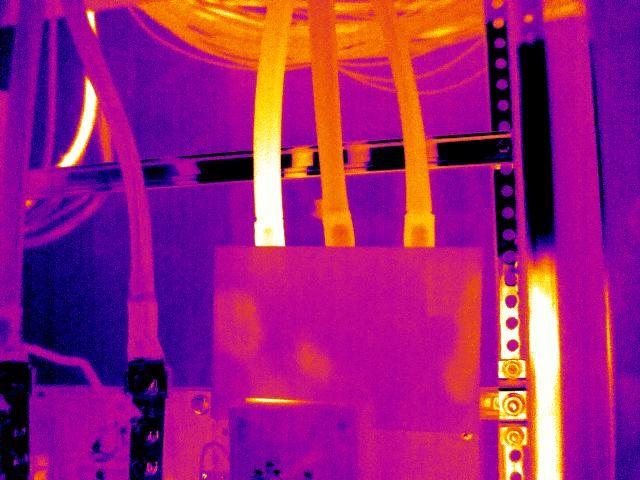
So, taking the above into account we can offer a basic electrical thermal survey to a couple of distribution boards for £495 plus Vat, right up to the huge industrial areas, that may require multiple visits that may be in excess of £10,000 plus Vat, and of course everything in between. In all instances it’s best to call us so we gain a more accurate overview of our project and quoted; accordingly, so please contact us to discuss your project (along with any site-specific issues) and obtain a quote.

thermogrographicinspectiontocommercialbuilding.jpg

Is your thermal imaging company adequately trained?

When you are employing a thermographer, you should check to see that they incorporate the high specifications possible for their inspections. Are they certified to Level 3 and do they use large format FLIR thermal imaging cameras, anything less and you may not get the thermal imaging report you need to comply with BREEAM. 

Their specification should include:

  1. Level 3 thermographic certification
  2. Level 3 qualified thermographers
  3. Large format FLIR cameras with 45-degree lenses

The importance of clear and concise thermographic reports

We spend such a large amount of time on our thermal imaging reportage, that’s why it’s one of the best in the industry, this is obviously a part of the service which is off-site and clients don’t see. Whilst we may draw initial conclusions on-site, which may need more investigation; usually, our final conclusions and report will only be finalised after all the data has been studied. It’s our ongoing aim to provide thermographic reports that are clear, concise, and easy to reference. Our aim is to take the guesswork out of the equation.

thermal_imaging_survey_electrical_distribution_board.jpg

Please contact us for more information on Thermal Inspection Services

Our team of Level 2 & 3 certified professional Thermographers is highly experienced in carrying out thermal imaging surveys and have many years of experience in all aspects of engineering, construction, maintenance, management, and professional survey work.

Our thermal imaging equipment is the best and most accurate on the market, ensuring we pick up faults that other equipment may miss. Our reports are professionally presented and are clear, concise, and easy to follow. We endeavour to give our clients a first-class service every time.

If you would like to contact us for more information on our thermal imaging services, please contact us on 01525 303905 or email us at info@aptsoundtesting.co.uk. Alternatively, if you would like more information on how to prepare for your thermal imaging survey, please visit our website or download our thermal imaging checklist.

Improving Separating Walls and Floors to Pass Part E Sound Testing

Improving Separating Walls and Floors to Pass Part E Sound Testing

Improving Separating Walls and Floors to Pass Part E Sound Testing

Approved document E of Building Regulations stipulates a minimum soundproofing standard for all new flats and houses with shared walls as well as conversion projects where house have been converted into flats. Usually, in newly built homes, you shouldn’t suffer noise issues with neighbour noise, unless they are creating very loud noise that is an environmental nuisance i.e., playing their music at 90dB.

Suffering excess noise through separating walls or floors can be a big problem for residents, and more so at night after 10pm, when there is less background noise to help the situation as noise becomes more noticeable. 

Improving Separating Walls and Floors to Pass Part E Sound Testing

Excess noise is a very common in older houses and flats constructed prior to 2004, as the dwellings may have been created with separating walls and floors, with no consideration to the sound insulation. In many of these older conversion properties, excess noise can be a huge issue as it usually consists of a timber joist with existing floorboard above and one single later of 12.5mm plasterboard below. This type of construction usually achieves around 30dB (Approved Document E, requires a minimum of 43dB for conversion properties) so normal residential noise such as speech can be easily heard from adjoining neighbours.  

One simple way to upgrade the floor would be to add insulation between the joists, with acoustic resilient membrane above the flooring. Below the joists resilient bars can be installed along with two layers if 15mm soundboard. You can easily achieve 46-48dB by using the above acoustic treatment, as long as its installed inline with manufacturers details. 

What’s the difference between airborne and impact noise?

There are two types of noise that usually become an issue between neighbours, airborne and impact noise; however, on closer inspection they are quite different! Airborne noise is created by speech, TV and music; whereas, impact noise is created by footfall, doors banging such as kitchen cupboard doors. In many instances impact noise is more annoying as its usually a loud thump similar to a banging of a drum sound. Impact sound can also radiate through the fabric of the building via walls etc.

Sometimes it’s a good idea to ask your neighbour to come around to your property so they can hear the noise disturbance, more often than not there can be a fairly simple solution such as replacing kitchen cupboard doors with soft closing hinge; or installing a large rug to the middle of the floor.  You may even be able to do a deal where you pay half the costs which should speed up the process.  

What’s Leaseholder Sound Testing?

We often get involved in leaseholder sound testing, for this type of test we undertake a sound test visit to check the sound insulation performance of the existing floor partition prior to the commencement of construction works. Thereafter, once the construction works are completed, we visit site a second time to check the acoustic performance of the newly upgraded floor is not worse than the original construction.

We can help with the acoustics on your project

Hopefully, this article will offer some guidance to help you soundproof your separating wall to reduce excess noise through the floors and help to improve the acoustic insulation values in-line with Approved Document E standards.

If you would like some more information, please give our team of friendly acoustic design consultants a call to discuss your project and let us take the stress out of soundproofing! We can undertake the initial acoustic design of your party walls and thereafter the sound testing to check the sound proofing of your party wall. For more information please email us at: info@aptsoundtesting.co.uk or visit our website here. Alternatively please call us on 07775 623464

Types of Sound Insulation Testing Needed on Flats

Types of Sound Insulation Testing Needed on Flats

What Types of Sound Insulation Testing is Needed on Flats?

There are two types of sound tests that are required for flats to comply with Approved Document E; they are:

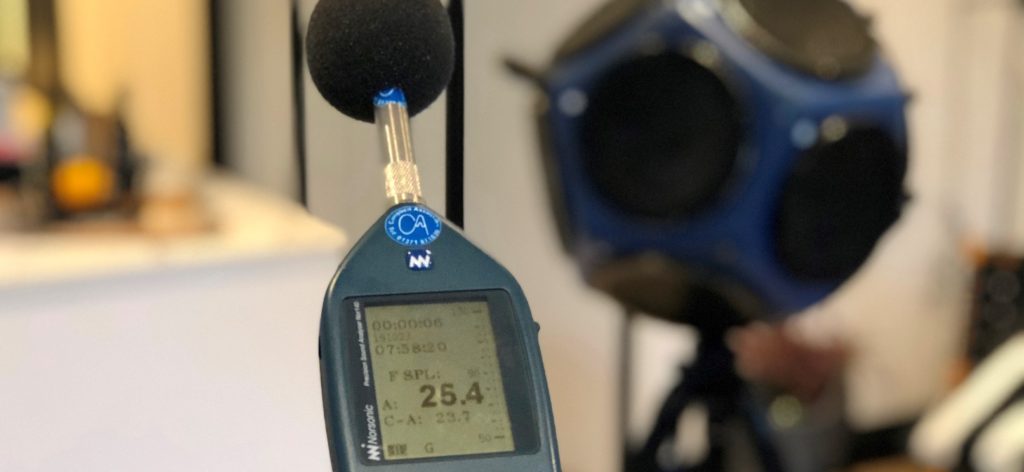
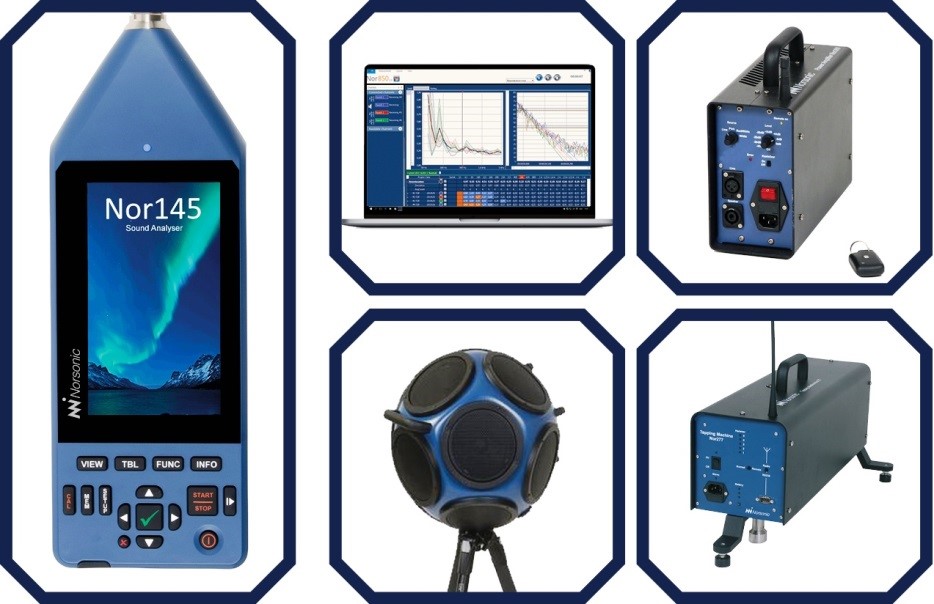
Airborne Walls and Floor Tests – These types of sound tests are carried out on separating walls and floors/ceilings between flats. An airborne sound test measures levels of sound transmitted through the air, such as speech and TV and Music noise. We use the latest Dodecahedron loudspeakers that produces white noise on one side of the partition, and measure noise with a Level 1 decibel meter on the other side of the partitions to check how much sound is lost through the partition.

Impact Floor Tests – This type of sound tests is only carried out on separating floor/ceiling divides between dwellings. An impact test measures the levels of noise transmitted directly through a separating construction as a result of impact noise such as footfall.  We use a Norsonic tapping machine, which drops metal hammers onto the floor to create impact noise. We then measure the amount of sound that passes through the partition with a decibel meter on the other side of the dividing partition.

Types of Sound Insulation Testing is Needed on Flats?

All types of sound insulation testing should only be completed on ‘habitable’ rooms. Habitable rooms can be Lounges, Living Rooms, Studies, bedrooms and open plan kitchens. Test findings are fed into a report, that will compare the results against the Part E Building Classification, which will clearly show a pass or fail. Thereafter the sound test report, will be sent to the client. As a UKAS accredited testing laboratory, our sound test report should always be acceptable to your tasked Building Control, and will help you to achieve building signoff for Approved Document E.

We know how important a sound insulation certificate is to you in achieving building control signoff, that’s why we pull out all the stops to make certain that you get the certificate quickly. We pride ourselves on the fact that our sound insulation certificates are issued with speed and efficiency.

Even before you get the sound test certificate, you will receive the results of the test. First, our skilled and competent acoustic engineers give you a verbal result at the site. Then, a written report is sent to you within 24 hours of a working day.

So why do we need Sound Testing on Flats?

When sound resistance (or sound insulation) is high in party walls and floors, the environment is more comfortable for residents as sound affects every aspect of our lives including home/work environment and while relaxing.

Insufficient sound insulation usually causes distress and discomfort while an effective sound insulation system brings about speech privacy and helps to improve relaxation and often helps to improve sleep patterns.  This is one of the several reasons why sound insulation is a key element in building.

Types of Sound Insulation Testing is Needed on Flats?

If, for example, resident working night shifts may not be able to sleep if their neighbour/s like to play loud music. Robust levels of sound insulation will help to reduce the noise and help to improve the quality of a person’s life in diverse ways. There are also developments where the neighbouring units are used for different purposes, such as home/work/studio units, in such cases a sound test ensures that the noise coming from each unit is minimal.

Why Choose us for your Acoustic Requirements

APT Sound Testing was formed with the idea of offering clients all the necessary help with acoustics on their projects. We provide all the necessary noise assessments, testing and certification under one roof to save developers time and money and reduce coordination issues.  Everyone at APT is fully trained and highly knowledgeable in our field or expertise cancelling out any need to speak to multiple people or departments

Based in London and Luton and operating nationwide across England & Wales, whether you require a single service or a fully tailored compliance package from design to sign off stage you can rest assured that APT will take a pro-active approach to ensure you have everything required for Building control sign off.

Secrets to Successful Sound Testing

It is our ongoing our goal to ensure all of our clients and customers are aware of all the required services their project(s) needs. We offer the most cost-effective assessment and precompletion testing solutions for your projects.

We also specialise with failed projects by providing on site diagnostics. If you have failed air tests, sound tests, low EPC ratings or bad ventilation rates are not things to be worried about then please contact us, at APT we have a massive amount of experience in providing the most cost effective and easy to understand remedial solutions.

For further information sound insulation on party floors in Flats, please see our sound test checklist or visit us at www.aptsoundtesting.co.uk or call us on 01525 303905.  

Minimising Noise Transference

Minimising Noise Transference

Sound Testing to Minimising Noise Transference
There are many different types of intrusive sounds that can penetrate through external walls, party walls, and separating floors. And these are a major concern for the inhabitants and users of both residential and commercial buildings.

In many existing buildings, where noise is a problem, any noise reduction is welcomed, giving comfort and relief by improving the quality of the living space. In residential building conversions, alterations must be designed to minimise the risk of disturbance from external noise sources from both neighbouring properties or from outside noise sources via the building façade.

Defining Noise

There are many ways to define noise; usually, it’s any unwanted, unpleasant or unexpected loud sound’. Most people will be disturbed by any unexpected loud noise, but many are able to become accustomed and de-sensitised to constant background noises as long as these do not vary in pitch or become too loud or intense. A couple of examples of this are residents living under an airport flight path or adjacent to a railway line.

Noise usually originates from outside the building envelope, via sound sources such as traffic, horns, alarms, and sirens, however, noise can also be generated from within buildings via household activities such as televisions, radios and washing machines or badly maintained mechanical plant. Equipment such as old central heating boilers and air conditioning units can generate significant whine and hum acoustics which can be very upsetting to certain ‘sensitive’ people and can greatly affect the person/s wellbeing. The preferred background (ambient) noise level in dwellings is 35dB. This is very often reduced to 30dB for sleeping areas as this is seen as the most sensitive area within a dwelling.

The subsequent noise intensity is measured in decibel (dB) units and uses a logarithmic scale. A 10dB increase in noise is normally perceived as a ‘doubling’ in loudness. The table below gives the typical decibel level of some example sound sources.

SOUND LEVEL (dB)DESCRIPTIONSOURCE EXAMPLE
10
20
40-50
50-60
70
80
Very faint
Quiet
Normal
Noisy
Loud
Very loud
Normal breathing
Whisper at 1.0 metre
Light traffic at 50 metres
Loud speech
Busy street, pub or restaurant
Vacuum cleaner or hairdryer
example sound sources

Improving Sound Insulation

In order to consider the options for tackling noise problems, it is necessary to have a basic understanding of sound behaviour and acoustic design.

In most instances, the weakest acoustic area of the external walls will be window units. In existing buildings, these are often Sash units and many councils do want them replaced as they are one of the most important features within the external façade of existing buildings.

As a result, many councils/local authorities will not let you remove and replace original window units unless the frames are rotten and beyond reasonable repair, however despite this decent acoustic improvements can still be made by installing a draught-proofing strip to the opening lights, and by providing an acoustic caulk seal around the window frame.

If it’s extremely noise secondary glazing units can be installed along with demountable shutters. One of the simplest improvements can be made via the installation of good quality heavy curtains fixed close to the wall; this can also be one of the most attractive upgrades and can also help keep heat within the home – a double winner!

If the building is being subdivided into new apartments then the walls between apartments will need to be sound tested in line with Part E for Converted Dwellings. In this instance, we can undertake sample sound testing on walls and floors to check the existing sound insulation performance.  

 APT Sound Testing has considerable experience in all matters related to architectural acoustic design and detailing. We can help develop the initial acoustic design from the initial design scheme stage right through to the pre-completion sound testing.

Our approach is robust and does not leave any room for errors using our In-depth knowledge of acoustic materials, construction systems, and Regulations we can provide the following:

  1. Sample sound testing to identify the acoustic performance of the existing building to allow for targeted acoustic upgrades.
  2. Acoustic testing of existing wall façades to ISO 140-5, to check the existing sound levels so new targeted wall upgrades can be specified.
  3. Provision of cost-effective and practical acoustic solutions
  4. Thorough understanding of the desired character of the space
  5. Specification of External Building Fabric and including walls, doors and windows in order to minimise noise break-in, or break-out for privacy and overall acoustic quality

If you would like more information in regards to acoustic design or sound testing on your project, please contact us now at: info@aptsoundtesting.co.uk or call us direct on 01525 303905.

Sound Insulation in London

Sound Insulation in London

Sound Insulation in London
London is a major city in the UK containing in excess of 5 million dwellings. In this overcrowded and often noisy environment, it is essential that robust acoustic design is incorporated into all new and refurbishment projects from the offset.

To help enforce good acoustic design principles pre-completion sound testing was introduced in July 2003, this resulted in all new build properties and conversions that were built after this date are required 10% of each party wall/floor construction type to be tested.

Sound insulation testing is carried out between pairs of rooms separated by party walls or floors. The two ‘habitable’ areas that usually require sound testing are living rooms and bedrooms, although other rooms can be tested if this is not possible, i.e. kitchen to the bedroom.

APT Sound Testing undertakes UKAS accredited Part E sound testing throughout London and the South East. We have extensive knowledge regarding the way different materials and construction methods can influence the results of a sound test, so we can always offer robust and cost-effective acoustic design advice to ensure your compliance with Part E of Regulations. Our usual road map for design advice is:

1. Site Visits & Precompletion Testing
We offer Acoustic Site Survey Visits to let us view the existing site construction. This allows us to check for potential problem areas such as lightweight blocks that haven’t been used in the existing construction. It also lets us check that the installation teams are installing the acoustic materials as per the manufacturer’s guidelines, thus avoiding crucial onsite mistakes. In our experience, a sound test failure is often due to poor workmanship rather than the actual design. The site survey visits negate the risk of sound test failure.

We also undertake sample sound testing of the existing construction. This offers an accurate overview of the acoustic performance of the existing partitions which enables us to offer an acoustic design that correlates with the existing construction.

2. Acoustic Design Considerations
a.            Avoid using lightweight blocks in the inner envelope construction as sound will travel along light block-work both vertically and horizontally from dwelling to dwelling.

b.            The use of resilient suspended ceilings will help improve the performance of the floor partition.

c.             Use a high quality resilient acoustic membrane on top of the floor to improve the impact performance of a floor.

d.            Ensure all penetrations are fully sealed where they terminate through floors and they are adequately boxed with acoustic quilt and two layers of plasterboard.

Defect Diagnosis & Remedial Advice
With over 30 years’ experience in building acoustics, we are able to diagnose the reasons for the sound test failure and recommend a cost-effective solution. Often, the reasons for the partition failure are obvious to the test engineer in which case the advice will be minimal, and subsequently the cost for acoustic design advice will be minimal.

Sometimes, there are more technical issues that require more detailed diagnosis and invasive investigation, such as large amounts of noise flanking due to serious design faults, e.g. the use of lightweight blocks in the construction of apartment development.

Whatever the problem we can usually find an acoustic solution that will satisfy Part E of Building Regulations.

If you have a project that needs acoustic design advice or needs sound insulation testing then please contact us via the APT Sound Testing Website or phone us directly on 01525 303 905 and we should be able to offer you an expedient acoustic solution to help you achieve practical completion.

Designing Buildings to Pass Sound Testing

Designing Buildings to Pass Sound Testing

Designing Buildings to Pass Sound Testing
From the very start of the design phase of a new building, it’s extremely important that careful consideration is given to the acoustic element of the building.

By getting us involved at the start of the design process we can undertake comprehensive acoustic design reviews and ongoing site surveys. We always advocate meeting with the design team at the earliest opportunity to go through all acoustic elements for the building’s design, taking into account the site constraints and the most cost-effective method of achieving Part E of Building Regulations. We try to forward any possible ‘onsite’ construction problems and difficulties in achieving successful acoustic construction and subsequently the sound testing for Part E.

Once we have completed the acoustic design review our services don’t finish there. We provide the site team with ongoing design support and site visits. You will have direct contact with the allocated acoustician from the start of the process through to the successful completion of the project.

Different Types of Sound Testing

Acoustic Design & Onsite Construction
Once the first phase of the building is completed, we can undertake sample sound testing to ensure the acoustic design and onsite construction methods are sufficient to pass Part E sound testing.

When it comes to refurbishment projects i.e. houses converted into flats and/or office blocks into flats we can undertake a sample test of the existing wall and floor construction. Once we have established the sound levels for the existing construction we can then look at the extent of the acoustic upgrades to attain Part E Complaisance. This is much more effective than just forwarding an acoustic design that may be too excessive and expensive when the existing construction is already ‘acoustically’ robust and therefore only needs to improve by a few dB.

One problem we often encounter (without our design input) is that the building marginally fails during the sound test. The potential problem that is often overlooked is that many types of acoustic design/materials have attained an acoustic rating within a laboratory. It is very difficult and extremely unlikely that the sound levels achieved on a construction site will be as good as in the confines of a stringent laboratory environment.

When the construction assembly is tested in the lab, it is also certified and an exact description of the materials and the installation techniques are described in detail and followed to the letter, obviously, this should be replicated on your site as closely as possible, however, this seldom happens. This is one of the reasons why a 5dB point difference is allowed between the construction design on paper and the actual on-site construction performance.

When you consider that sound doubles every 10dB, then 5dB can make a huge difference to the overall performance of the dividing partition under test. If consideration is not allowed during the design process then there will be a greater chance of a sound test failure on your project. 

Another potentially problematic area of sound transference and potential sound test failures is down to flanking sound. Noise flanking is when travels along a continuous path due to insufficient isolation/break within the building wall & floor elements. One of the most common flanking paths is along with the inner leaf of an external cavity wall. This may be due to lightweight block construction resulting insufficient mass to prevent noise transference.  

Unwanted noise travelling along flanking paths makes the building structure vibrate and this causes the sound to radiate into your room. One solution is to build another wall or ceiling in front of the original, but not connected to it (often called an independent wall or ceiling). APT can help to locate the flanking sound and propose a cost-effective design that will pass the sound testing and satisfy Part E of Building Regulations.

For the smaller projects, we undertake a more simplified acoustic design service consisting of a review of the design drawings, such as to floor plans and sections. This usually takes place straight after planning has been approved as increased cost savings can be realised at the earliest stage. We can also undertake sample sound testing if the client is not sure of the existing onsite construction.

We can then evaluate the building design to ensure that it the walls and floors are capable of meeting the acoustic requirements of Approved Document E.

Some of the main areas we consider are:

•             There are no potential flanking points, where isolated partitions are wrongly mechanically fixed together to cause noise bridging or the wrong materials have been specified such as lightweight blocks etc.

•             The acoustic treatments for Soil Pipes, Stair Cases Steel Beams, etc. to ensure they are acoustically fit for purpose, as these are some of the many areas that get missed.

•             Acoustic floor treatments are compatible with the proposed floor finishes i.e. Carpets, Laminates, Floor Tiles and under-floor heating systems.

•             The Lighting specification to, ensure they are acoustically compliant to the overall design i.e. down lighter design, etc.

If you would like more information in regards to sound testing please follow our blog at: http://soundtestinguk.blogspot.co.uk/, or contact us at: info@aptsoundtesting.co.uk or visit the APT Sound Testing website.

Sound Insulation Testing

Sound Insulation Testing

The Required Site Conditions for Sound Insulation Testing
During the sound insulation testing, our equipment produces high levels of noise; between 100-100dB. However, to record accurate test measurements, relatively quiet conditions are required on-site throughout the testing. Any site operatives working in the testing area will have to leave temporarily and any noisy works in the vicinity of the test areas including external site activity such as groundworks, drilling and banging will need to be halted. We also require full access to all the rooms being tested.

We provide a full testing schedule within our quotation which will clearly identify suitable couplings of test rooms that may require access to adjoining neighbours dwellings to enable us to complete the testing. APT Sound Testing will try to schedule the sound testing with you at a time when noise can be controlled to achieve the best possible testing results.

Sound Testing Services for New Build

How Long Will the Sound Testing Take?
The time taken to undertake sound testing varies from project to project as no site is exactly the same. Taking into account standard site conditions a set of tests on houses -two airborne walls will take one to two hours. A six-pack of tests on flats – 2 airborne walls, two airborne floors, and two impact tests will take between two to three hours. Throughout the sound testing, we will require full free uninterrupted access to the units/rooms in all test areas.

Should I inform my Neighbours of the Sound Testing?
Your neighbours will need to be contacted if access is required to their properties to complete the sound testing. Also as the sound levels produced during the test are very high it would be ‘neighbourly’ to inform the residents as they are likely to hear the test. If your project is a new build and/or a change of use and it’s built onto an existing property then chances are you will be required to undertake an airborne wall test.  We recommend that you check this with your local building control officer prior to the testing so you can plan access to the neighbouring properties accordingly.

Can I Observe the Sound Testing?
APT Sound Testing will happily give you a brief demonstration and overview of the test if so required; however, during the actual sound testing, we will need to follow stringent rules which restrict extra personnel within the test areas.

I want peace of mind that I’ll pass the sound testing
Poor Sound test results can occur for many reasons. The most common factor influencing acoustic performance is poor workmanship. Detailing is critical to maximising on-site acoustic performance, especially in floor and wall isolation and appropriate party wall and floor construction. If inadequate provision for the isolation of materials is not undertaken Noise flanking may occur which is another common reason for sound test failure.

We offer an acoustic design service to review the construction detailing. We also offer a sample testing service along with site inspections which provides a ‘one-stop acoustic solution’. We visit the site during the build process to check for any workmanship issues that may cause problems during the final pre-completion testing.

If you would like APT Sound Testing to review your site construction or to comment on their suitability, then please speak to us about our acoustic design advice service. This is a relatively inexpensive option that may avoid sound testing failures which result in expensive remedial treatment and delay your project handover.

For information in regards to sound testing or acoustic design, please follow our blog at: http://soundtestinguk.blogspot.co.uk/, or contact us on 0777 5623464 or visit our website at: www.aptsoundtesting.co.uk  

Sound Testing Explained

Sound Testing Explained

Sound Testing Explained

So what exactly is Sound Testing? Airborne and Impact Sound is transmitted through most walls and floors by setting the entire structure into vibration. This vibration generates new sound waves of reduced-intensity on the other side. The passage of sound into one room of a building from a source located in another room or outside the building is termed ”sound transmission”. 

Sound transmission loss or Sound Reduction Index, R dB, is a measure of the effectiveness of a wall, floor, door, or another barrier in restricting the passage of sound. The sound transmission loss varies with frequency and the loss is usually greater at higher frequencies. The unit of measure of sound transmission loss is the decibel (dB). The higher the transmission loss of a wall, the better it functions as a barrier to the passage of unwanted noise across the dividing (acoustic) partitions.

How to pass your Sound Testing in Bedford

Types of Sound Insulation in Buildings
Approved Document E stipulates that there are two types of sound insulation in buildings: airborne and impact. Airborne sound insulation is used when the sound produced directly into the air is insulated and it is determined by using the sound reduction index. Impact sound insulation is used for floating floors and it is determined by the sound pressure level in the adjacent room below.

A sound insulation test of a separating partition will be considered as a pass if the airborne sound insulation is equal to or greater than the DnT,w + Ctr value shown for the appropriate dwelling in the table, for airborne testing in new builds properties a figure of 45dB or greater is required and for Impact testing 62dB and below. For conversion properties a figure of 43dB or greater is required and for Impact testing 64dB and below.

What is DnT,w

DnT,w is an in-situ measured performance parameter that demonstrates the level of resistance to sound transmission between two adjacent spaces, such as flats or houses. The measurement will include both direct sound transmission and flanking sound transmission of the construction. Flanking transmission is the effect of sound travelling through the building and may be particularly evident where beams and joists bridge a common partition or along poorly isolated lightweight wall constructions.

The DnT,w of a separating wall or floor will typically be of the order 5 to 7 dB lower than the manufacturers specified Rw (single figure quantity of sound insulation) for the single element, due principally to the contribution from flanking sound transmission around the element when it is built on-site – this should always be accounted for in the initial acoustic design.

What is Ctr

Ctr is the spectrum adaption term. It is a correction attributed to the sound insulation quantity to account for urban traffic noise.

What is L’nT,w

L’nT,w is an in-situ measured performance parameter that demonstrates the level of resistance to impact sound transmission between floors. The impact measurement includes both direct sound transmission and flanking sound transmission.

Weighted Sound Reduction Index Rw

When specifying the acoustic performance of an acoustic partition in a more general manner, it can be useful to describe the sound insulation by a single number. The weighted sound reduction index, Rw , is a rating method given in EN ISO 717-1. This standard fits a standard reference curve to the measured sound reduction index curve.

Within the EN ISO 717-1 standard, a rating method is also given where the Rw value is completed by two C-terms which are applied to two models of the noise spectra for various types of noise. These two terms, Rw + C and Rw + Ctr, also include the frequency range 100 – 3150 Hz but can be extended to 50 – 5000 Hz. As industrial and traffic noise often have high sound levels which are also below 100 Hz, it is recommended that the extended frequency area is used.

The summary value, Rw + C, gives the reduction value in dBA for a spectrum with a level which is equally high in all third-octave bands. This can be used for:

•             Highway road traffic travelling at speeds in excess of 80 km/h

•             Factories emitting mainly medium and high-frequency noise

•             Living activities (talking, music, radio, TV)

•             Railway traffic at medium and high speed

•             Jet aircraft at a short distance

The summary value Rw + Ctr also gives the reduction value in dBA, spectrum with low-frequency dominance such as:

•             Disco music

•             Urban road traffic

•             Railway traffic at low speeds

•             Factories emitting mainly low and medium frequency noise

Both the impact and airborne insulation performance of floors and walls should be carefully considered from the start of the project to ensure that the minimum performance requirements for new and converted developments are met inline with Approved Document E

If you would like more information in regards to our sound testing and/or noise survey services, please contact us now on 01525 303 905or email us direct at info@aptsoundtesting.co.uk.