Category: Uncategorized

Air Tightness Testing

Air Tightness Testing

Air Tightness Testing Services

APT Sound Testing offers comprehensive Air Tightness Testing services across the United Kingdom. We cater to projects of all scales, ranging from individual dwellings to expansive commercial structures. As one of the select few UKAS accredited companies, we specialise in both Air and Sound testing, ensuring full compliance with Building Regulations and Standards.
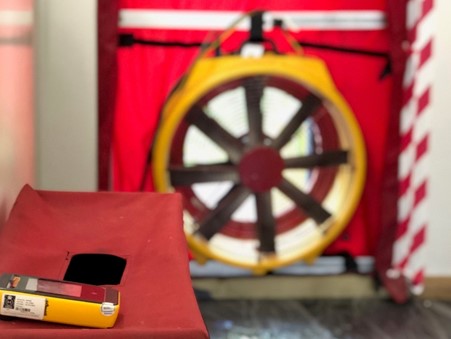
Air Tightness Test

Our unique accreditation allows us to conduct Air, Sound, and Vent Testing all in one visit, offering clients cost efficiencies and streamlined on-site coordination. Unlike many firms, we handle all work directly without subcontracting.

Since its mandate in 2006 under Building Regulations Part L in England and Wales, achieving satisfactory levels of air tightness has become imperative. This requirement aligns with efforts to create environmentally friendly buildings by minimizing carbon emissions through the prevention of energy loss via air leakage. Part L defines ‘air leakage’ as the uncontrolled flow of air through a building’s gaps and cracks, commonly known as draughts.

Energy loss through the building fabric contributes to the building emission rate. New projects must adhere to specific air testing and emission rate standards. The typical target for a standard dwelling is 5.0m3/hr/m2, while commercial buildings often aim for lower rates, around 3.0m3/hr/m2.

Air infiltration usually accompanies exfiltration elsewhere in the building, potentially leading to issues like condensation, mould, or rot. Our consultancy services extend from the project’s design phase to pre-completion testing, ensuring compliance for building control signoff. For clients requiring weekend testing, we offer an ‘out of hours testing’ service to minimize disruption during weekdays.

Our combined air and sound testing packages provide substantial cost savings. With our engineers accredited in both disciplines, clients benefit from a streamlined ‘3 step’ pre-completion package, eliminating the need for multiple contractors. On-site coordination is enhanced, as both tests are conducted efficiently on the same day. Additionally, we offer out of hours testing to minimize disruption during standard working hours.

We pride ourselves on offering friendly, expert advice to help properties achieve required emission rates for air testing. Reach out to our knowledgeable team of air tightness consultants through our contact form or by calling our offices to discuss your specific air testing needs.

We can help with your Air Tightness Testing

APT Sound Testing we have large amount of experience in understanding the requirements of Approved Document L, along with extensive experience of carrying out thousands of successful air tightness tests on a wide range of developments across London and the UK.

In order to achieve the required air tightness target (which is getting lower all the time) and to avoid the risk of a failed air tightness test, we strongly recommend that early consideration is given to the design of the air leakage line within your project.

By working with our customers throughout their design and construction stages, we can provide advice and guidance on the most feasible ways to avoid air leakage and attain compliance for the air tightness test. Please download our air tightness checklist to help you prepare for your test.

Guide to Passing a Smoke Shaft Air Test

Guide to Passing a Smoke Shaft Air Test

How to Pass a Smoke Shaft Air Test
Achieving success in a smoke shaft air test is vital for ensuring building safety and regulatory compliance. However, passing the test on the first attempt can be challenging. Here’s a condensed guide outlining essential steps to prepare your smoke shaft for the air tightness test:

  1. Consultation with Experts: Seek early advice from air tightness consultants for insights into effective smoke shaft design and sealing strategies.
  2. Determine Air Tightness Target: Establish the airtightness goal, typically less than 3.8 m³/h/m² @ 50 Pa, which can be challenging for small enclosures like smoke shafts.
  3. Optimal Design: Ensure robust construction materials like concrete or high-density blocks to create a tight air barrier with no mortar joint gaps.
  4. Interior Finish: Smooth and seal the inside of the shaft meticulously, including all junctions and joints, using appropriate methods like parge coating or mastic sealing.
  5. Seal Penetrations: Completely seal all service, structural, and cable penetrations within the smoke shaft envelope.
  6. Secure Door Openings: Use heavy-duty materials to seal all door openings within the smoke shaft to prevent leakage.
  7. Seal AOV Door Frames: Mastic seal the perimeter of AOV doors to prevent leakage.
  8. Seal Shaft Base and Head: Ensure thorough sealing of the shaft’s base and head before the air test.
  9. Conduct Air Testing: Use a calibrated blower door fan set to pressurize the shaft and measure air tightness according to CIBSE TM23 standards.
  10. Address Test Failures: If the shaft fails the test, employ smoke testing or thermal imaging to identify and seal leaks, producing a detailed leakage survey report.

For comprehensive assistance in smoke shaft systems, consult experts specialising in smoke shaft design and compliance. Utilise services from UKAS accredited air tightness consultants and testing companies, equipped with the latest high-powered fan equipment and diagnostic tools like smoke machines and thermal imaging.

UKAS Accredited

We are a UKAS accredited, as well as being certified to ATTMA Level 2 for air tightness testing. For a detailed guide, you can refer to our article that provide a comprehensive roadmap and tips for preparing your smoke shaft for an air test. It’s advisable to consult with UKAS accredited air tightness consultants early in the process to increase the chances of passing the smoke shaft air test on the first attempt.

How We Can Help you PASS your Smoke Shaft Air Test

There are many ways we can help you pass your smoke shaft air test at the first attempt. Firstly, our experienced engineers have over 10 years in the field of smoke shaft testing – having undertaken hundreds of air test, so we know how to help clients to pass their testing:

Our simple roadmap to a successful smoke shaft air test:

Smoke shaft survey visits by experienced air tightness consultants.
UKAS and ATTMA Level 2 air testing company
UKAS smoke shaft air test certification
The latest high-powered fan equipment
UKAS calibrated equipment
Diagnostic leakage surveys testing using smoke machines & thermal imaging
Rapid testing service – sometimes within 48 hours!

We offer leading design, consultancy, and compliance for every part of your project. It’s APT’s aim to provide a friendly and professional stress-free experience.

Please contact APT on 07775623464, or email us at info@airpressuretesting.co.uk for more information.

Premier Acoustic Consultants in the UK

Premier Acoustic Consultants in the UK

As premier Acoustic Consultants, we provide comprehensive solutions to meet all your acoustic needs, ensuring compliance with planning regulations and Building Regulations Part E for seamless project approval. With our expertise, your company is guided through every phase with professional advice, maintaining a continuous focus on cost considerations.

Sound Testing Services

From Initial Design to Pre Completion Testing

Our services begin with on-site visits to conduct sample sound insulation testing on existing building walls and floors, evaluating their acoustic performance against established standards. Armed with this data, we proceed to tailor an acoustic design strategy that aligns with Building Regulations Part E requirements.

From the initial design phase to pre-completion sound testing, we assist in shaping the acoustic aspects of your project. Our meticulous approach involves analyzing construction elements such as mass, isolation, and absorption to optimize acoustic performance.

To facilitate compliance with Approved Document E, we offer a comprehensive 4-step acoustic design advisory package:

  1. Site Survey Visits: Our experts assess existing site construction to identify potential issues and ensure proper installation of acoustic materials.
  2. Sample Sound Testing: Accurate evaluation of existing construction’s acoustic performance informs targeted acoustic design recommendations.
  3. Acoustic Design Review: A thorough examination of proposed party walls and floors to ensure compliance and optimal acoustic performance.
  4. Pre-completion Sound Testing: Fulfilling requirements outlined in Approved Document E for sound insulation testing, ensuring project approval.

Acoustic Design Services

We have many years’ experience of acoustic partition design on all types of developments from pairs of semi-detached houses, up apartment blocks containing hundreds of residential units. Utilising our vast experience in construction design, and the data from thousands of sound insulation tests, we have a clear understanding of the positives and negatives of all types of construction.

We are also a UKAS accredited sound testing laboratory which means we can offer a comprehensive design and testing solution for all your acoustic requirements. We can test and issue certification on completion of any works carried out and you can be safe in the knowledge that the results will be accepted by the tasked building control officer.

For further details on our acoustic consultancy services, please refer to the information below. Should you require Sound Insulation Testing as requested by local authorities, please contact us at 01525 303905 or via email at info@aptsoundtesting.co.uk.

Conducting a Smoke Shaft Air Test

Conducting a Smoke Shaft Air Test

Conducting a Smoke Shaft Air Test

Many clients often inquire about the necessity of conducting air testing on their smoke shafts. Let’s delve deeper into the reasons behind this practice and how it ensures safety and compliance with relevant legislation and standards such as BS 9999 and BS 9991.

smoke shaft air test

Smoke Shaft Air Test Services
If the shaft fails to achieve the airtightness target, a smoke leakage test is conducted. During the smoke test, theatrical smoke is pushed into the shaft, revealing any gaps or cracks in the smoke shaft envelope. on large smoke shafts over multiple floors, its best that multiple observers are used to check the floors whilst the air test engineer operates the blower fan equipment.

Smoke Control and Fire Safety
Smoke inhalation is a major cause of fatalities and injuries during fires, often overshadowing the direct impact of the fire itself. More than 60% of deaths in fire incidents occur due to smoke inhalation. Controlling smoke is crucial in safeguarding lives and property. Smoke control systems not only protect escape routes but also aid firefighters, thus reducing casualties.

  1. Smoke Shaft Functionality: Smoke shafts play a pivotal role in evacuating smoke from buildings during a fire. To operate efficiently, smoke shafts must be airtight to facilitate the functioning of mechanical Automatic Opening Ventilation (AOV) systems, which extract smoke from escape routes. Air testing confirms the shaft’s airtightness before AOV commissioning, ensuring compliance and safety measures are met.
  2. Building Regulations and Standards: Smoke shafts are subject to evolving regulations and standards in the UK. For residential buildings, BS 9991:2015 provides updated fire safety guidance, including recommendations for smoke control. Compliance with these regulations is essential to ensure the safety of occupants and adherence to legal requirements.
  3. Air Testing Process for Smoke Shafts: Air tightness testing of smoke shafts involves a positive pressurization test using a high-powered blower door fan. This test is conducted with the shaft fully sealed but before AOV fans and louvres/shutters are installed. If the shaft fails to achieve the airtightness target, a smoke leakage test is performed. During the smoke test, theatrical smoke is introduced into the shaft to identify any gaps or cracks in the smoke shaft envelope.

In summary, air testing plays a crucial role in verifying that smoke shafts meet safety standards, thereby protecting lives and enhancing overall fire safety measures. At Air Pressure Testing Ltd, we specialise in conducting AOV smoke shaft testing, ensuring compliance and peace of mind for our clients.

Our experienced engineers and state-of-the-art equipment guarantee reliable results and professional service. From survey visits to smoke testing and thermal imaging, we offer comprehensive solutions to help you achieve smoke shaft signoff efficiently and effectively.

Air Pressure Testing Ltd boasts a client base from one of self-builders to the largest construction companies in the UK. We offering leading design, consultancy and compliance for every part of your project, at all stages. It’s APT’s aim to provide a friendly and professional stress-free experience.

Sound, Air, & Vent Testing Package

Sound, Air, & Vent Testing Package

Introducing our Sound, Air & Vent Testing Package

Are you gearing up for a new project? Simplify your compliance process with our all-inclusive testing package. At APT Sound Testing, we hold UKAS accreditation, allowing us to conduct both Air and Sound testing, ensuring full compliance with Building Regulations and Standards .

Say goodbye to the hassle of coordinating multiple visits and subcontractors. With our seamless Big 3 Package, you’ll not only save on costs but also eliminate potential coordination issues. Plus, rest assured knowing that our testing engineers uphold the highest standards, as we never subcontract our work.

Achieve compliance effortlessly with Building Regulations Part E, F & G by opting for our Big 3 Package, which includes:

1: Sound Insulation Testing: Ensure your residential development meets noise attenuation requirements with our comprehensive sound insulation testing. Part E of Building Regulations mandates testing of 10% of each party wall/floor construction type. Our testing covers both airborne noise (e.g., televisions, conversations) and impact noise (e.g., footsteps), ensuring your dwelling offers optimal sound resistance.

2: Air Tightness Testing: Compliance with Building Regulations Part L is a breeze with our air tightness testing. Since 2006, it’s been a legal requirement to achieve satisfactory levels of air tightness to reduce carbon emissions and enhance energy efficiency. Our testing identifies and addresses air leakage, helping you meet specific requirements and emission rate targets.

3: Extractor Fan Testing: Under Part F of Building Regulations, extractor fan testing is essential for new buildings with intermittent extractor fans in areas like bathrooms, WC, and kitchens. Our testing ensures these ventilation systems are balanced, commissioned correctly, and fit for purpose, contributing to the well-being of occupants and preventing property damage from issues like mold.

Choosing our Big 3 Package
By choosing our Big 3 Package, you not only streamline the testing process but also benefit from substantial cost savings. Our UKAS accreditation guarantees the highest quality service, giving you peace of mind throughout the compliance process.

Contact APT Sound Testing
Ready to simplify your compliance journey? Contact us now at 01525 303 905 for more information on our Big 3 Package. At APT Sound Testing, we’re committed to providing a friendly, proactive service to meet all your compliance and certification needs.

We can also undertake ‘in house’ UKAS accredited air tightness testing in one seamless package, lowering costs and negating coordination issues. Contact us today for more information.

Extractor Fan Testing Overview

Extractor Fan Testing Overview

Extractor Fan Testing Overview with APT Sound Testing

In adherence to the new regulations outlined in Part F of Building Regulations, it is now mandatory for standard intermittent extractor fans, commonly found in bathrooms and kitchens of new buildings, to undergo air flow rate measurement on-site. These results must be submitted to the building control body before completion and handover.

Our service facilitates extractor fan testing concurrently with air and sound testing, streamlining coordination efforts and offering significant cost efficiencies. Rest assured, our operations are conducted by a UKAS accredited company, ensuring quality and compliance.

Importance of Extractor Fan Testing

As modern buildings prioritize insulation and air tightness, it’s imperative that ventilation systems are appropriately installed, balanced, and commissioned to ensure optimal operation for occupants’ well-being. Approved Document F mandates that Mechanical Ventilation and Heat Recovery (MHVR) systems, along with intermittent extractor fans, have their flow rates verified, ensuring efficient operation. These test results are integral to building compliance and sign-off procedures.

In typical circumstances, we conduct Ventilation Flow Rate testing concurrently with on-site Air Pressure Testing, enabling streamlined compliance with both Part L and Part F regulations.

Best Practices Guide

a. Confirm ductwork complies with manufacturer specifications. b. Minimize duct bends to optimize airflow and minimize resistance. c. Use flexible ducts solely for connecting units to central diffusers to maintain acoustic performance. d. Employ recommended duct jointing collars and components for optimal duct performance. e. Seal all grilles and ductwork penetrating the building’s air barrier to ensure continuity. f. Ensure correct placement, securing, and adjustment of fans. g. Verify internal doors have 10mm undercuts as per regulations. h. Electrician should set fan speed according to manufacturer data. i. Secure air handling units to stable building elements using recommended fixing brackets. j. Install units in accessible positions for maintenance.

Expert Consultation

For guidance on achieving compliance with approved Document F and domestic extract fan testing, contact our knowledgeable consultants via the provided contact form or phone our offices. For assistance in preparing your building’s ventilation system for compliance, reach out to our team for tailored vent testing solutions. Use our contact forms or call our offices to discuss your specific requirements with our experts.

Sound Testing and Acoustic Design Services
Here at APT Sound Testing we offer a friendly and proactive design, consulting, and precompletion testing service for all your compliance and certification requirements.

We undertake sound testing on all types of residential buildings and commercial buildings. We also undertake sound testing on schools and buildings containing rooms for residential purposes.

Our team of experienced sound test engineers are dedicated to giving our customers the best quality of service and offer acoustic design advice where possible, to help our clients achieve the required acoustic results to pass the sound testing and attain building completion. We can also undertake ‘in house’ UKAS accredited air tightness testing in one seamless package, lowering costs and negating coordination issues.

UKAS Accredited Sound Testing

UKAS Accredited Sound Testing

UKAS Accredited Sound Testing for London & UK

We provide UKAS accredited sound testing for London and the whole of the UK as required by Approved Document E of the Building Regulations. We undertake sound testing on all types of residential buildings and commercial buildings. We also undertake sound testing on schools and buildings containing rooms for residential purposes.

Premier Acoustic Consultants

Our team of experienced sound test engineers are dedicated to giving our customers the best quality of service and offer acoustic design advice where possible, to help our clients achieve the required acoustic results to pass the sound testing and attain building completion. We can also undertake ‘in house’ UKAS accredited air tightness testing in one seamless package, lowering costs and negating coordination issues.

As premier Acoustic Consultants, we provide a comprehensive solution for all your acoustic needs, ensuring compliance with planning regulations and Building Regulations Part E. Our expertise guarantees professional guidance at every stage of your project, with a continual focus on cost considerations.

We conduct on-site visits to perform sample sound insulation testing on existing walls and floors, evaluating their performance and guiding targeted acoustic design to meet Building Regulations Part E requirements.

Our four-step acoustic design advice package includes:

>>> Site Survey Visits: Inspection of existing site construction to identify potential issues and ensure proper installation of acoustic materials.

>>> Sample Sound Testing: Accurate assessment of existing construction’s acoustic performance to inform targeted acoustic design.

>>> Acoustic Design Review: Comprehensive evaluation of proposed developments’ party walls and floors for compliance.

Pre-completion Sound Testing: Essential testing to satisfy Approved Document E requirements.

Our UKAS-accredited sound insulation testing laboratory offers proactive testing services and reliable reporting for building control sign-off. We specialize in acoustic partition design across various developments, providing comprehensive design and testing solutions.

Our services include:

Sample Sound Testing: On-site visits to ensure proper installation of acoustic materials, reducing the risk of test failure due to poor workmanship.
Site Survey Visits: Inspections to verify compliance with acoustic requirements and mitigate potential issues.
We also offer planning noise surveys, including BS8233 for residential developments and BS4142 for industrial sites. Our experienced consultants provide detailed assessments and mitigation measures to ensure compliance with noise regulations.

Sound Testing for London & the UK

We provide UKAS accredited sound testing for London and the whole of the UK as required by Approved Document E of the Building Regulations. We undertake sound testing on all types of residential buildings and commercial buildings. We also undertake sound testing on schools and buildings containing rooms for residential purposes.

Our team of experienced sound test engineers are dedicated to giving our customers the best quality of service and offer acoustic design advice where possible, to help our clients achieve the required acoustic results to pass the sound testing and attain building completion. We can also undertake ‘in house’ UKAS accredited air tightness testing in one seamless package, lowering costs and negating coordination issues.

For more information or assistance with your project’s acoustic requirements, contact us at: 01525 303905 or visit our website for details on our services.

Smoke Shaft Testing & Building Regulations

Smoke Shaft Testing & Building Regulations

Looking at Smoke Shaft Testing & Building Regulations

There is a number of building regulations and guidance for undertaking air testing to Automatic Opening Vent (AOV) smoke shafts. Here’s a summary of the main regulations and standards:

Approved Documents:

• The Approved Document B – this provides guidance on fire safety and mentions the role of AOV systems in facilitating evacuation by clearing smoke. It’s important to refer to the latest version of this document for detailed guidelines.
• BS EN 12101-2:2006 – AOV smoke shafts must comply with standards such as BS EN 12101-2:2006, which covers the design of smoke ventilation systems.
• BS EN 9991 (2015) – Fire Safety in the design management and use of residential buildings.
• Smoke Shaft Testing Requirements: all tests are carried out in accordance with the requirements of ATTMA TSL Issue 1, CIBSE T23:2000, BS EN 13829 and BS EN 12101-2:2006.
• Smoke Shaft Testing Frequency: Annual air testing is required to ensure the AOV smoke shafts are running correctly.
• Air Testing Body: The air test to the smoke shafts should be carried out by a Level 2 ATTMA member, Level 1 IATS, or a UKAS accredited testing laboratory.
• UKAS Calibrated Equipment: Testing should be carried out using UKAS calibrated equipment to meet ISO 17025 air permeability standards.

For the most accurate and up-to-date information, it’s recommended to consult the official documents and any recent amendments provided by the UK government and relevant authorities for AOV Smoke shafts.

How Long will a typical smoke shaft air testing project take

The duration of a typical smoke shaft testing can vary based on factors such as the size of the building, the complexity of the smoke shaft system, and the testing methodology. However, I’ll provide a general estimate:

  1. Small Buildings or Single Shafts: For smaller buildings with a single smoke shaft, the test may take 1 to 2 hours. This assumes straightforward access and minimal complications.
  2. Larger Buildings or Multiple Shafts: In larger buildings, or those with multiple smoke shafts, testing can take a bit longer. Expect 2 to 4 hours or more, depending on the scope.
  3. Preparation and Setup: Setting up the equipment, sealing openings, and ensuring safety precautions add to the overall time. Allow additional time for safety checks and coordination.
  4. Testing Process: The actual air testing involves pressurising the shaft and measuring air leakage. The time spent on this step depends on the shaft’s size and complexity.
  5. Reporting and Documentation: After testing, data analysis, reporting, and documentation take additional time. This includes recording results, identifying any issues, and recommending corrective actions.
  6. Failed Air Test – If the shaft fails the test, a combined thermal imaging and smoke air leakage test can be undertaken, and a report collated. The time required to collate the report, varies depending on the size of the shaft and the amount of air leakage paths identified.
  7. Remedial Work (if required): If the shaft fails the test, remedial work inside the shaft may be necessary. The time required for repairs or improvements varies depending on the amount of remedial works required and the ease of access to undertake the works.

Remember that accuracy and thoroughness are essential during smoke shaft testing. It’s crucial to follow established procedures and prioritize safety. Consult with experts to determine the specific duration for your building’s smoke shaft air test.

Why use APT for your smoke shaft air testing?
We have been undertaking AOV smoke shaft testing throughout London and the South-East, on many prestigious projects such as Battersea Power Station, The Imperial War Museum and Clarridges and Berkeley Hotel.

Our experienced engineers at Air Pressure Testing have over 10 years in the field of smoke shaft testing, so we know how to help clients to pass their testing and achieve smoke shaft signoff.

What can we do?

• Smoke shaft survey visits
• A UKAS and ATTMA Level 2 testing company
• Smoke shaft air test certification
• The latest high-powered fan equipment
• UKAS calibrated equipment
• Smoke testing in the event of an air test failure
• Thermal Imaging in the event of an air test failure
• Same day quotation
• Experienced test engineers
• Thousands of air pressure tests undertaken
• Fantastic customer satisfaction score

Air Pressure Testing Ltd boasts a client base from one of self-builders to the largest construction companies in the UK. We offering leading design, consultancy and compliance for every part of your project, at all stages. It’s our aim to provide a friendly and professional stress-free experience.

APT Sound Testing can be contacted on 01525 303 905, or via our website contact page to discuss your Smoke Shaft Testing and any specific requirements with our friendly and knowledgeable staff.

An Introduction to Sound Insulation Testing

An Introduction to Sound Insulation Testing

Introduction to Sound Insulation Testing

Sound insulation testing is a mandatory assessment according to Approved Document E, which evaluates the sound insulation efficacy of party walls and floors between dwellings. Typically conducted as properties near completion, the testing determines compliance with the minimum Building Regulation Part E standards for sound insulation.

The responsibility for arranging sound testing lies with the contractor, who must demonstrate to Building Control that the dividing partitions meet the requirements outlined in Approved Document E. This process is commonly known as Approved Document E (ADE) sound testing or pre-completion testing (PCT).

Sound Testing for Compliance with Approved Document E

Approved Document E, titled ‘Resistance to the passage of sound’, has been effective since July 1st, 2003, setting forth minimum sound insulation criteria for new and converted dwellings, encompassing various building types such as flats, houses, student accommodations, care homes, hotels, and schools.

This governmental document offers guidance to building contractors, architects, and developers involved in designing and converting residential buildings. It outlines the sound insulation standards for each building type and provides advice on acoustics, as well as details regarding construction procedures and materials that may impact sound test results.

Airborne and Impact Sound Testing

To meet the requirements of Part E, airborne sound testing for walls and floors typically necessitates achieving 45dB, while Impact Sound Testing for new builds requires reaching 62dB. However, in some cases, a higher target may be necessary to align with the Code for Sustainable Homes, often specified as +3, +5, or +8dB. For conversion properties, the targets are slightly lower at 43dB for airborne sound testing and 64dB for Impact Sound Testing.

Compliance with the Code for Sustainable Homes necessitates meticulous attention to acoustic design from the outset to mitigate the risk of sound testing failure.

Assistance in Achieving Compliance

Here at APT Sound Testing we provide specialist support in achieving these stringent design criteria and offer solutions if your building fails sound insulation testing, potentially saving time and costs. To book sound insulation testing or for more information, please contact us on 01525 303905 or visit our website www.aptsoundtesting.co.uk.

Air Tightness Testing Services for the UK

Air Tightness Testing Services for the UK

Comprehensive Air Tightness Testing services Across the United Kingdom
APT Sound Testing offers comprehensive Air Tightness Testing services across the United Kingdom. Our expertise covers a wide spectrum of projects, ranging from individual dwellings to large-scale commercial structures. With UKAS accreditation for both Air and Sound testing, we ensure compliance with Building Regulations and Standards. This unique accreditation enables us to conduct Air, Sound, and Vent Testing in a single visit, providing clients with cost-effective solutions and streamlined on-site coordination, without the need for subcontracting.

How to Pass an Air Tightness Test

Air Tightness Testing
Air Tightness Testing, mandated by Building Regulations Part L in 2006 for England and Wales, is instrumental in fostering environmentally sustainable buildings by curbing energy wastage through air leakage. Defined as the uncontrolled flow of air through building gaps and cracks, air leakage, commonly recognized as draughts, contributes to energy inefficiency. The resultant energy loss, termed the building emission rate, necessitates adherence to specific testing and emission rate criteria, such as the standard dwelling target of 5.0m3/hr/m2 and even lower rates for commercial buildings, typically around 3.0m3/hr/m2.

Air Infiltration and Exfiltration
Addressing air infiltration and exfiltration is pivotal, as these phenomena can lead to adverse consequences such as condensation, mould, and structural damage. At APT Sound Testing, we offer consultancy and design reviews to guide clients from project inception to pre-completion testing, facilitating building control signoff. Our flexible testing schedule, including weekends, minimizes disruptions during regular working hours.

APT Combined Air &Sound Testing Packages
Furthermore, our combined Air and Sound testing packages deliver significant cost savings and operational efficiency. Leveraging our engineers’ multi-skilled expertise and UKAS accreditation, we offer a streamlined ‘3-step’ pre-completion package, eliminating the need for multiple contractors. On-site coordination is optimized, with both tests conducted methodically on the same day, while out-of-hours testing options further mitigate disruptions.

We pride ourselves on providing expert advice and support to help properties achieve requisite emission rates for air testing. Clients can easily reach out to our knowledgeable team of air tightness consultants through our contact form or by contacting our offices directly. At APT Sound Testing, we are committed to delivering reliable, friendly service tailored to meet your specific air testing needs.

Here to Help with your Air Tightness Testing

APT Sound Testing we have large amount of experience in understanding the requirements of Approved Document L, along with extensive experience of carrying out thousands of successful air tightness tests on a wide range of developments across London and the UK.

In order to achieve the required air tightness target (which is getting lower all the time) and to avoid the risk of a failed air tightness test, we strongly recommend that early consideration is given to the design of the air leakage line within your project.

By working with our customers throughout their design and construction stages, we can provide advice and guidance on the most feasible ways to avoid air leakage and attain compliance for the air tightness test. Please download our air tightness checklist to help you prepare for your test. APT Sound Testing can be contacted on 01525 303 905, or via our website contact page to discuss your specific requirements with our friendly and knowledgeable staff.